
3 themes that gripped Wall Street as stocks dropped for a 4th straight week
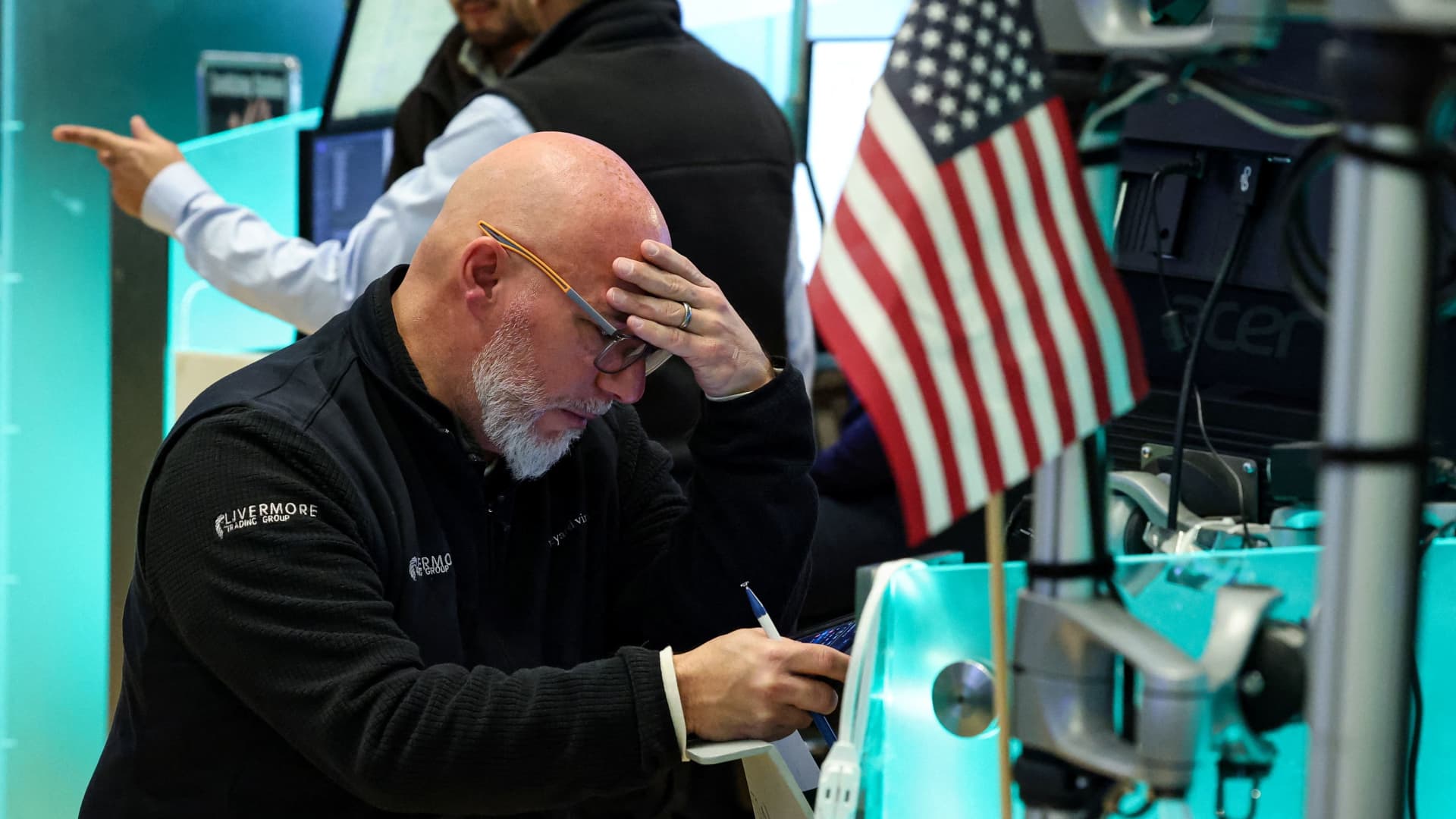
Things just keep getting worse for the stock market. The S & P 500 , Nasdaq , and Dow suffered their fourth consecutive week of losses as the Iran war and hot wholesale inflation stoked economic concerns. Nvidia ‘s annual GTC developers event last week was chock full of bullish announcements and the talk of Wall Street and Silicon Valley. Still, it did not help the AI chip powerhouse’s stock. Micron’s earnings report and post-release commentary provided an update on how severe the worldwide memory shortage is, which weighed on the stock. .SPX .IXIC,.DJI YTD mountain S & P 500, Nasdaq, and Dow year to date performane The S & P 500 fell 1.5% over the past five sessions. The Nasdaq and the Dow each tumbled roughly 2% for the week, with each dipping briefly into 10% correction territory on Friday before closing off their lows. The rise in oil prices (and occasional drop) has been largely moving stocks in the opposite direction since the U.S. and Israel first attacked Iran three weeks ago. The decline in stocks has kept the market in oversold territory for nine straight sessions, according to the S & P Short Range Oscillator , so we put some cash to work. The Club bought Goldman Sachs and Boeing twice last week and scooped up shares of Wells Fargo and Cardinal Health . Each of those names has been unfairly punished in the market downturn, and could rally on even a bit of positive news. Jim Cramer has been saying that opening the Strait of Hormuz, the vital oil transport waterway off Iran’s coast, is key to meaningful recovery in stocks. It’s unclear if the market can snap its losing streak come Monday. Until then, here is a closer look at the three forces that drove Wall Street and our portfolio last week. Inflation concerns Inflation was on investors’ minds as the Middle East conflict sent oil soaring. Wholesale prices for February came in hotter than expected, and that was even before the Iran war started. The producer price index jumped a seasonally adjusted 0.7% over the month, way higher than Dow Jones estimates of a 0.3% increase. Hours after that, Fed Chair Jerome Powell said that inflation wasn’t coming down as quickly as hoped. He also said that the war-induced spike in oil will raise it in the near term. Jim called the oil-PPI combo a “one-two punch” for the stock market last week. Brent crude , the international benchmark, jumped 8.8% for the week after attacks on various energy facilities overseas. Consumers are already feeling the pinch from higher gas prices at the pump, which, as we reported on Friday, tends to make Costco gas stations busier, with people deciding to swing into the store while they’re there. Costco sells gas cheaper than retail prices. The extra store traffic boosts sales. Memory crunch Micron delivered a blockbuster quarter on Wednesday. Revenue for the memory-chip maker nearly tripled, but CEO Sanjay Mehrotra chalked it up to “structural supply constraints” and “an increase in memory demand driven by AI.” A day later, however, Mehrotra said that Micron can’t deliver enough memory to major customers as a result of this tightening supply. “We are only able to supply, for our key customers in the midterm, about 50% to two-thirds of their requirements,” the CEO told Jim during CNBC’s ” Squawk on the Street ” on Thursday. The explosion of AI has caused a massive memory crunch. It’s great news for storage and memory stocks like Micron, which has run about 50% year to date after more than tripling in 2025. But for hardware companies that need memory, it’s a mixed bag. Look at HP ‘s earnings last month. Shares of the laptop maker hit a 52-week low after management projected annual profits at the low end of guidance and noted pressure from increased memory prices. The stock has lost 18% year to date. Apple is faring better, with its stock down less than 9% year to date. The iPhone maker grabbed share in China for the first nine weeks of the year despite the region’s lagging smartphone market, data from Counterpoint Research indicated on Thursday. Analysts said Apple was able to attract more customers because it held the line on pricing, while rivals have been forced to hike prices because of rising memory costs. “Maybe this is a sign that [Apple’s] better [at] managing memory costs versus competitors that have to raise prices,” Jeff Marks, the Investing Club’s director of portfolio analysis, said during Thursday’s Morning Meeting. Nvidia’s GTC Nvidia held its highly-anticipated GTC last week, which included new product announcements and insight into where revenue is headed. Highlights: CEO Jensen Huang said the company expects its Blackwell and Vera Rubin generation chip orders to hit $1 trillion through 2027. The conference is a big deal for investors because they often look at Nvidia for signs of what’s next in AI. It’s not only the leading AI chipmaker, but it’s also the largest publicly-traded U.S. company by market capitalization. It’s been a frustrating stock to own recently. Shares dropped 4% for the week despite all the positive news. While down more than 7% in 2026, Jim has maintained his “own, don’t trade” stance. (See here for a full list of the stocks in Jim Cramer’s Charitable Trust.) As a subscriber to the CNBC Investing Club with Jim Cramer, you will receive a trade alert before Jim makes a trade. Jim waits 45 minutes after sending a trade alert before buying or selling a stock in his charitable trust’s portfolio. If Jim has talked about a stock on CNBC TV, he waits 72 hours after issuing the trade alert before executing the trade. THE ABOVE INVESTING CLUB INFORMATION IS SUBJECT TO OUR TERMS AND CONDITIONS AND PRIVACY POLICY , TOGETHER WITH OUR DISCLAIMER . NO FIDUCIARY OBLIGATION OR DUTY EXISTS, OR IS CREATED, BY VIRTUE OF YOUR RECEIPT OF ANY INFORMATION PROVIDED IN CONNECTION WITH THE INVESTING CLUB. NO SPECIFIC OUTCOME OR PROFIT IS GUARANTEED.
<