Tariff revenue soars more than 300% as U.S. awaits Supreme Court decision
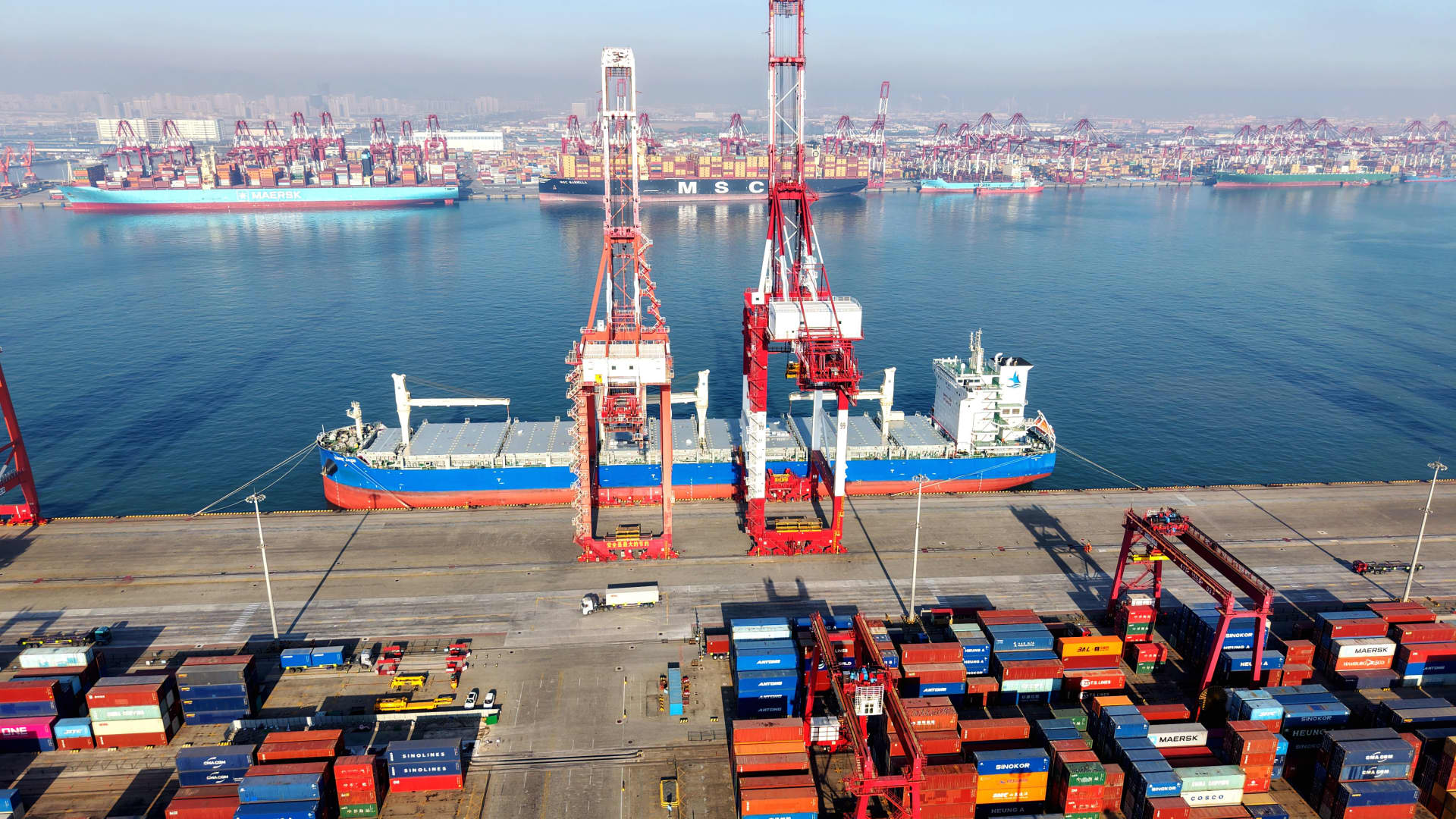
A cargo ship is loading and unloading foreign trade containers at Qingdao Port in Qingdao, Shandong Province, China, Jan. 13, 2026.
Cfoto | Future Publishing | Getty Images
The U.S. government in January ran up a smaller deficit than a year ago, while tariff collections surged and provided a reminder of how pivotal a long-awaited Supreme Court decision could be to federal fiscal health.
Customs duties collected through tariffs totaled $30 billion for the month, putting the fiscal year-to-date tally at $124 billion, or 304% more than the same period in 2025.
President Donald Trump first levied the duties in April 2025 with an across-the-board rate on all goods and services entering the U.S. along with a menu of so-called reciprocal tariffs on individual countries. Since then, the White House has been negotiating with its trading partners, backing off on some of the more aggressive charges while maintaining tough talk on issues.
Last November, the Supreme Court heard oral arguments challenging the auspices under which Trump justified the tariffs. The decision was expected in January. The high court hasn’t ruled yet, and there’s concern in the White House that a negative ruling could force the U.S. into reimbursing the duties collected so far.
The tariffs helped put a dent in the pace of the budget deficit.
In the fourth month of the fiscal year, the shortfall totaled roughly $95 billion, down about 26% from the same period a year ago, the Treasury Department reported
Year to date, that put federal red ink at $697 billion, or down 17% from the same period of fiscal 2025, according to numbers not adjusted for calendar. Calendar adjustments put the deficit reduction at 21%.
Interest on the $38.6 trillion U.S. debt continues to be a burden on the national finances. Net interest paid totaled $76 billion for the month, more than all other expenditures except Medicare, Social Security and health care. Year to date, gross interest has totaled $426.5 billion, up from $392.2 billion the year before.
<