
Broadcom CEO’s copper commitment tanks Corning shares — but sellers are mistaken
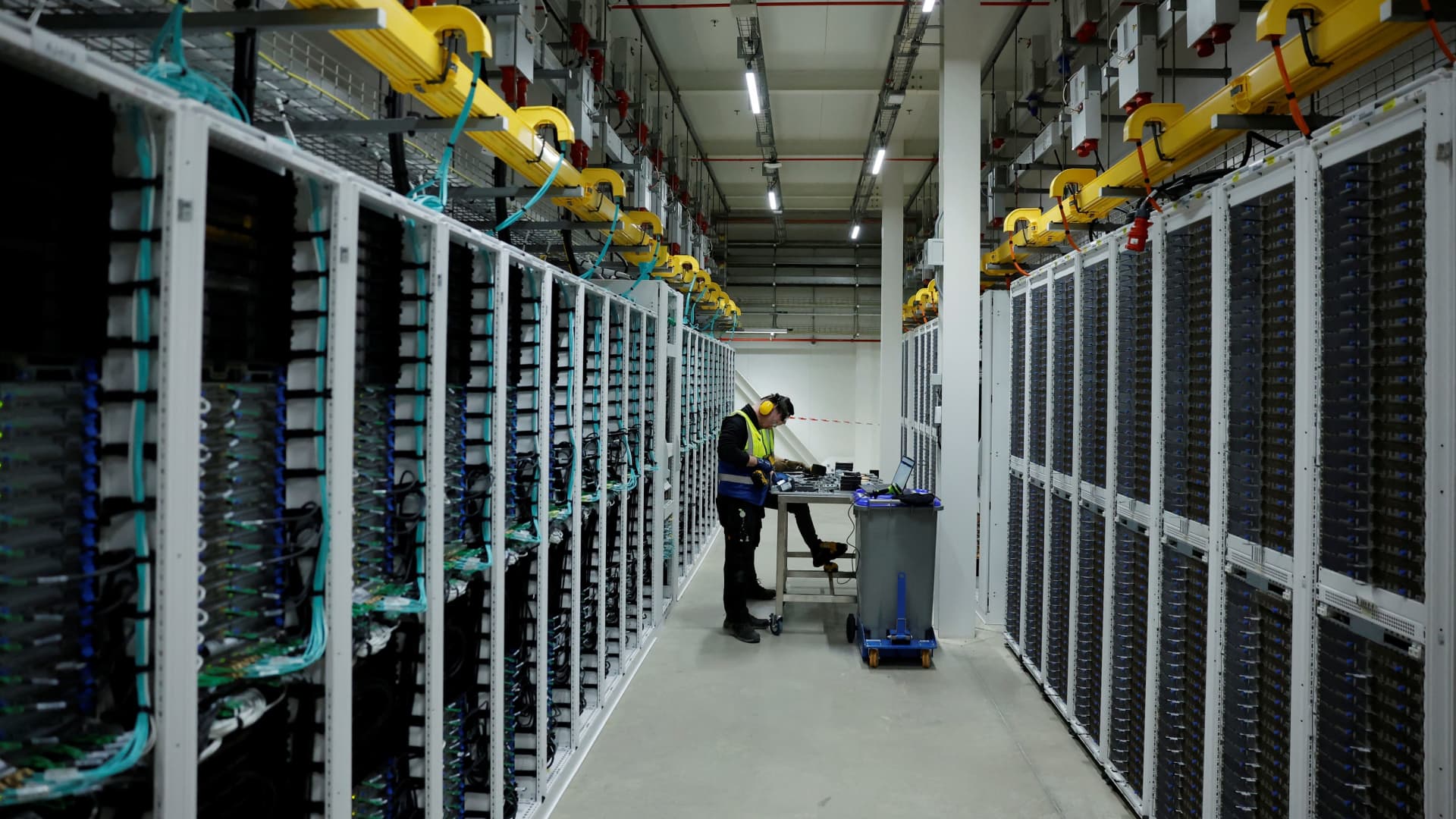
Shares of optics maker Corning are tumbling Thursday, likely in response to comments from well-respected Broadcom CEO Hock Tan on the chipmaker’s earnings call the prior evening. But the market reaction seems like a clear-cut overreaction based on Corning’s own guidance and industry outlook. A key pillar of our investment thesis in Corning is the growing use of fiber-optics technology in the data center, ultimately replacing copper as a means to transmit data. On Wednesday night, Tan weighed in on this transition and his commitment to copper in a specific use case appears to what’s driving the decline in fellow Club name Corning. Before digging into Tan’s comments, let’s first define some key terms used when discussing the construction of data centers and, in particular, networking together all the various parts to deliver fast, reliable AI computing. These terms are “scale-up” and “scale-out.” Scale-up refers to the connections within a single server rack — essentially those filing-cabinet looking structures containing a bunch of computing components. With scale-up, we’re talking about connecting various chips together so they operate as one giant chip. Because this is about connections within a single rack, the distance between connections are very short. Scale-out, on the other hand, refers to the connections made between racks throughout the data center. There are rows upon rows of server racks in AI data centers. With scale-out, we’re talking much larger distances between end points. That means the data has more ground to cover. Now, back to the Broadcom call . When discussing Broadcom’s networking roadmap during his prepared remarks, Tan said Broadcom’s customers would likely continue to “stay on direct-attached copper” until at least 2028. Then, during the question-and-answer portion of the call, Tan was asked to elaborate on that copper comment. In response, Tan said he was referring only to scale-up solutions on the 2028 timeline. He noted that for scale-out technology, Broadcom is already working with optics because we’re passed the point at which it makes sense to use copper. Generally speaking, optical technology is considered superior to copper for sending data over longer distances, in large part because the signal doesn’t degrade at high speeds. For connecting chips to one another in scale-up, though, Tan argued “the best way to do that is to use direct-attached copper. That’s the lowest latency, lowest power, and lowest cost. So, you want to keep doing that, especially in scale-up as long as possible. In scaling out, we’re past that. We use optical.” To be clear, Tan did indicate that scale-up will eventually need to move to an optics-based solution. His argument is that we’re just not there yet and likely won’t be for a few years — the argument being, it’s best to push copper to its limits before taking on the added complexity of moving to optics. Now, this might seem like a negative development and a dent to the optimism around Corning’s transformation into a key cog in the massive AI buildout. However, when you actually dig deeper, Tan’s outlook is not at all counter to what Corning executives have said. GLW .SPX YTD mountain Corning’s year-to-date stock performance versus the S & P 500. Let’s take a look at what Corning CEO Wendell Weeks said on the company’s 2025 fourth-quarter earnings call in late January. Alongside its quarterly numbers, Corning increased its growth targets associated with its Springboard initiative, a multi-year plan to drive higher sales. It came just one day after Corning announced a blockbuster $6 billion agreement to supply Meta Platforms with fiber-optic cables for scale-out usage in the Instagram parent’s data centers. When discussing the Springboard plan, Weeks said it doesn’t assume any significant revenue contribution from the scale-up use of optics — if that materialized, it would be pure upside to what Corning has already projected. Notably, the Springboard plan currently covers through 2028, which is the same timeline as Tan’s copper comments. Nevertheless, Weeks went on to add: “I believe that’s inevitable. Calling timing is more difficult. There are scenarios where the timing would be within the time period between now and 2028. There are scenarios where it will be primarily starting maybe late 2028 and beyond. What we seek to do with Springboard is to not over-speculate. And if we don’t have really quite compelling evidence of the timing of something as significant and large as the scale-up opportunity, we will tend to view the timeline from a conservative point of view.” More recently, speaking at the Morgan Stanley’s influential technology and media conference this week, Corning CFO Edward Schlesinger reaffirmed what Weeks said: “I don’t think we’re going to see scale up probably for a couple of years. I mean, our view is it sort of inflects up in 2028 maybe, and then it sort of continues to grow through the end of the decade. But you mentioned CPO, and I think CPO is actually going to be in scale out and scale up. And I think there’s an opportunity to start to see some scale out CPO connectivity happen maybe next year, maybe a little earlier than 2028. What we’re primarily signing up contracts for is the scale out part of the network.” Bottom line We understand there are some investors and traders who view Tan’s copper comments as bearish for the Corning story and growing adoption of optical technology in data centers more broadly. However, that looks to be the wrong interpretation. Both companies appear to be in perfect alignment on the use of optics for scale-out and the timing on when optics may play a larger role in scale-up connections. By the way, fellow Club name Nvidia announced a couple strategic partnerships in the data-center optics space this week with Lumentum and Coherent — another proof point, in our minds, that optics will play a larger role down the road. And yet, shares of both Lumentum and Coherent are being punished in Thursday’s session, too. If anything, Thursday’s sell-off in Corning demonstrates the importance of booking profits in stocks that have gone on parabolic moves — just like we’ve seen with Corning this year, which entered Thursday’s session up roughly 65% year to date. When stocks catch fire, some of your fellow shareholders may latch onto anything that can be twisted into a negative — even if it’s not really news — and use it as a reason to sell. (Jim Cramer’s Charitable Trust is long AVGO, GLW and NVDA. See here for a full list of the stocks.) As a subscriber to the CNBC Investing Club with Jim Cramer, you will receive a trade alert before Jim makes a trade. Jim waits 45 minutes after sending a trade alert before buying or selling a stock in his charitable trust’s portfolio. If Jim has talked about a stock on CNBC TV, he waits 72 hours after issuing the trade alert before executing the trade. THE ABOVE INVESTING CLUB INFORMATION IS SUBJECT TO OUR TERMS AND CONDITIONS AND PRIVACY POLICY , TOGETHER WITH OUR DISCLAIMER . NO FIDUCIARY OBLIGATION OR DUTY EXISTS, OR IS CREATED, BY VIRTUE OF YOUR RECEIPT OF ANY INFORMATION PROVIDED IN CONNECTION WITH THE INVESTING CLUB. NO SPECIFIC OUTCOME OR PROFIT IS GUARANTEED.
<