
Iran vows to kill Israeli PM Netanyahu as war impact widens
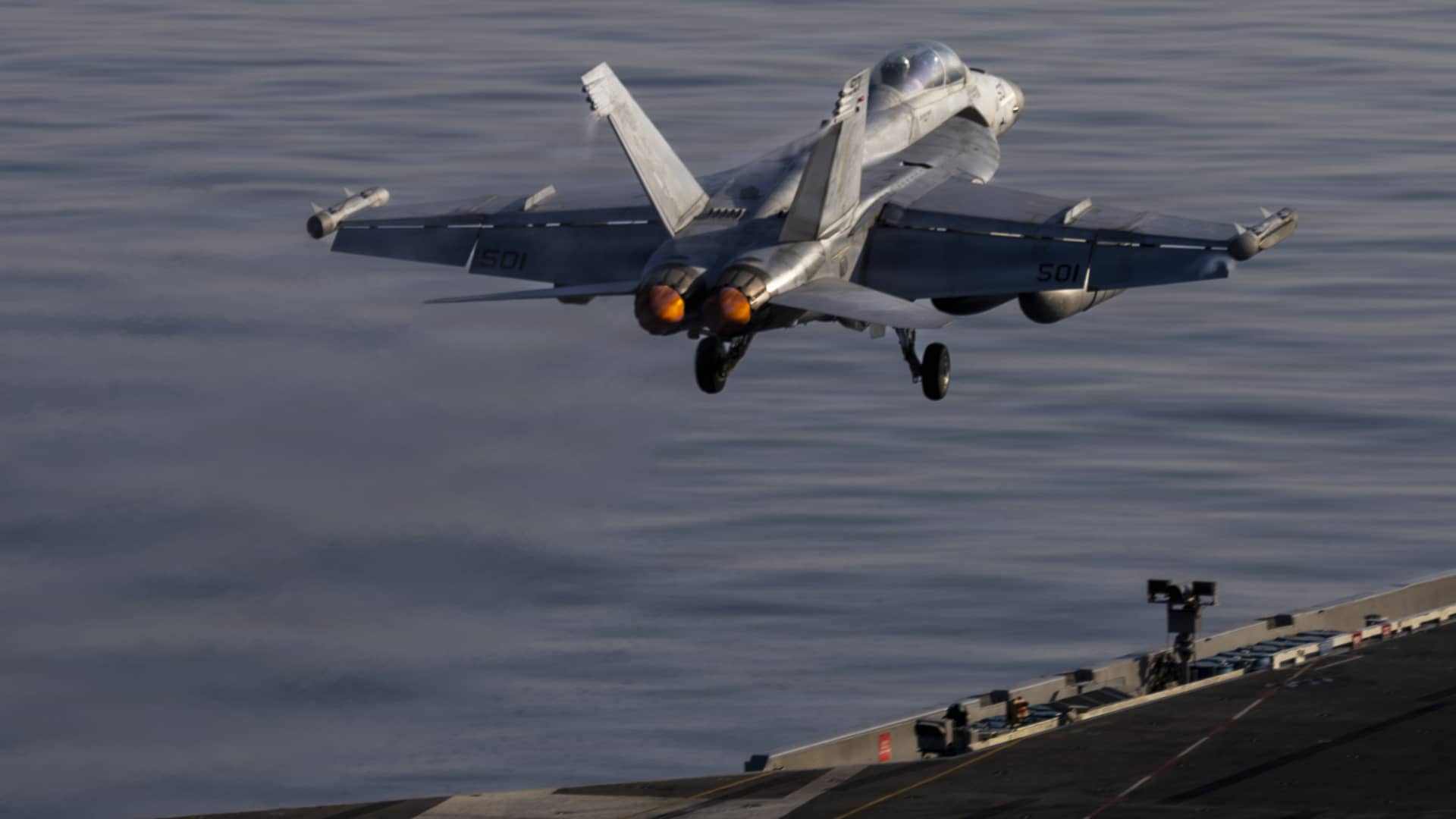
AT SEA – MARCH 02: (EDITOR’S NOTE: This Handout image was provided by a third-party organization and may not adhere to Getty Images’ editorial policy.) In this handout photo provided by the U.S. Navy, EA-18G Growler, attached to Electronic Attack Squadron (VAQ) 133, launches from the flight deck of Nimitz-class aircraft carrier USS Abraham Lincoln (CVN 72) in support of Operation Epic Fury on March 2, 2026 in the Mediterranean Sea. (Photo by U.S. Navy via Getty Images)
U.s. Navy | Getty Images News | Getty Images
Tehran on Sunday vowed to kill Israeli Prime Minister Benjamin Netanyahu as the U.S.-Israel war on Iran continued to threaten oil supplies in the Gulf.
“IRGC vows to pursue and kill ‘child-killer’ Netanyahu if he is still alive,” Iran’s IRNA news agency said in a post on X, referring to the country’s Islamic Revolutionary Guard Corps.
Israel in return targeted key members of Iran’s leadership over the weekend.
The Israel Defense Forces said they had “eliminated” two senior Iranian intelligence officials of the “Khatam al-Anbiya” Emergency Command.
Late on Saturday, the IDF said in a post on X that it had struck the primary research center of the Iranian Space Agency and an aerial defense system production factory.
Iran continued to retaliate against targets around the region. Israeli emergency services reported a “recent missile barrage” fired at central Israel, but said there were no known injuries.
Israeli security forces check the damage to cars after a rocket strike in Holon, in the Tel Aviv District on March 15, 2026. (Photo by JACK GUEZ / AFP via Getty Images) /
Jack Guez | Afp | Getty Images
Meanwhile, oil-loading operations in the United Arab Emirates’ port of Fujairah resumed on Sunday according to media reports, after being interrupted a day earlier due to a fire caused by falling debris from an intercepted drone.
A spokesperson for Abu Dhabi’s state oil giant, ADNOC, which operates in Fujairah, directed CNBC to the Fujairah Media Office, which did not immediately respond to emailed requests for comment.
The ongoing war has effectively choked off energy supplies moving through the narrow Strait of Hormuz which separates Iran and the UAE.
On Friday, Brent crude oil futures closed above $100 per barrel for the second straight day, and the global oil benchmark has surged more than 40% since the war in Iran began.
U.S. President Donald Trump said on Friday that he directed the U.S. Central Command to carry out a bombing raid, hitting military targets on Iran’s Kharg Island for the first time. Trump threatened further strikes on Iran’s oil export hub, even as he repeatedly urged allies to deploy warships to help the U.S. secure the Strait of Hormuz.
Kharg Island has been thrust into the global spotlight because it is regarded as one of Iran’s most sensitive economic targets. The terminal accounts for around 90% of the country’s crude exports and has a loading capacity of roughly 7 million barrels per day.
Iran’s Foreign Minister Abbas Araghchi took to social media to say his country is “ready to form a committee with the countries of the region to investigate the targets that were attacked. Our attacks only target American bases and interests in the region.”
In a Telegram post Sunday, Araghchi said: “We have not targeted any civilian or residential areas in the countries of the region so far,” and added, “Occupying Kharg Island would be a bigger mistake than attacking it.”
The impact of the war is now also affecting major events in the Gulf region. Formula 1 said it has canceled the upcoming Grand Prix races in Bahrain and Saudi Arabia scheduled for April.
“While alternatives were considered, no substitutions will be made in April,” Formula 1 said in a post on X.
<