elevated oil, but a rate cut
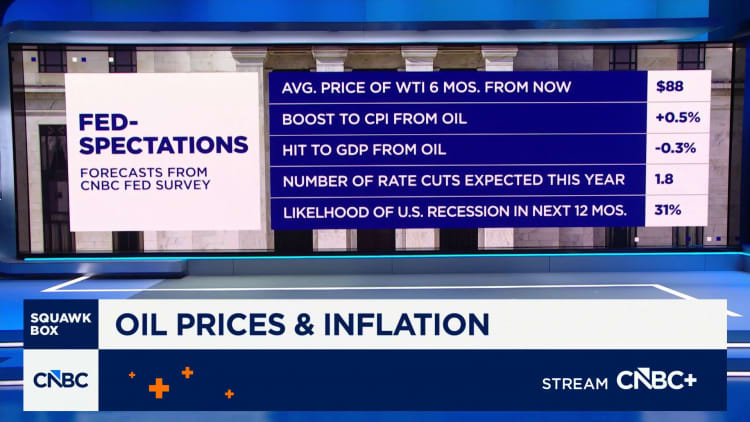

Three weeks into the U.S. attack on Iran, respondents to the CNBC Fed Survey forecast oil prices to remain high for several months, inflation to increase and growth to take a modest hit.
But they believe the Federal Reserve could still cut rates this year.
The 32 respondents, including fund managers, analysts and economists, see oil prices on average at $88 a barrel six months from now. That would lead to a half-point increase in the Consumer Price Index and shave 0.3% percentage points off of growth. The probability of recession during the next 12 months rose 8 points to 31%. While that’s elevated, it’s still well below the 53% level of concern followed the Liberation Day tariffs in April.
“My forecast is contingent on a resumption of oil shipments through the Strait of Hormuz within the next month,” said economist Robert Fry. “If that doesn’t happen, oil prices will go much higher, and I will put a recession in my forecast.”
The survey found 44% believe the Strait will be closed for less than a month and 38% saying it will be closed for longer.
On average, respondents forecast 1.8 rate cuts this year from the Federal Reserve, a more dovish outlook than the Fed futures market, which has priced in only one cut. One possibility for the difference is that many economists see the oil price surge as being temporary and more likely to lead to economic weakness than sustained inflation.
The Fed’s two-day policy meeting concludes on Wednesday and the central bank is widely expected to keep rates the same, within a range of 3.5% to 3.75%. The Fed stood pat at its last meeting in January after cutting rates three times in 2025.
“An oil price spike risks more weakening — not inflation,” said economist Steve Blitz. “The Fed will be on alert to ease, not tighten. All of that gives Warsh a window to cut in June.”
Oil economic impact
For now, the impact is seen as modest. The outlook for GDP fell to 2.1% from 2.4% in the January survey, on par with last year. The 2027 forecast is a tenth higher at 2.2%. The outlook for the unemployment rate has remained relatively steady for this year at around 4.5%.
The inflation forecast is more challenging for the Fed. Headline CPI is seen forecast rising to 2.9% and settling next year to 2.7%, suggesting two more years of above-target inflation. More significantly, 82% of respondents believe it’s very or somewhat likely that higher oil prices result in higher core inflation, which the Fed follows more closely to guide policy.
“There are so many variables in play out there that the Fed’s best move is to do nothing right now,” said John Donaldson, director of fixed income, Haverford Trust Co. “The odds of any move being the right move are no better than 50-50.”
Peter Boockvar from One Point BFG Wealth Partners, added, “I expect a lot of “I don’t know” and “we’ll have to see” type comments from Powell in the press conference.”
Private credit concern
The S&P 500 is seen ending the year just above 7000 for about a 4% gain from the current level, but marching higher next year to 7627, or about 14% higher.
While the war in Iran and higher oil prices and inflation top the list of major concerns, there is also worry about private credit. Two-thirds of responds say they are somewhat concerned that troubles in private credit could drag down growth and 69% say it could lead to broader systemic risk.
Asked about the overall level of systemic risk in credit markets, 75% call it “somewhat elevated” the highest measure in the survey, which began asking the question in October.
<