Stock market today: Live updates

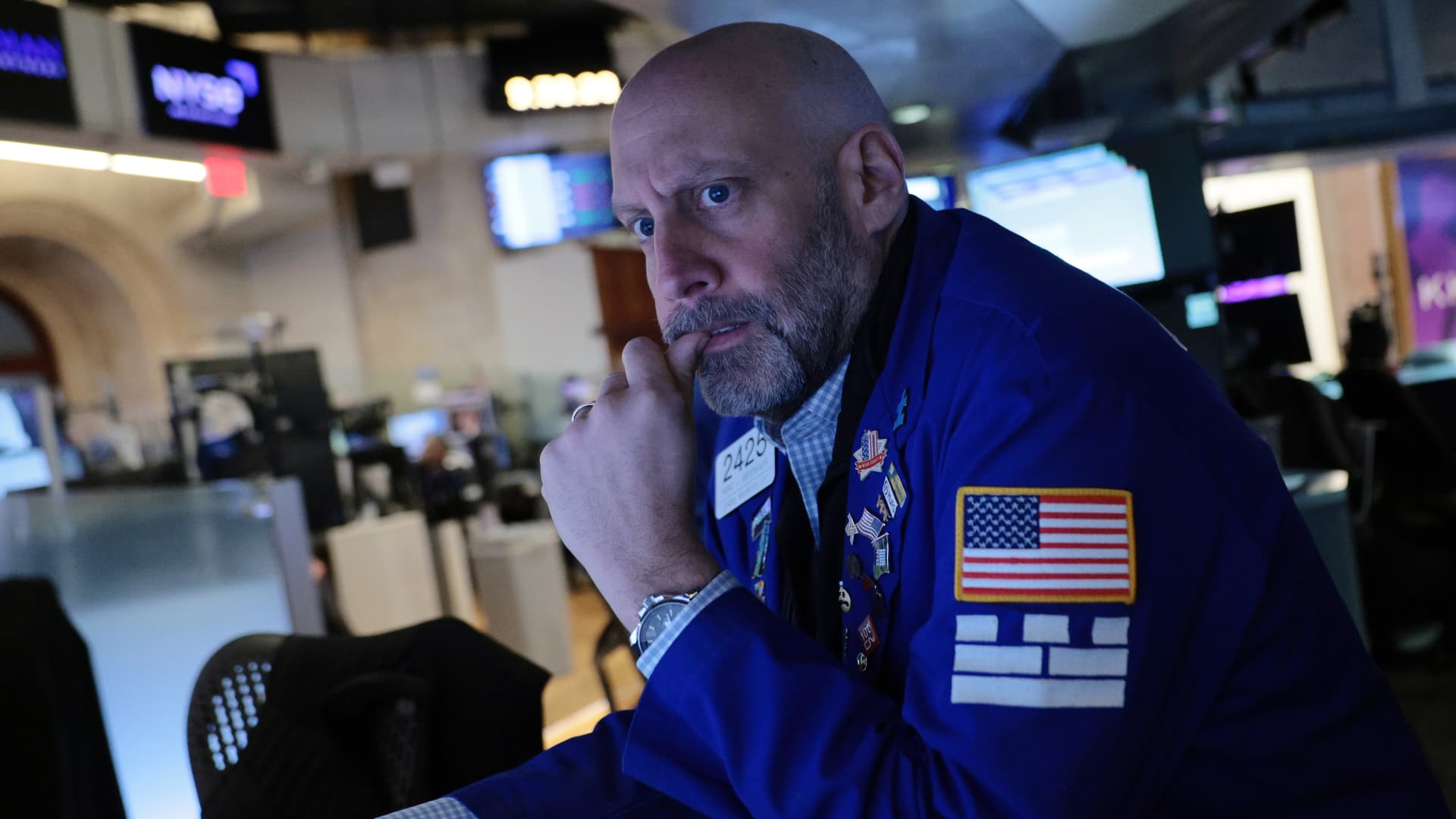
Traders prepare as sales of MDA Space Ltd begin at the New York Stock Exchange during morning trading on March 12, 2026 in New York City.
Michael M. Santiago | Getty Images News | Getty Images
Stock futures ticked higher on Thursday night after new comments from Israel Prime Minister Benjamin Netanyahu appeared to somewhat ease concerns around the U.S.-Iran war.
Dow Jones Industrial Average futures were up 70 points, or 0.2%. S&P 500 futures gained 0.2%, along with Nasdaq-100 futures.
Stocks fell on Thursday but closed well off their lows after Netanyahu said Israel was assisting the U.S. “in intel and other means” to open the Strait of Hormuz. He added that Iran had lost the ability to enrich uranium and produce ballistic missiles, noting the conflict may end faster than many fear.
West Texas Intermediate futures fell sharply post-settle following those comments, giving stocks a boost off their lows of the day. Still, WTI remains more than 48% higher this month.

SPX since U.S.-Iran war began
“All the near-term action depends on the Strait opening,” said Scott Wren, senior global market strategist at Wells Fargo Investment Institute. “We think it opens in a matter of weeks not months.”
The major averages are still on pace to post their fourth losing week in a row, however. The S&P 500 and Dow enter Friday’s session down 0.4% and 1.2%, respectively. The Nasdaq Composite has shed 0.1%.
Both the Dow and Nasdaq are also nearing correction territory. The Dow is 8.3% below its record close set Feb. 10, and the Nasdaq sits nearly 8% away from its all-time closing high reached Oct. 29.
Still, with the S&P 500 holding around 5% off of its all-time high, Unlimited CEO Bob Elliott thinks the market is still too optimistic about the impact the war could have on earnings and the economy.
“When you look at stocks compared to bonds, the markets are pricing in stronger growth since the beginning of this conflict. That doesn’t make any sense,” he told CNBC’s “Closing Bell: Overtime” in an interview. “Households basically getting something like 1% to 2% of real purchasing power taken away from them, even if this conflict resolves tomorrow.”
<