Oil prices surge with Brent rising 5% as Trump vows to hit Iran ‘extremely hard’ within weeks

The Liberia-flagged crude oil tanker Shenlong Suezmax successfully docked at Mumbai Port after navigating the high-risk Strait of Hormuz amid the intensifying West Asia conflict on March 11, 2026 in Mumbai, India.
Hindustan Times | Getty Images
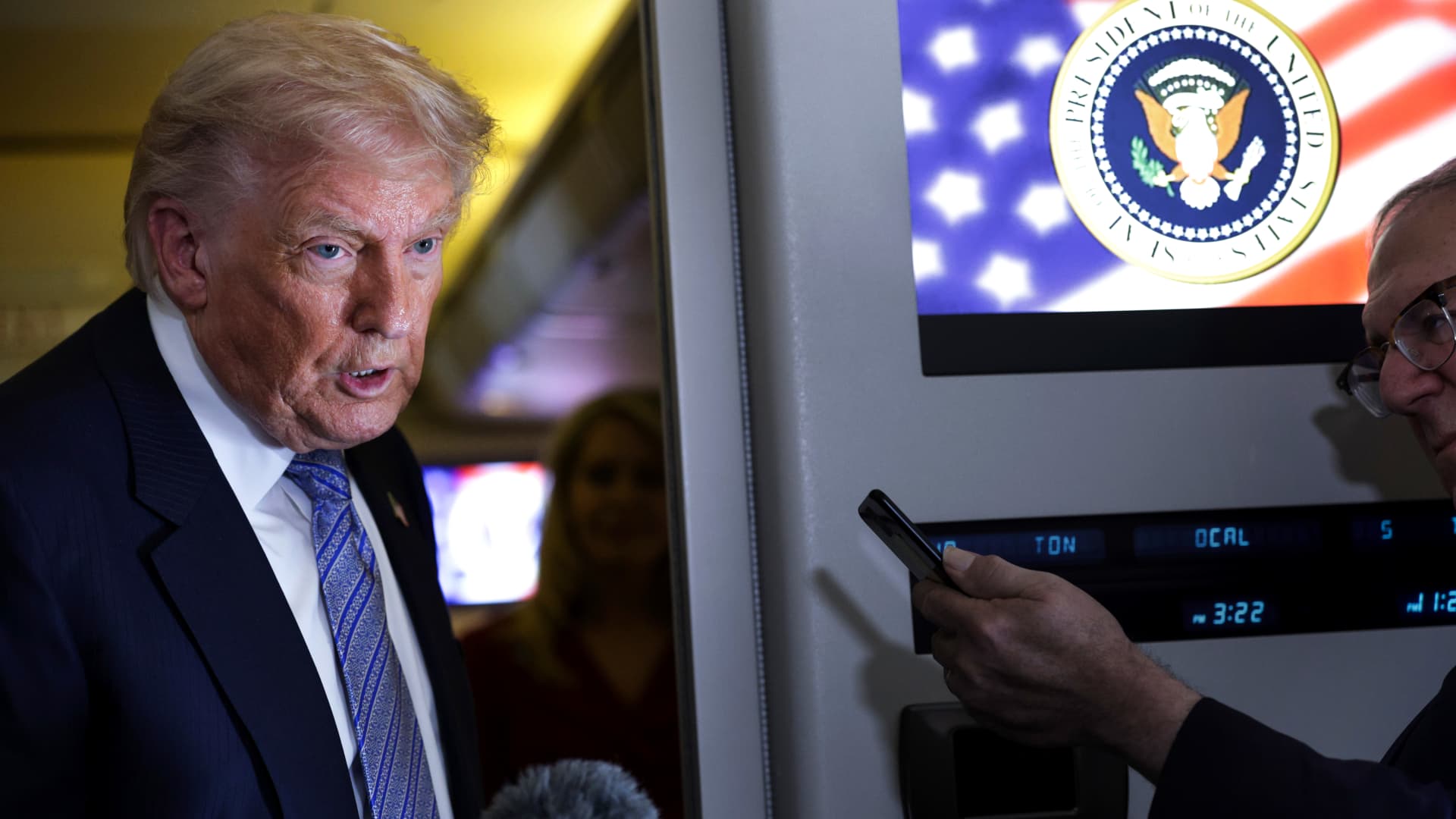
Oil jumped in volatile trading as U.S. President Donald Trump warned of further military aggression against Iran in the next two or three weeks, dampening hopes for an imminent de-escalation in the conflict.
U.S. West Texas Intermediate crude futures for May gained 4.1% to $104.21 a barrel as of 9:45 p.m. ET. International benchmark Brent crude futures for June rose 5% to $106.42 per barrel.
Trump in his speech attributed the increase in oil prices to the “Iranian regime launching deranged terror attacks against commercial oil tankers and neighboring countries that have nothing to do with the conflict.”
He said the U.S. will “hit” Iran “extremely hard” over the next two or three weeks during a national address on Wednesday, while adding that the war won’t last long and discussions with Tehran “are ongoing,” leaving a diplomatic resolution on the table.
“We are going to finish the job, and we’re going to finish it very fast,” he said.

Brent
George Efstathopoulos, portfolio manager at Fidelity International, told CNBC’s “Squawk Box Asia” that markets had braced for a “binary outcome” where the president may either signal his plans for a war exit or further escalation and prolonged uncertainty — “clearly we seem to be on the latter path right now.”
Efstathopoulos expects that the speech will further fuel the risk-off sentiment as investors wait for uncertainty to subside.
Oil tanker traffic through the Strait of Hormuz was unlikely to resume anytime soon, said Giles Alston, political risk analyst at Oxford Analytica.
Traffic in the Strait of Hormuz, which used to see a fifth of the world’s oil and gas flows through, has effectively ground to a halt since the U.S.-Israel war against Iran began on Feb. 28.
“It’s becoming increasingly clear that the U.S. position on what you do to get your oil out of and through the Straits of Hormuz is now something which Washington has largely washed its hands off. This is now something for those who take oil through the Strait to sort out for themselves,” he said on CNBC on Thursday.
Earlier on Wednesday, Trump said in a post on Truth Social that Iran had asked for a ceasefire, briefly raising hopes for more oil tanker movement through the waterway, sending oil prices lower.
Iran’s “New Regime President” has asked the U.S. for a ceasefire, a request that will only be considered if the Strait of Hormuz is “open, free, and clear,” Trump said. “Until then, we are blasting Iran into oblivion or, as they say, back to the Stone Ages!!!”
The Islamic Republic, however, has denied Trump’s claim, saying that the waterway won’t be reopened based on the U.S. leader’s “absurd displays” and that the key transit route remains “decisively and dominantly under the control of the IRGC Navy.”
The two sides have frequently contradicted each other’s claims about the existence and status of peace-deal talks since the war started. Trump has also sent conflicting signals, reportedly saying negotiations were close to producing a peace deal, but the U.S. was also prepared to escalate fighting by sending thousands of troops to the region.
Brent oil dipped below $100 per barrel for the first time in a week after Trump said Tuesday evening that he expected the U.S. military to wind down operations against Iran in “two or three weeks” and appeared to be declaring victory even without a negotiated deal with Iran. “We’ll be leaving very soon,” he said.
<