Here are the 3 big things we’re watching in the stock market in the week ahead

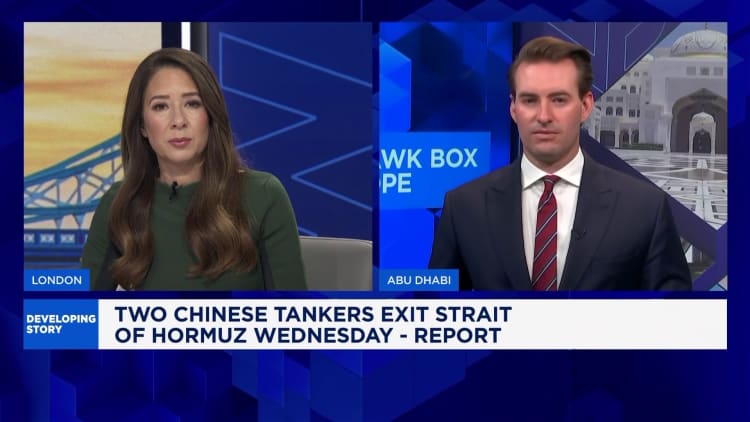
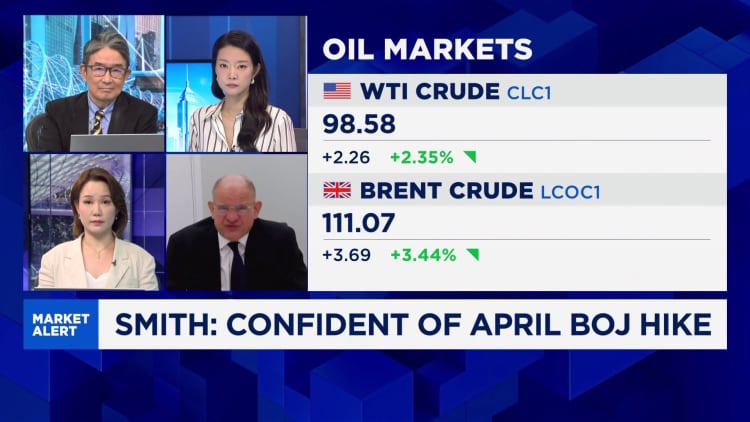
The war with Iran will remain the dominant driver of the market action in the week ahead, as investors hope for a resolution to the conflict. But it will influence the market in other ways too: On Friday, we’ll get our first look at how the war-related surge in oil prices is showing up in the inflation data. While an end to the war likely means that the bottom is in for the stock market, we must refrain from getting too bullish too soon — even if Thursday’s volatile session ended on an encouraging note with the S & P 500 slightly higher. The war isn’t over until it’s over, and things can change by the minute, not just by the day. The Trump administration may say it expects the war to end within two to three weeks, but it takes both sides to end a war. Indeed, there was more escalation in the fighting this weekend. As long as missiles and drones keep flying and traffic through the Strait of Hormuz is snarled, there’s the potential for things to get out of control. 1. Oil prices: One of the big lessons from last week is that the moves in oil told the true story. Sure, short-covering likely had something to do with the magnitude of Tuesday and Wednesday’s rebound. But right now, the oil market is the sun around which the stock market revolves. Just as it was right for stocks to slide as oil rallied in the early days of the war, it’s equally right for equities to rebound as the price of oil retreats, as they did on Tuesday and Wednesday. Admittedly, Thursday’s session was a bit of an exception to this inverse relationship between oil and stocks. That doesn’t change the main conclusion: If the war indeed ends soon, it seems right to assume oil prices would see further declines, and we would in turn have increased confidence that a buyable bottom in stocks has been reached. Now, the caveat: Messages out of Washington and Tehran have been mixed, and we have to consider a scenario in which the Strait of Hormuz remains closed or partially closed despite an end to the war being declared. President Donald Trump has suggested he could end the conflict without the vital shipping lane being open. With that idea out in the ether, we did see oil decline on Tuesday and Wednesday, so maybe an end to the missiles flying is what matters most to energy markets. Nevertheless, it’s difficult to imagine there not being an elevated geopolitical premium priced into oil if the war is “over” and traffic through the Strait of Hormuz is still at least partially curtailed — perhaps with Iran collecting a toll on the boats plying the water. In that scenario, maybe oil at $150 to $200 a barrel is off the table, but going back to the lows $60s anytime soon seems far-fetched. We’ve spoken at length about the impact of higher oil prices on the global economy and corporate profits, so while investors will certainly welcome an end to the war, it’s hard to call an all-clear and argue new highs are around the corner until we see more relief on the price of oil. As a result, expect the stock market to remain volatile next week as updates on the Iran war continue to roll through. A U.S. fighter jet was shot down in Iran Friday. And, in an expletive-laden social media post Sunday, Trump threatened to bomb Iran’s power plants and bridges if the Strait of Hormuz isn’t opened to all traffic by Tuesday. Our job as long-term investors, though, is to cut through the noise of headlines to determine what dynamics will have lasting impacts on our portfolio companies. Of course, the price of oil is one example. 2. Inflation data: Another oil-related dynamic that matters greatly is inflation, which brings us to the macroeconomic updates on deck for next week. They will give the Federal Reserve fresh data to work with when determining the path forward for its overnight lending rate. They will also give the bond market new information to consider on the longer end of the yield curve (like the 10-year Treasury note), where rates become far more consequential to things like mortgages and auto loans. The long end is primarily driven by traders’ expectations for inflation, economic growth and fiscal policy. On the shorter end of the curve is where we find notes like the 2-year Treasury, which is more sensitive to Fed policy. The Fed’s dual mandate is price stability and maximum employment. We received good news on the labor market front Friday when the March jobs report came in well ahead of expectations . Now the spotlight moves to the price stability front with a pair of inflation reports. The big update comes on Friday, when we get the consumer price index (CPI) for March. This is the highest priority report of the week because it will reflect the start of the war with Iran. As of Thursday, economists are expecting to see a 2.7% year-over-year increase for both the headline and core (ex-food and energy) indexes, according to FactSet. In February, headline CPI increased 2.4% on an annual basis and core CPI rose 2.5%. The morning before CPI, the February consumer spending and income report is set to be released. Normally, we would say this is the most important release of the week because it contains the Fed’s preferred inflation gauge, known as the personal consumption expenditures (PCE) index. However, with the government still working to get economic updates back on track following the shutdown late last year, Thursday’s PCE index will be covering February data. That means it will cover a month in which oil was still trading in the low-to-mid $60s a barrel, rendering it a bit stale compared with the March CPI. It’s not useless data, though. Think of it instead as providing an important baseline for how things were looking for consumer purchasing power before the war broke out. Economists are expecting to see a 3% increase in core PCE (ex-food and energy), according to FactSet on Thursday. Outside of the inflation updates, we’ll also get a check on the services sector with the Monday release of the Institute for Supply Management’s Services Purchasing Managers Index (PMI) for March; our final read on fourth-quarter 2025 gross domestic product on Thursday; and an update on manufacturing activity with the release of February factory orders on Friday. These are not exactly market-moving releases on their own, especially with the war muddying the outlook, but think of them instead as individual pixels helping us understand the broader economic picture. 3. Earnings: While the earnings calendar is light in the week ahead ( with no Club names on it ), there are three notable reports to watch. The main one is Delta Air Lines , which reports Wednesday morning. Delta — and the entire airline industry — is uniquely exposed to the price of oil because it’s one of the largest operating costs for an airline, alongside labor. In its most recent annual report, Delta disclosed that “a one cent increase in the cost of jet fuel per gallon would result in approximately $40 million of additional annual fuel expense based on annual consumption of approximately four billion gallons of jet fuel.” In other words, it’s a make-or-break commodity for their financial results. Of course, Delta will also provide insight into consumers’ appetite for travel in the face of these higher fuel costs (and higher ticket costs as a result). One caveat to note: Delta tends to serve higher-end consumers, which are more capable of handling price increases and booking their trips anyways. When CEO Ed Bastian appeared on CNBC two weeks ago, he said, “We live at the top end of the ‘K’ that people talk about, the premium end of the ‘K.’ That’s where over 90% of our revenue is sourced from. That group of folks want to travel.” At the time, he indicated Delta was still seeing strong bookings, so we’ll be listening for any changes in management’s tone or outlook come Wednesday. Even if Delta reports that its affluent customers are still buying higher-priced tickets, remember this will make its way into future inflation reports. That is an important thing to keep in mind when interpreting inflation data. Sure, the Fed prefers to look at the core inflation indexes that strip out energy costs, but any energy-related costs passed through to consumers (in this case via higher ticket costs) will certainly be included in the calculation for other items. That is till not exactly great for the economy. And if customers are starting to shy away from plane tickets due to increased prices, well, that’s not great for the economy either. There are two additional reports that will provide insight into the state of consumer spending. First up is denim brand Levi Strauss on Tuesday night, followed by Modelo brewer Constellation Brands on Wednesday night. Week ahead Monday, April 6 10:00 a.m. ET: ISM Services PMI Tuesday, April 7 After the bell: Levi Strauss (LEVI) Wednesday, April 8 2:00 p.m. ET: Federal Reserve’s Meeting Minutes for March Before the bell: Delta Air Lines (DAL), RPM international (RPM) After the bell: Constellation Brands (STZ) Thursday, April 9 8:30 a.m. ET: Fourth-Quarter GDP (final read) 8:30 a.m. ET: Initial Jobless Claims 8:30 a.m. ET: Personal Spending and Income Report Before the bell: BlackBerry (BB), Simply Good Foods (SMPL) Friday, April 10 8:30 a.m. ET: Consumer Price Index 10:00 a.m. ET: ISM Services PMI 10:00 a.m. ET: Factory Orders (See here for a full list of the stocks in Jim Cramer’s Charitable Trust.) As a subscriber to the CNBC Investing Club with Jim Cramer, you will receive a trade alert before Jim makes a trade. Jim waits 45 minutes after sending a trade alert before buying or selling a stock in his charitable trust’s portfolio. If Jim has talked about a stock on CNBC TV, he waits 72 hours after issuing the trade alert before executing the trade. THE ABOVE INVESTING CLUB INFORMATION IS SUBJECT TO OUR TERMS AND CONDITIONS AND PRIVACY POLICY , TOGETHER WITH OUR DISCLAIMER . NO FIDUCIARY OBLIGATION OR DUTY EXISTS, OR IS CREATED, BY VIRTUE OF YOUR RECEIPT OF ANY INFORMATION PROVIDED IN CONNECTION WITH THE INVESTING CLUB. NO SPECIFIC OUTCOME OR PROFIT IS GUARANTEED.
<