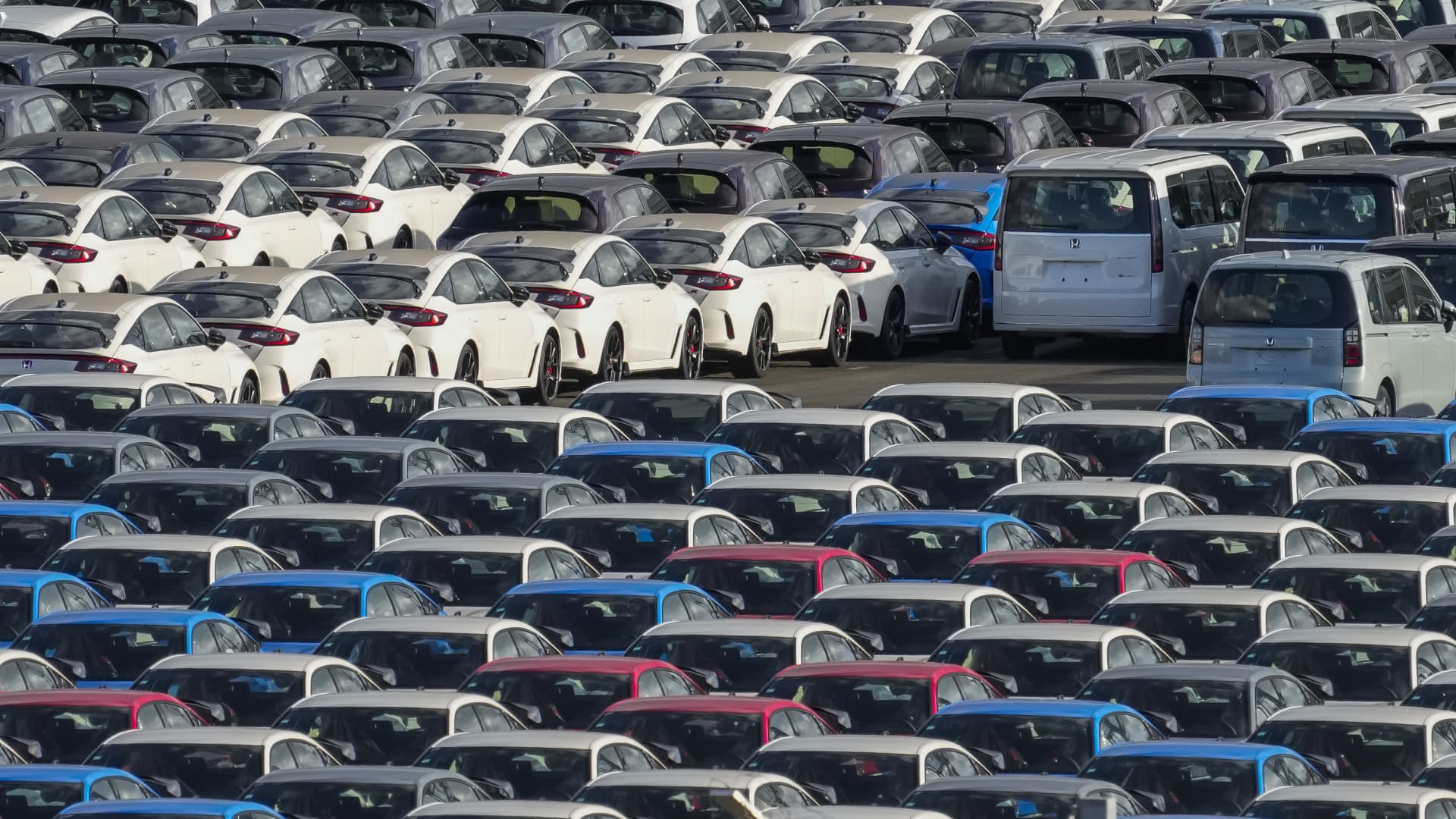

Diesel, kerosene imports and air travel
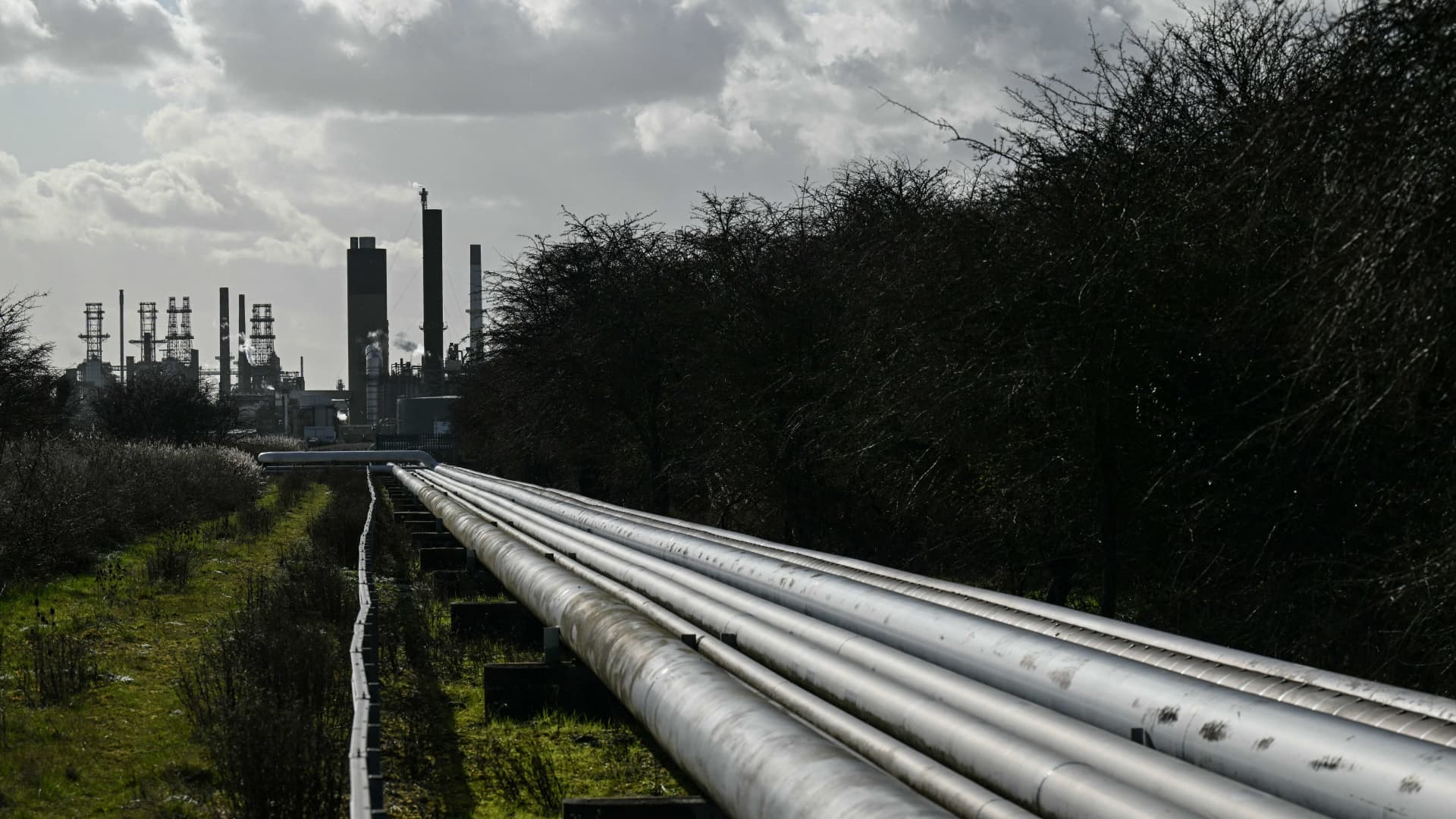
Pipework at the Humber Refinery, operated by Phillips 66, and the Humber estuary near South Killingholme, north-east England on March 11, 2026.
Oli Scarff | Afp | Getty Images
This report is from this week’s CNBC’s UK Exchange newsletter. Like what you see? You can subscribe here.
The dispatch
If Britain should have learned one lesson from the pandemic and Russia’s subsequent invasion of Ukraine, it is the importance of security of supply, whether in food, energy, fertiliser or other commodities.
The Middle East crisis suggests it was not.
Poor supply chain resilience may soon lead to shortages in refined oil products and, in particular, diesel and jet fuel (kerosene).
This is due partly to a big drop in refining capacity. As recently as the 1970s, the U.K. boasted as many as 18 refineries, but this has fallen sharply and more rapidly than in countries like France and Germany.
According to the House of Commons Library, U.K. refinery output fell by 41% between 2000 and 2024, with BP and Shell, the big two local oil majors, exiting the market by 2011.
These closures reflect various factors, including poor investment returns, a lack of government support for refinery upgrades and higher carbon and energy costs. The relative smallness of U.K. refineries (bigger refineries, benefiting from economies of scale, are more competitive) and lower demand for some products as Britain pushed more aggressively towards net-zero and the roll-out of electric vehicles also played a role.
Following the closures last year of the Prax Lindsey refinery in Lincolnshire and the Petroineos refinery at Grangemouth in Scotland, Britain now has just four: Fawley in Hampshire, operated by Exxon Mobil; Humber in Lincolnshire, operated by Phillips 66; Pembroke in south Wales, operated by Valero Energy and Stanlow in Cheshire, operated by Essar.
This quartet supplies around 85% of the U.K. market’s needs. In some products, Britain remains self-sufficient, most notably petrol. It is one of just 16 OECD countries enjoying petrol self-sufficiency — even if it is a net importer of the crude oil needed to produce the stuff.
That is not the case, however, with kerosene and diesel, where Britain is a net importer.
According to Fuels Industry U.K., the trade body for the downstream industry, Britain imported 3.1 times as much kerosene as it produced in 2024 and 2.5 times as much diesel (in which it was self-sufficient as recently as 2011). The dependence on imported kerosene is longer established but has risen due to refinery closures.
At the turn of the century, more than four-fifths of kerosene was sourced domestically.
The kerosene problem
The source of these imports has changed in recent years. Before its invasion of Ukraine in 2022, Russia provided around a fifth of U.K. diesel supplies, but 58% of diesel imports now come from the U.S. and the Netherlands.
More problematic is kerosene. Thanks to Heathrow Airport, a major international aviation hub, Britain was — according to the government — second only to the U.S. among OECD countries for jet fuel demand in 2024. Some 60% of Britain’s kerosene imports come from Saudi Arabia, the United Arab Emirates and Kuwait (with 38% from the latter alone), which is why the closure of the Strait of Hormuz is so critical.
Worse still, Britain’s kerosene stockpiles are very low — just one month’s worth of supplies — compared with most of the rest of the world.
The crisis has provided a rich seam for the government’s critics. The Scottish National Party, for example, has blamed Westminster for allowing Grangemouth — which supplied all of Scotland’s kerosene — to close.
Ministers insist that, with kerosene supplies from the Netherlands and the Belgian hub of Antwerp remaining uninterrupted, there is no risk of rationing as some Asian countries are already doing.
However, with European kerosene prices having doubled, air fares are likely to rise this summer while airlines cut capacity.
On the bright side, if that forces more people to holiday at home this summer, that should at least provide an opportunity for Britain’s hard-pressed hospitality sector.
Need to know
UK ‘not supporting’ U.S. Iran blockade as France’s Macron confirms ‘multinational’ talks on the Strait of Hormuz
The U.K. was one of the first countries to declare it’s not getting involved in the blockade on Iranian ports.
Why pressure is mounting at oil giant BP ahead of its annual general meeting
BP is bracing for a possible shareholder revolt at its annual general meeting.
OpenAI announces first permanent London office after halting UK Stargate project
In February, the company said it would make London its largest research hub outside of the U.S.
— Holly Ellyatt
Coming Up
APR 16: UK GDP for February
APR 21: UK unemployment rate for February
APR 22: UK inflation rate for March
<