

Judge blocks above-ground construction of White House ballroom
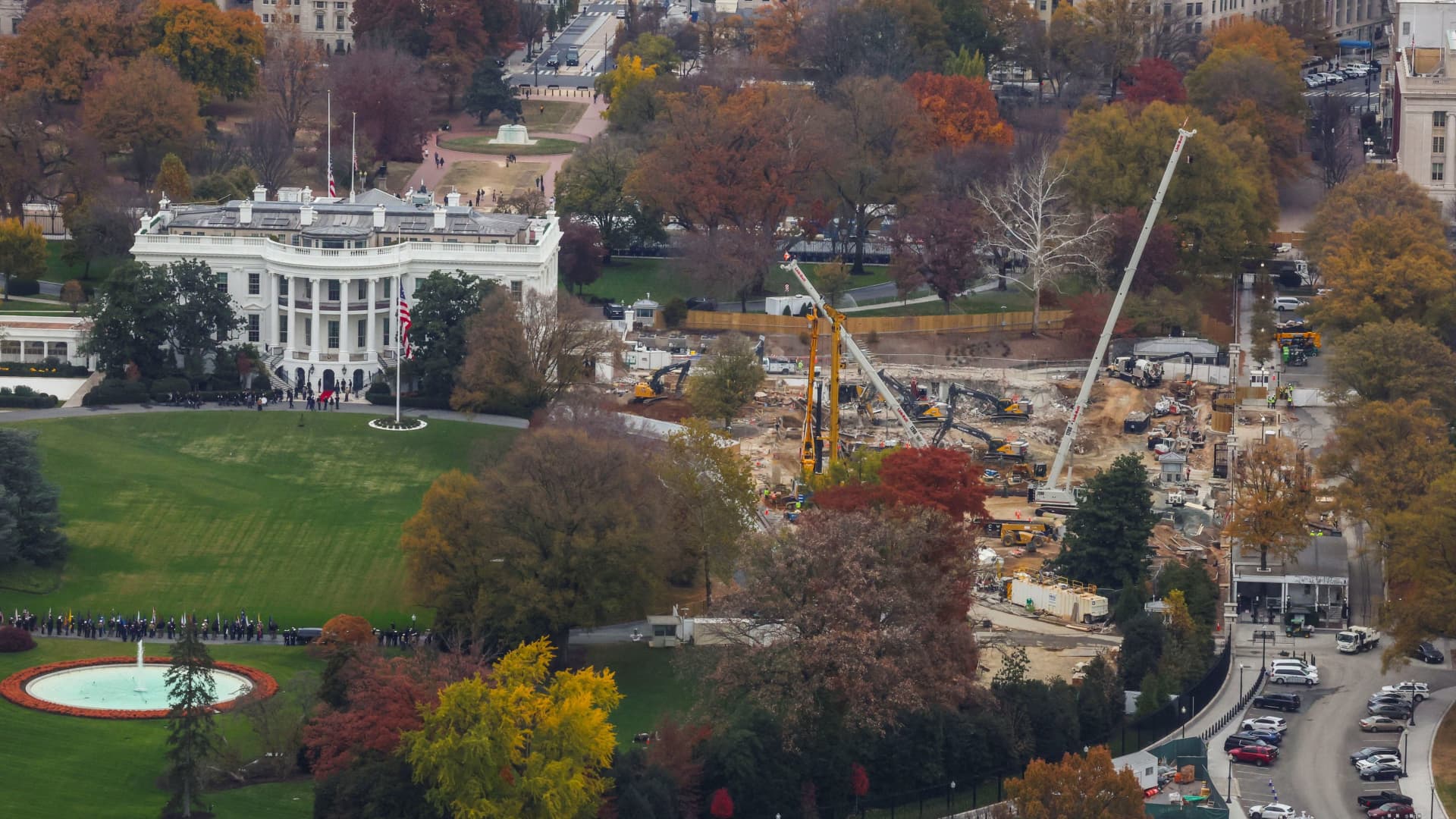
The demolition of the East Wing of the White House during construction of U.S. President Donald Trump’s proposed ballroom is seen from the reopened Washington Monument, following the longest shutdown of the government in Washington, D.C., U.S., Nov. 15, 2025.
Jessica Koscielniak | Reuters
A federal judge in a revised order on Thursday blocked the Trump administration from above-ground construction work on the controversial proposed White House ballroom.
But Judge Richard Leon’s order allows the administration to continue below-ground construction, including work related to national security facilities.
Leon is also allowing above-ground construction “that is strictly necessary to cover, secure, and protect such national security facilities,” as long as that construction does not “lock in the above-ground size and scale of the ballroom,” according to his injunction in U.S. District Court in Washington, D.C.
The order comes five days after the federal Circuit Court of Appeals in D.C. told Leon to clarify his prior order issued on March 31, which enjoined the Trump administration from taking any action to build the planned $400 million, 90,000 square-foot ballroom where the White House’s East Wing once stood. The East Wing was demolished last year to make way for the project at the behest of President Donald Trump.
The appeals court specifically told Leon to reconsider the potential national security implications of blocking the construction.
The National Trust for Historic Preservation in the United States is suing the Trump administration to block the ballroom from being built.
Leon, in two prior decisions, had declined requests by that group to halt the project.
But in his March 31 ruling to issue an injunction against the ballroom, Leon said that no law “come close” to giving Trump the power to build such a structure at the White House without authorization by Congress.
“The President of the United States is the steward of the White House for future generations of First Families. He is not, however, the owner,” Leon wrote in a memorandum opinion explaining his ruling that day.
This is breaking news. Please refresh for updates.
<