Hong Kong to announce tax break to lure global commodity traders
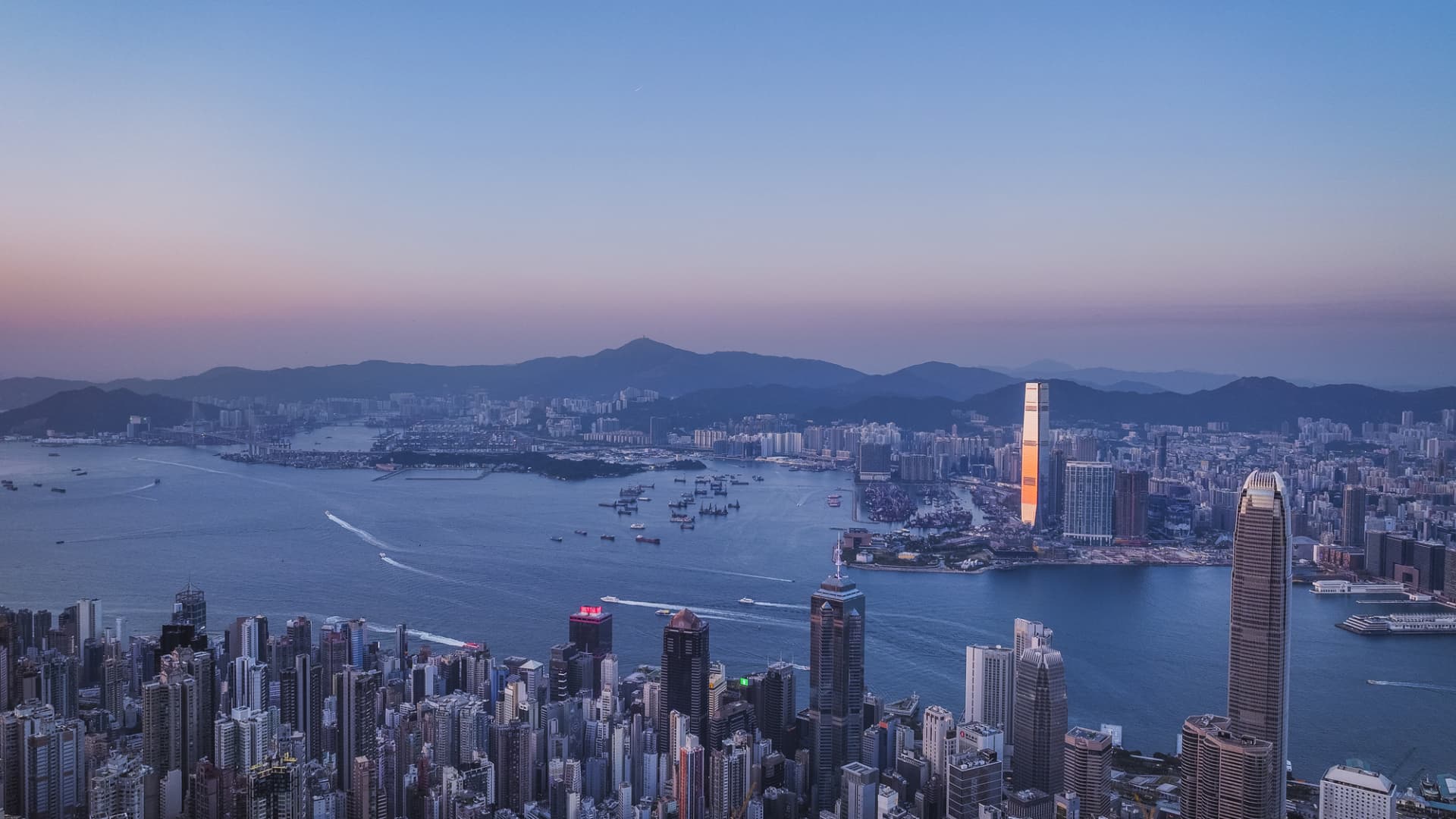
Hong Kong is rolling out a new tax break for commodity traders as it seeks to strengthen its position as a regional trading hub and revive shipping activity amid global supply chain disruptions.
The government plans to introduce a concessionary regime for qualifying traders of physical commodities, halving the tax rate on their profits to 8.25% from the standard 16.5% on eligible trading activities. The scheme will cover key sectors including mining commodities and is aimed at attracting global players to set up or expand operations in the city.
Officials see the move as closely tied to Hong Kong’s maritime ambitions.
Commodity trading is integral to the maritime industry, Moses Cheng, chairman of the Hong Kong Maritime and Port Development Board, told CNBC.
By drawing more traders to Hong Kong, authorities expect a knock-on boost to shipping demand. “By introducing this tax concession… it would enhance the volume of shipping activities that are needed, and that would undoubtedly benefit the maritime industry,” Cheng said.
Hong Kong has long played a supporting role in global commodity trading, leveraging its strengths in trade finance, shipping services and legal arbitration, though it lags established hubs such as Singapore, Geneva and London where major trading houses are headquartered.
Hong Kong’s participation in commodity trading remains “relatively limited” compared with other global hubs, according to a 2025 report by the Financial Services Development Council.
The city ranks among the world’s busiest container ports despite a steady decline in throughput over the past decade as cargo shifted to mainland Chinese ports.
Hong Kong handled about 13.7 million twenty-foot equivalent units (TEUs) in 2024, remaining “one of the world’s busiest container ports,” according to the Hong Kong Maritime and Port Development Board.
The trading push comes as the Middle East war disrupts commodity flows and drives up costs across global supply chains. Higher oil prices have sharply increased operating expenses for shipping firms, squeezing margins and forcing governments, including Hong Kong, to step in with temporary support.
“The significant increase in the oil price is impacting not just the shipping industry… it’s impacting every aspect of the commercial world,” Cheng said.
While disruptions such as the closure of the Strait of Hormuz have had a more limited direct impact on container traffic into Hong Kong compared to regional peers, rerouting and elevated fuel costs are adding to industry pressures. “The unrest in the Middle East would result in shipping companies having to reroute… and that will significantly increase the cost of operating,” said Cheng.
Against that backdrop, Hong Kong is positioning itself as a stable base for commodity trading, leveraging its legal framework, financial services, and connectivity under the “one country, two systems” arrangement.
Cheng said the new tax incentive is designed to sharpen that edge. “I think… with this new tax incentive, I’m sure that commodity traders will be attracted to base themselves in Hong Kong,” he said.
By comparison with Hong Kong, Singapore does not impose a single blanket tax rate for physical commodity trading, but instead offers targeted incentives for qualifying firms. Under its Global Trader Programme, administered by Enterprise Singapore, eligible commodity traders can benefit from concessionary tax rates of 5%–10% on qualifying trading income, covering activities across oil, metals, and agricultural products.
Established hubs such as Geneva and London also do not offer commodity-specific tax regimes, with trading firms generally taxed under standard corporate income tax systems. In Switzerland, combined federal and cantonal rates typically range from around 11%–22%, including about 14%–15% in Geneva, while the U.K. applies a 25% corporate tax rate, or 19% for smaller firms.
<