
Goldman sees ‘undervalued’ opportunities in South Korea
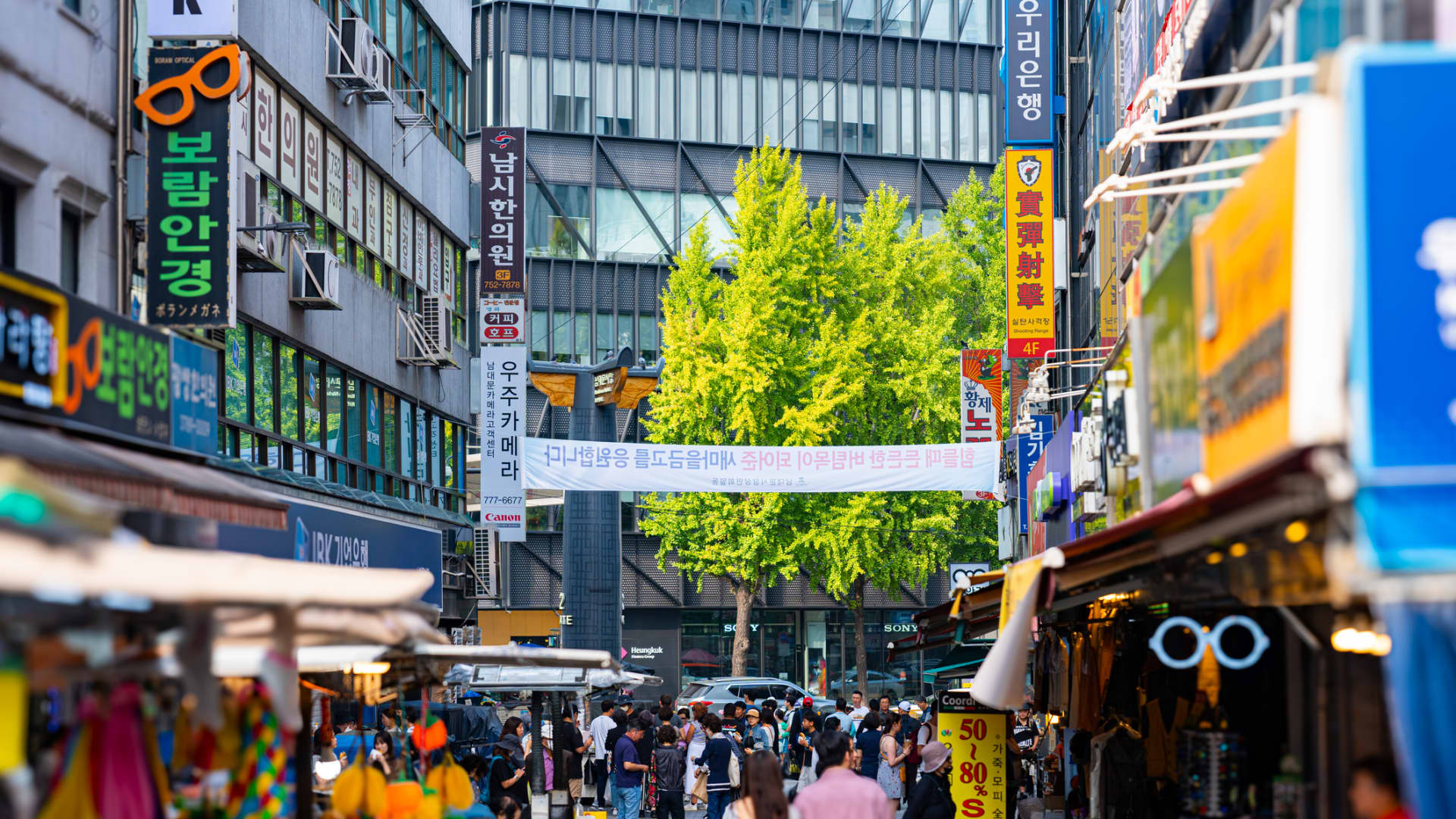
South Korea’s Kospi index was the best-performing major equity market of 2025, notching a 75% return over the year largely thanks to blockbuster demand for its domestic memory chipmakers. Since then, the index has rallied a further 40%, with April’s performance erasing March’s heavy losses felt during the depths of the Iran conflict. But South Korea’s market has been characterized by volatility of late, with the Kospi experiencing some of the most outsized gyrations as a result of its concentration in a handful of stocks, as well as speculative positioning of retail traders. But analysts at Goldman Sachs think the structural drivers behind South Korea’s return to form are still intact. The research team wrote in a note published this week that South Korean reforms to corporate governance are improving “incrementally,” leaving room for “undervalued” opportunities across the market. South Korea has traditionally lagged its emerging market peers as a result of its notorious ‘chaebols’: family-owned conglomerates that dominate entire industries with a history of suppressing share prices and dividends to shareholders. For years this was known as the ‘Korea discount’, which kept stocks trading at lower price-to-earnings ratios than global peers. A similar story of corporate governance reform unfolded in Japan at the beginning of the 2010s, which eventually unlocked significant returns to shareholders. For Goldman, Korea is still in the early stages of that development, and has a way to go before it can be considered a success. “Year-to-date performance has been largely driven by earnings upgrades, particularly on the back of strong AI-related semiconductor demand,” the analysts wrote. “The market is still at a discount relative to regional and global peers, despite sustained progress in enhancing shareholder value through the recent AGM season and ongoing corporate actions.” Goldman praised the increased number of share buybacks and increased treasury share cancellations as two examples of better governance, despite identifying 70% of the Kospi’s constituents as trading below book value. “Despite the growing number of shareholder proposals, governance changes have remained largely incremental, with corporates partially meeting investor expectations,” they added. “Overall, the latest AGM season reinforces that the market is transitioning to early-stage implementation of governance reform, with meaningful outcomes likely to be back-end loaded into upcoming cycles.” However, South Korea is particularly reliant on energy imports and the potential for a prolonged price shock could send shockwaves across its industries. As a result, the Iran war is “serving as a significant turning point” for South Korea to shift to renewable energy and away from oil, the country’s energy minister said. In an interview with CNBC’s Lisa Kim, South Korea’s Minister of Climate, Energy and Environment Kim Sung-hwan said there is a “growing national consensus that we must undergo a fundamental energy transition.” Seoul has committed to achieving 100 gigawatts of renewable energy capacity by 2030. Currently, South Korea’s total renewable energy capacity stands at 37 gigawatts, according to the Renewable Energy Institute.
<