
Bulgaria votes as pro-Russian former president leads the polls
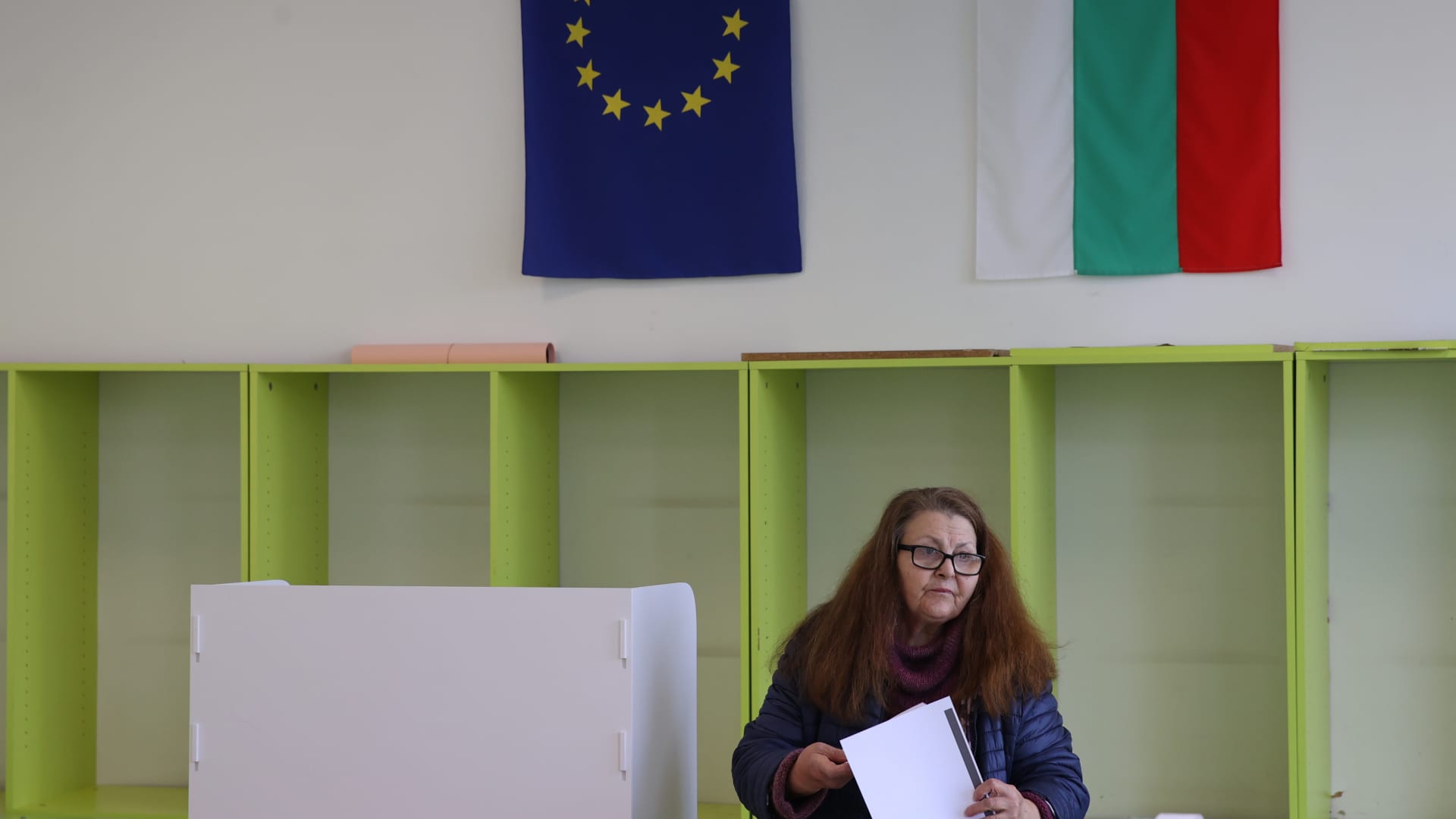
KARDZALI, BULGARIA – APRIL 19: People vote for the general elections at a polling station in Kardzali, Bulgaria on April 19, 2026. (Photo by Ayhan Mehmet/Anadolu via Getty Images)
Anadolu | Anadolu | Getty Images
Bulgarians went to the polls on Sunday in the eighth parliamentary election in five years, with the clear frontrunner, pro-Russian former President Rumen Radev, promising to stamp out corruption and end a spiral of weak, short-lived governments.
Radev, a eurosceptic former fighter pilot who opposes military support for Ukraine’s war effort against Moscow, stepped down from the presidency in January to run in the election, which comes after mass protests forced out the previous government in December.
A slick social media campaign, deep coffers and a pledge of stability have boosted Radev’s support in the Balkan country of about 6.5 million, where voters are weary of repeated snap polls and a small group of veteran politicians widely seen as corrupt.
“We need, finally, a path to democratic, modern European Bulgaria,” Radev said after casting his ballot in Sofia, adding that he wants to “develop practical relations with Russia based on mutual respect and equal treatment.”
Polls close at 8 p.m. (1700 GMT). Exit polls are expected as the vote closes and preliminary results could come later on Sunday or Monday.
Winner will have work to do
Bulgaria has developed rapidly since the fall of communism in 1989 and joined the European Union in 2007. Life expectancy has risen sharply, unemployment is the lowest in the EU, and the economy has greater safeguards since joining the euro zone in January.
But it lags other EU countries in many metrics, and graft remains endemic, including in elections, where vote-buying is rife.
The cost of living has become a particular issue since Bulgaria, a member of NATO, adopted the euro. The previous government fell amid protests against a new budget proposing tax rises and higher social security contributions.
That and the recent political crisis appear to be as important to voters as Radev’s calls to improve relations with Moscow or resume Russian oil and gas flows to Europe.
“Politicians need to come together and make decisions – not have constant conflicts and arguments, going from one election to another without getting anything done,” said Bogomil Bardarski, a 72-year-old metalworker who voted in Sofia.
Radev has strong lead in polls
Radev’s participation has supercharged voter interest. A poll by Sofia-based Alpha Research forecasts turnout of around 60%, nearly double the 34% recorded in June 2024.
That and other polls show Radev’s Progressive Bulgaria securing about 35% of the vote. If confirmed, that would mark one of the strongest results by a single party in years, though still short of a parliamentary majority.
The figures highlight frustration with the long dominance of the GERB party led by former Prime Minister Boyko Borissov, which trails in second place with about 18%, and the Movement for Rights and Freedoms, whose leader Delyan Peevski is under U.S. and UK sanctions for corruption.
One likely governing partner, the We Continue the Change-Democratic Bulgaria (PP-DB) coalition, also believes reform is needed. However, its pro-European stance could temper Radev’s Russian agenda. Borissov on Sunday voiced support for Ukraine and highlighted the gains his party has made with European integration.
“[GERB] have taken the country into the euro zone, where the anchor is very strong at the moment. I hope it will hold and won’t allow us to be pulled eastward,” he said after voting.
<