Brockman rebuts Musk’s take on startup’s history
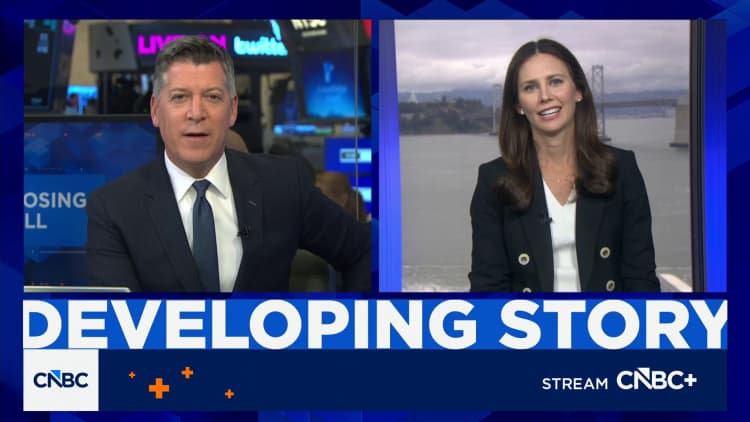

OpenAI President Greg Brockman concluded his testimony on Tuesday, where he largely rebutted Elon Musk’s account of the early years of the startup and negotiations that occurred at the company.
Brockman testified that he never made any commitments to Musk about the company’s corporate structure, and he never heard anyone else make them. He emphasized that OpenAI is still governed by a nonprofit.
“This entity remains a nonprofit,” Brockman said, referring to the OpenAI foundation. “It is the best-resourced nonprofit in the world.”
The trial for Musk’s lawsuit against the artificial intelligence company began its second week on Monday.
Musk sued OpenAI, Brockman and CEO Sam Altman two years ago, alleging that they violated an obligation to keep the company a nonprofit. Musk testified during the trial’s first week of proceedings, where he repeatedly accused Altman and Brockman of trying to “steal a charity.”
Brockman, who spoke from the witness stand in federal court in Oakland, California, over the course of two days, also revealed that Musk had enlisted several OpenAI employees to do months of free work for him at Tesla, Musk’s electric vehicle company.
That work mainly included efforts to overhaul the company’s approach to developing self-driving technology as part of the Autopilot team there in 2017.
During his two days on the stand, Brockman answered questions about his personal financial ambitions, his understanding of OpenAI’s structure and Musk’s involvement at the company, which they co-founded with other executives in 2015.
In Musk’s testimony last week, the Tesla and SpaceX CEO said that the time, money and resources he poured into OpenAI had been integral to the company’s success. He repeatedly said that he helped recruit the company’s top talent.
Brockman said Tuesday that while Musk was helpful in convincing some employees to take the leap to join OpenAI, he was a polarizing figure for others.
“Elon had a reputation of being an extremely hard driver,” Brockman said. He added that “certain candidates were very attracted” by Musk’s involvement at OpenAI, and that “certain candidates were very turned off.”
Musk testified last week that a former OpenAI researcher named Andrej Karpathy joined Tesla, but only after he had planned to leave the startup already.
Brockman said that Musk, after he hired Karpathy, approached him with “an apology and a confession,” about the hire, and that neither Musk nor Karpathy had told him the researcher planned to leave OpenAI before that.
Musk was generally not very available for meetings and conversations, Brockman said, so he relied on employees, including Sam Teller and former OpenAI board member Shivon Zilis, as proxies.
Brockman also testified that Musk never expressed interest in open sourcing OpenAI’s technology, nor did he move to formally require it of the nonprofit.
Musk had repeatedly suggested on the stand that open sourcing OpenAI’s models was supposed to be a core tenant of the organization.
“Honestly, it was not a topic of conversation,” Brockman said.
Around 2017, Musk, Altman and Brockman participated in discussions about OpenAI’s direction, and they explored establishing a for-profit subsidiary where Musk would have an equity stake. Musk left the company’s board in 2018, and OpenAI established a for-profit arm following his departure.
Brockman testified on Tuesday about Musk’s hot-tempered response to him and other co-founders when they tried to negotiate over who should hold what stakes in a for-profit affiliate of OpenAI.
When their conversation turned to equity, Brockman said “something really changed” in Musk.
“Something just shifted in him. You could sense it. He was angry, he was upset,” Brockman said.
He said Musk declined the proposal during an in-person meeting, then tore a painting of a Tesla Model 3 car off the wall, and began storming out of the room.
Before he left, Brockman said Musk turned and demanded to know when he and his cofounders would be leaving the company. He said he feared Musk might hit him at the time.
Brockman’s finances
On Monday, Musk’s lawyer, Steven Molo, pressed Brockman about his equity stake in OpenAI’s for-profit subsidiary, which is worth roughly $30 billion. Molo repeatedly pointed out that Brockman never followed through on an offer to contribute $100,000 – or any cash – to the nonprofit.
“I did not end up donating, that is true,” Brockman said from the stand.
Brockman kept a journal to document both personal and professional events in his life, and Molo pointed to several entries during his line of questioning, including one excerpt from 2017, which read, “Financially, what will take me to $1B?”
Molo questioned whether Brockman was more interested in funding the nonprofit, or becoming a billionaire and enriching himself. Brockman said that OpenAI’s mission has “always been my primary motivation,” and that fair compensation for his work as a founder was a consideration but a secondary one.
Brockman testified that he thought he would have been “good” with $1 billion worth of shares, and Molo harped on his choice of words repeatedly.
Molo asked Brockman why he had not donated the other $29 billion worth of his equity back to the nonprofit, now known as the OpenAI Foundation. Brockman didn’t have a straightforward answer.
The trial will resume at 8:30 a.m. PT on Wednesday. The mother of four of Musk’s children, former OpenAI board member Shivon Zilis, is expected to testify.

<