
Pentagon taps Shield AI for low-cost missile program
The Shield AI website arranged on a laptop computer in New York, US, on Friday, Feb. 13, 2026.
Michael Nagle | Bloomberg | Getty Images
The U.S. government is partnering with defense tech startup Shield AI as it seeks more affordable drones to combat soaring materials costs amid the war with Iran.
The Office of the Under Secretary of Defense for Research and Engineering on Tuesday said it will integrate Shield AI’s autonomous Hivemind software to power low-cost uncrewed combat attack systems, or LUCAS drones.
Shield said the artificial intelligence software will allow the military to coordinate and adapt swarms of LUCAS drones in a rapidly evolving battlefield environment. The technology also allows platforms to operate, adjust and make decisions without human intervention.
“It’s better to the American taxpayer at the end of the day, because it’s cheaper to destroy a target, but it’s also keeping our war fighters safer,” Brandon Tseng, co-founder and president of Shield, said in an interview with CNBC. “They actually have the tools that they need to go and affect the battlefield.”
Shield and the Pentagon did not disclose the financials of the deal.
The U.S. government is embracing new technology in the war against Iran, as the Middle East nation’s low-cost Shahed drones destroy expensive military systems and reshape the modern battlefield. Defense tech companies like Shield AI are offering solutions, but their tools haven’t been deployed at scale.
LUCAS is one of the major exceptions, and the government is in the market to buy more after a successful run in Iran.
The $35,000 drone, made by Arizona-based SpektreWorks, is a copycat version of the Iranian drones that have wreaked havoc on data centers, embassies and airports.
Tseng expects cheaper military systems like LUCAS, powered by AI, to eventually overtake legacy systems in the military’s arsenal, although that transition could take well over a decade.
Hivemind is Shield’s flagship autonomy platform, which acts as an AI pilot for unmanned systems. Its customers include the U.S. government, defense tech contractors and the Indian Army. The company has also integrated the AI pilot on one-way attack drones in Ukraine and completed its first flight test on one of Anduril’s combat drones in February.
“It’s really about doing everything that we have done in Ukraine onto an American-made platform that is going to be used in volumes,” said Tseng.
The market for defense tech is skyrocketing as President Donald Trump embarks on his ambitious military reindustrialization plans. Those goals included scaling defense manufacturing and shipbuilding and creating a missile defense system akin to Israel’s Iron Dome.
That’s convinced Silicon Valley investors to pour money into the hot sector. Shield AI is fresh off a $2 billion funding round, which valued the defense tech firm at nearly $12.7 billion and ranked 49th on this year’s CNBC Disruptor 50 list. Palmer Luckey-backed Anduril doubled its valuation to more than $60 billion last week.
Tseng expects the system to be fully functional within the next two months, after which it will undergo military testing.
“No one is faster in the world at building AI pilots and then integrating them and then putting them on the battlefield,” he said.
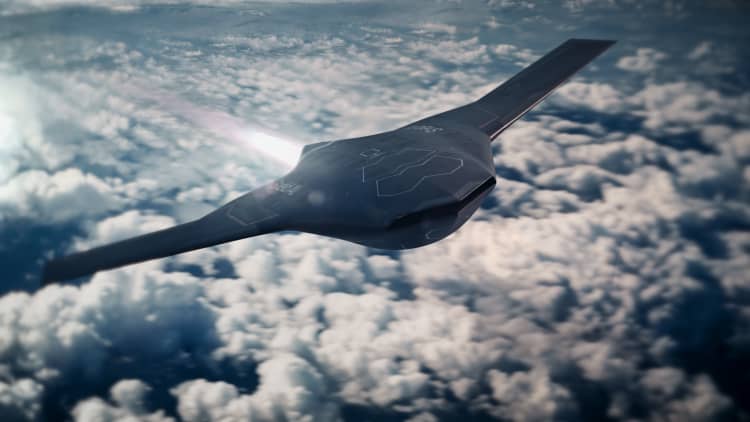
WATCH: A first look at Shield AI’s new AI-piloted fighter drone

<