
2 major developments at Meta may have just put a floor in on the struggling stock
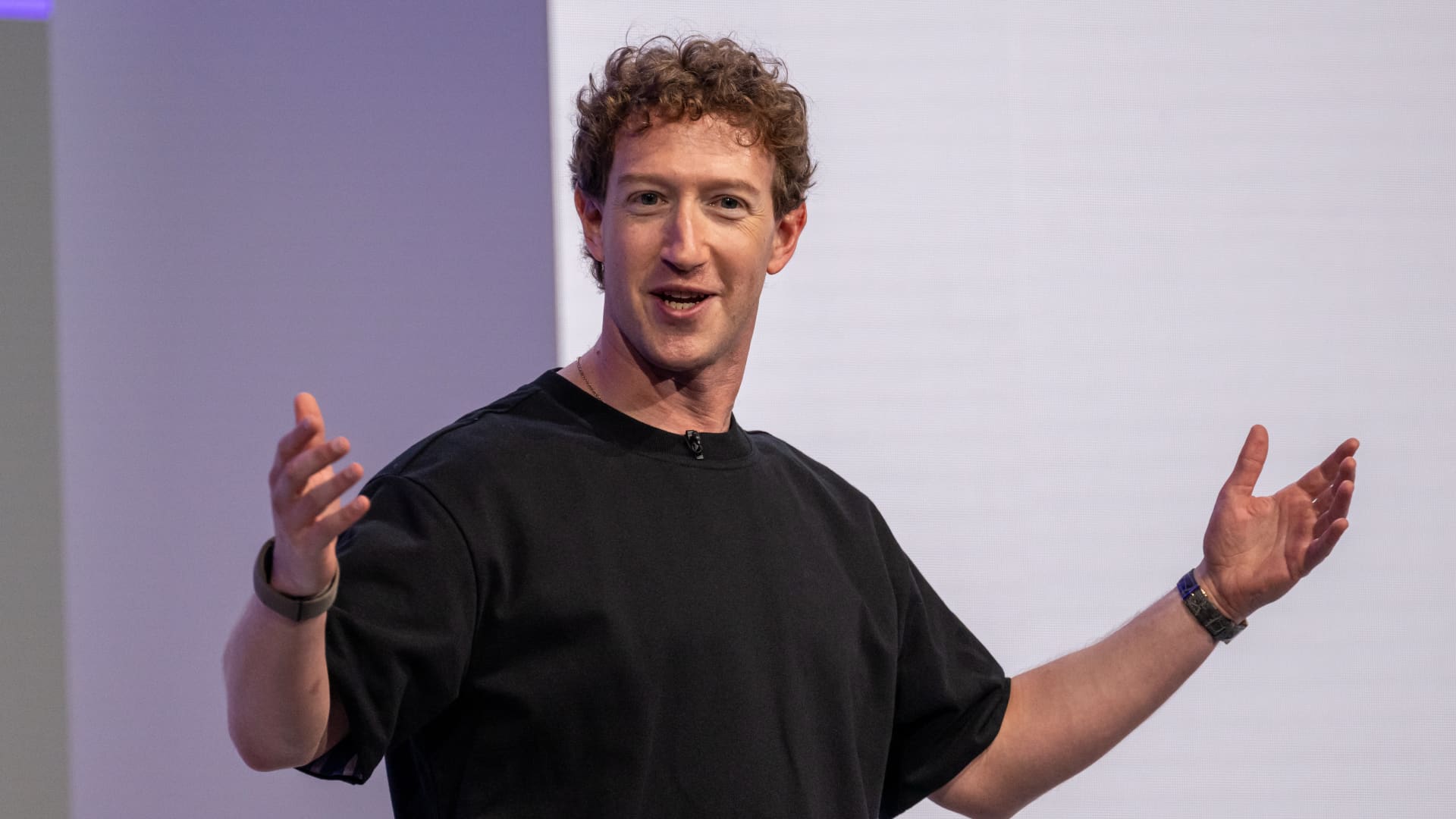
Is now the time to step and buy shares of Meta Platforms ? If concerns about the monetization of artificial intelligence investments and the wait for new revenue streams were keeping you on the sidelines, then two major updates from the company may have just given you the green light. The first came during Meta’s annual shareholder meeting late Wednesday, when CEO Mark Zuckerberg was asked about the possibility of entering the public cloud space. His response? “It’s definitely on the table.” He added that “almost every week there are different companies that come to us from outside asking us to both stand up an API [application programming interface] service or asking if we have compute that they could buy from us at some premium to what we’ve bought it at.” When Zuckerberg uses the industry term “compute,” he’s talking about all the data center infrastructure needed to train and run AI workloads. Meta cloud? Zuckerberg’s cloud commentary is material, not only for how shareholders like the Investing Club think about possible future growth opportunities, but for sentiment as well. Think back to last month, when Meta reported a monster quarter and the stock tanked. Sure, Meta increased its full-year capital expenditure guidance to a greater-than-expected range of $125 billion to $145 billion, up from between $115 billion and $135 billion. The market, however, graded Meta’s spending outlook hike more harshly than Amazon, Alphabet, and Microsoft even as their capex guides were even higher. Wall Street sees Meta at a greater risk of overbuilding and not optimizing its return on investment because it does not have a public cloud service to fall back on. Meta, unlike its megacap brethren, must sop up all the capacity it is building on its own. Any excess can’t be easily rented out to be monetized. The Street is simply more apt to reward those spenders with the infrastructure in place to sell excess compute. It also means less pressure on the cloud companies to provide the best possible AI models themselves for every situation. It’s why they are offering a wide variety of models. They don’t really care which one a client uses, as long as the demand for these models drives demand for the compute they have invested hundreds of billions of dollars in and are now looking to rent out. Standing up a public cloud business at Meta would require more investment — and what better way to blunt worries about spending than driving new revenue streams. Premium tiers That brings us to the second Meta update, which came Wednesday via a Facebook post by the company’s head of product. During a video message, Naomi Gleit detailed a premium tier of subscription choices for Meta’s Family of Apps, more tools for businesses and creators, as well as two new paid options for Meta AI, the company’s large language model. We already knew Facebook, Instagram, and WhatsApp were getting “Plus” subscription tiers, which will provide users with enhanced ways to interact across the suite. For Facebook and Instagram, the Plus tier will cost $3.99 per month; and for WhatsApp, it will cost $2.99 per month. What’s new is that Meta AI will also be getting subscription plans. The lower tier, Meta One Plus, will cost $7.99 per month, while the upgraded tier, Meta One Premium will cost $19.99 per month. Those are for users with more intense compute needs. The free tier will remain for those with more basic needs. For creators and business customers, Meta will soon start to offer the Meta One Essential plan for $14.99 per month, as well as an upgraded Meta One Advanced plan that increases ranking and targeting capabilities. Insight into how Meta might look to monetize its billions in AI capex spend with a cloud service and pushing ahead with paid tiers are perhaps signs that Zuckerberg has had enough. Meta is down nearly 4% year to date versus the S & P 500’s more than 10% gain and the Nasdaq’s over 15% increase. During our May Monthly Meeting on Wednesday, Jim Cramer said that Meta’s 2026 performance is shocking because Zuckerberg is known to be intolerant of underperformance. Last month, on the company’s post-earnings conference call, Zuckerberg was asked about the return on invested capital he sees over the next 12 to 24 months. “Just like anything else that we’ve done over time, the basic milestones that I look at are around, first, technically, are we delivering the quality to enable a great product? Then second, when you have the product, how is it scaling? And then third, you look at the monetization and then you drive up the efficiency of it towards increasing profitability….I don’t think we have a very precise plan for exactly how each product is going to scale month-over-month or anything like that… I think Muse Spark was a very high-quality model. It powers Meta AI, which I think is now a world-class assistant. We have an ability to be able to grow that and have a large amount of engagement. And over the coming quarters, we’re just going to be tracking how do our next set of training runs go, how do our products scale, how excited are we about the products in the pipeline? We’re – right now, we’re very excited. And then we’ll also ramp up monetization over that period of time as well.” (Muse Spark is Meta’s proprietary large language model (LLM), successor to the open-source Llama, and the brains behind Meta AI.) The success of the Meta AI subscriptions, in particular, will heavily rely on the capabilities of the Muse Spark as it puts the company in more direct competition with LLM heavyweights like Google’s Gemini, OpenAI’s ChatGPT, and Anthropic’s Claude. The Family of Apps tiers are more about strengthening the existing revenue stream from social media. Bottom line Both updates are important, while the new Meta AI subscriptions are likely the more near-term new revenue stream opportunity, the neocloud commentary could prove more material to future earnings estimates should we see more of a roadmap here. The Family of Apps tiers are wringing more money out of the existing social media platforms. While not a full-on new product roadmap, the announcements do feel like management’s attempt to let investors peek behind the curtains for reassurance that new revenue streams are most certainly a top priority. Neither is probably enough to move the needle on near-term earnings estimates. But the updates certainly move the needle on sentiment. Will they spark a sustained rally? Time will tell. But a change in the way investors think about Meta stock may just be enough to put in a floor. With shares trading at less than 19 times forward earnings estimates, Meta management was clearly looking to preview monetization opportunities that they were not eager to speak about before the stock’s recent pullback. Remember, long-term investing is not about trying to time rallies. It is about identifying undervalued stocks and CEOs who can’t stand to lose. In our minds, Meta and Zuckerberg check both boxes. (Jim Cramer’s Charitable Trust is long META, AMZN, GOOGL, MSFT. See here for a full list of the stocks.) As a subscriber to the CNBC Investing Club with Jim Cramer, you will receive a trade alert before Jim makes a trade. Jim waits 45 minutes after sending a trade alert before buying or selling a stock in his charitable trust’s portfolio. If Jim has talked about a stock on CNBC TV, he waits 72 hours after issuing the trade alert before executing the trade. THE ABOVE INVESTING CLUB INFORMATION IS SUBJECT TO OUR TERMS AND CONDITIONS AND PRIVACY POLICY , TOGETHER WITH OUR DISCLAIMER . NO FIDUCIARY OBLIGATION OR DUTY EXISTS, OR IS CREATED, BY VIRTUE OF YOUR RECEIPT OF ANY INFORMATION PROVIDED IN CONNECTION WITH THE INVESTING CLUB. NO SPECIFIC OUTCOME OR PROFIT IS GUARANTEED.
<