Laurence Olivier honored with a plaque at his London childhood home
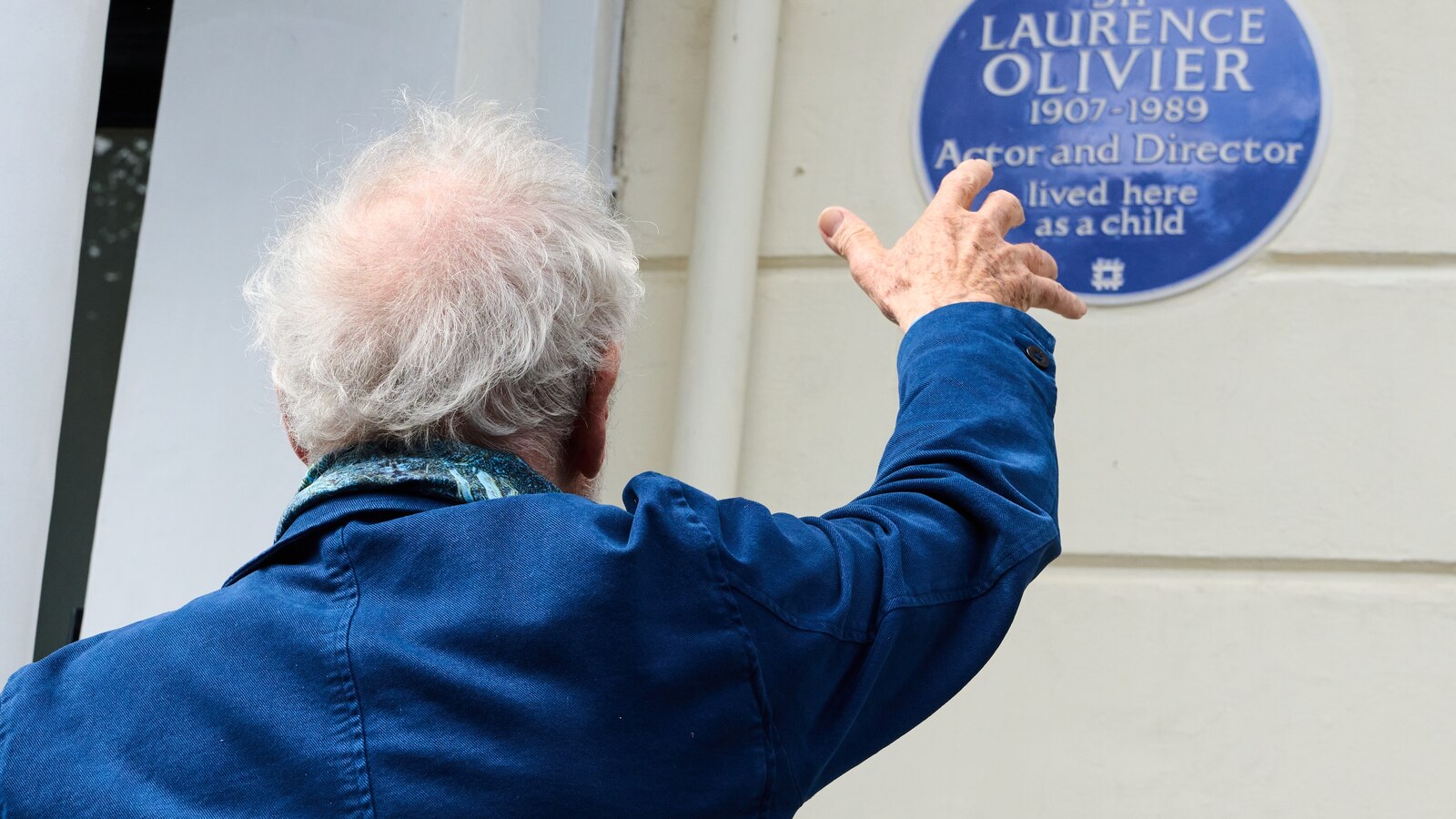
LONDON — Laurence Olivier, arguably Britain’s greatest ever stage actor, was honored Wednesday with a blue plaque attached to the central London property where he lived as a child.
Unveiled by Ian McKellen, the plaque at 22 Lupus Street in Pimlico marks the place where Olivier began acting as a child.
“For those of us who were lucky enough to have seen him in the theater, it’s of course quite right that, because he was the leader of our profession for so many years, it’s appropriate that this should be put up,” McKellen told The Associated Press after the unveiling. “Actors go out of fashion very quickly, but I’ve a feeling that this man’s name will never be forgotten, and because of this plaque.”
Olivier lived at the property between the ages of 6 and 11. While there, he reportedly transformed a wooden box and blue curtains into a makeshift stage where he sang, danced, and acted for hours at a time.
Olivier was venerated as a Shakespearean actor, playing many iconic protagonists in London including Hamlet, Henry V, Macbeth and, controversially, Othello. For his role as Hamlet, Olivier won his only Academy Award for best actor in 1949. Other famous screen roles include ones in “Rebecca,” “Wuthering Heights”,” “Marathon Man” and “Sleuth.”
London owes much to Olivier, who died at age 82 in 1989.
He campaigned for the establishment of the National Theatre. The building that now houses the theatre officially opened in 1976 and its largest auditorium is named after Olivier.
“Laurence Olivier transformed British theater and film through the brilliance, range and intensity of his performances,” said English Heritage senior historian Howard Spencer. “The plaque celebrates the formative home where one of Britain’s greatest cultural figures first found his voice as an actor.”
The Olivier Awards, which celebrate London’s theater scene, were named in his honor.
The London blue plaque program began more than 150 years ago. The plaques commemorate notable people who made London home at some point. There are more than 900 official plaques in the capital.
The first plaque commemorated the poet Lord Byron in 1867 but the house was later demolished. The oldest surviving plaque commemorates France’s final emperor, Napoleon III.
<