
How to get SpaceX stock — without buying the IPO
Elon Musk is photographed at SpaceX in Brownsville, Texas.
Marvin Joseph | The Washington Post | Getty Images
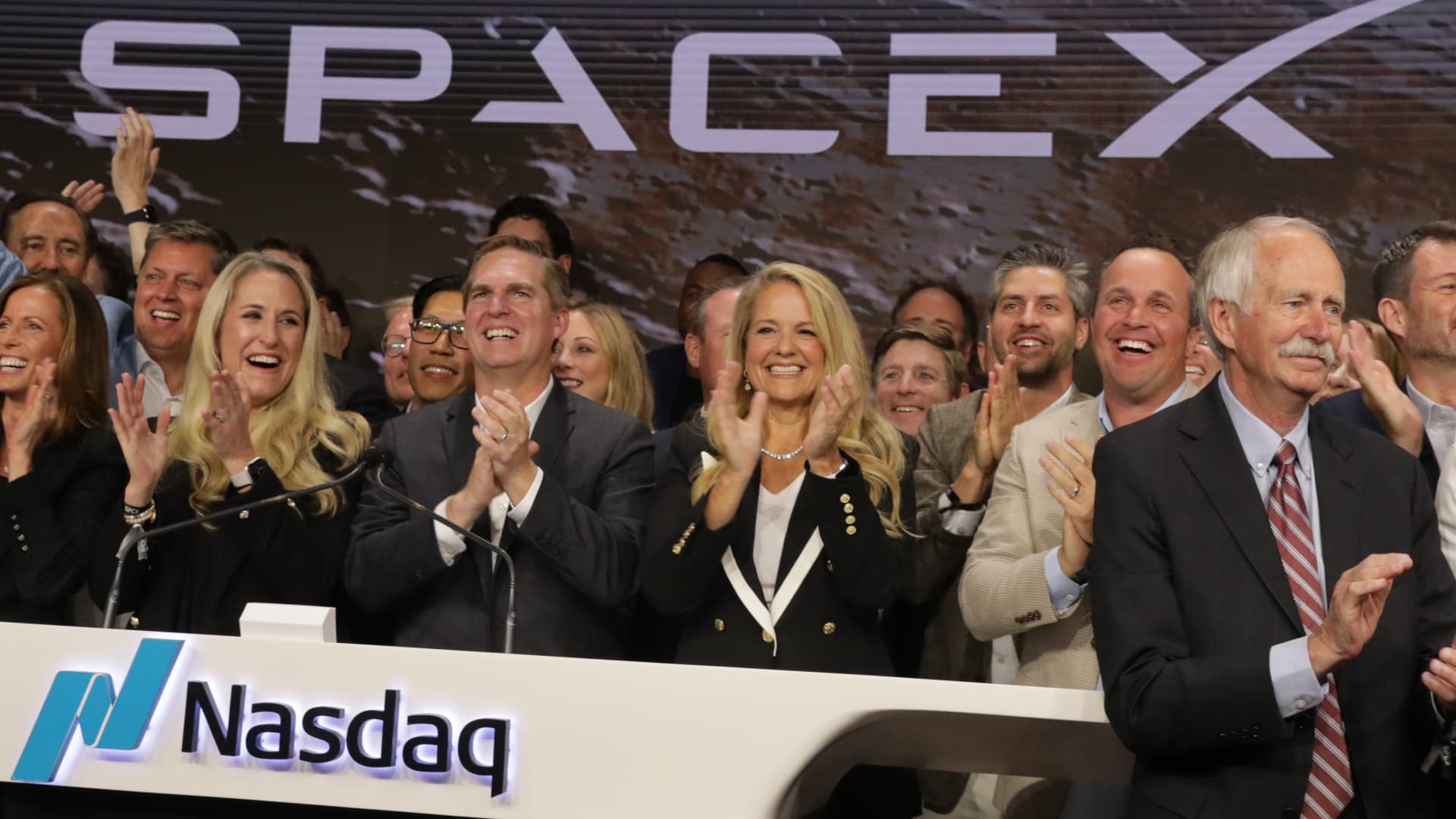
The SpaceX initial public offering on Friday is poised to be the biggest ever — and is generating a lot of buzz.
But IPOs can carry dangers for the average investor, according to finance experts.
For starters, stocks are often unprofitable in the early period after an IPO, experts said. And buying individual companies — instead of investment funds with a broadly diversified basket of stocks — can make that volatility more acute for unwary investors due to their concentrated positions.
There’s good news, though: Investors who want a piece of SpaceX don’t have to buy the stock outright.
There are ample mutual funds and exchange-traded funds that hold SpaceX positions, or will do so after the company goes public. They would hold the stock as one sliver of a broader investment portfolio.
The same is true of other highly anticipated, blockbuster IPOs slated for this year, like those of Anthropic and OpenAI, experts said.
“There will be other ways investors can access the stock, other than buying the IPO,” said Zachary Evens, an analyst of passive strategies at Morningstar.
At $135 per share, SpaceX would be valued at nearly $1.8 trillion, making it the seventh-biggest company in the U.S. by market capitalization. The IPO is poised to make CEO Elon Musk the world’s first trillionaire.
How to get access to SpaceX in index funds
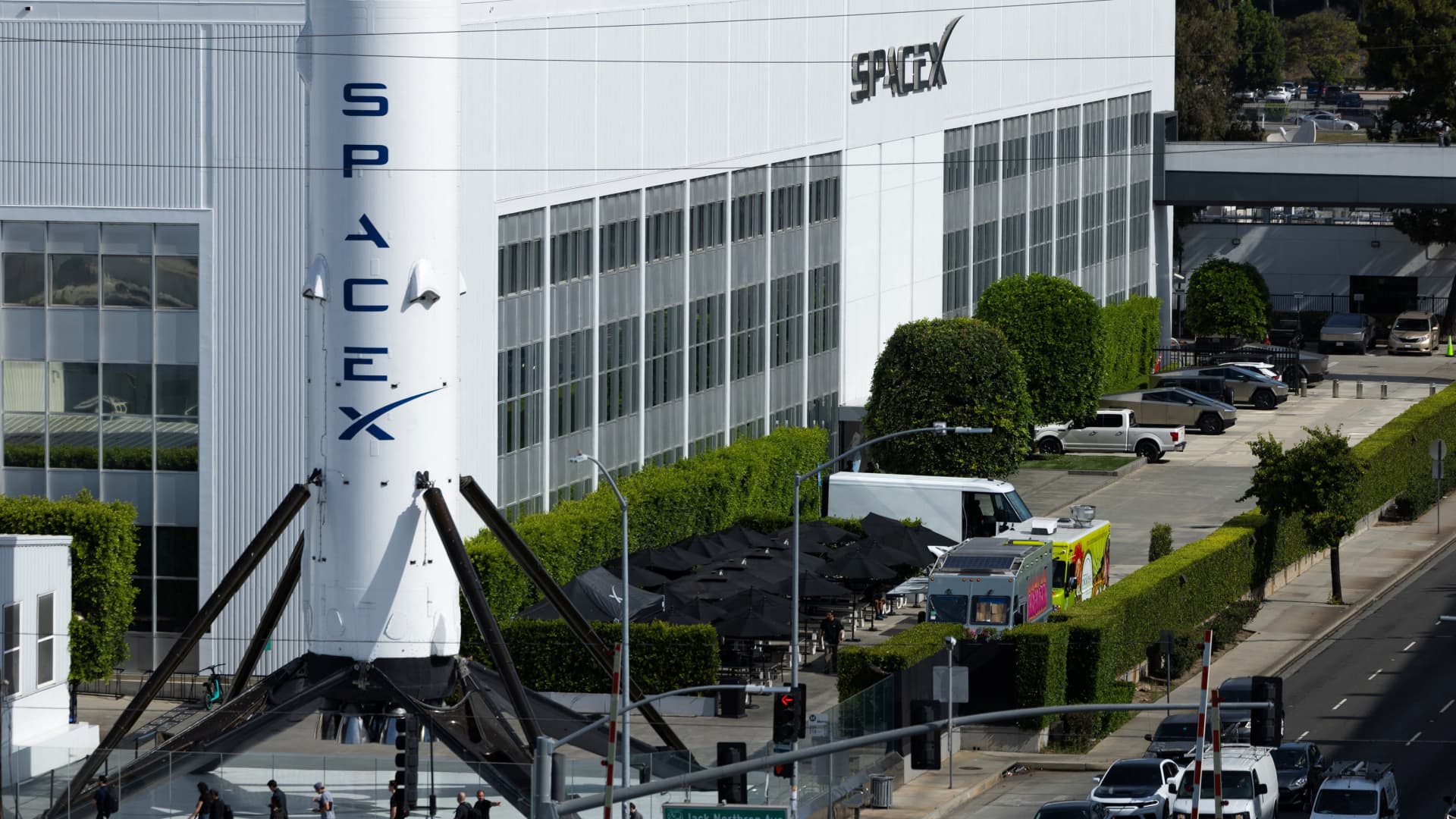
Vehicles drive past a SpaceX Falcon 9 rocket displayed outside a Space Exploration Technologies Corp. facility in Hawthorne, California, on June 8, 2026.
Patrick T. Fallon | Afp | Getty Images
The universe of investment funds for retail investors generally falls into two categories: those that are actively managed and others that are passively managed.
The latter, known as index funds, are designed to track the broad performance of the stock market via a specific market index. Data shows that, over the long term, such funds generally outperform those in which money managers actively pick stocks.
Many index fund investors will get access to SpaceX within days or weeks following the IPO, experts said.

The timeline depends on the specific criteria established by various index providers — and ranges from a few days to more than a year.
For example, the Russell U.S. indexes can add mega-cap companies like SpaceX into their indexes after five days of trading, Evens said.
The same timeline applies to indexes provided by FTSE, CRSP and MSCI, according to Vanguard Group.
Here’s what this means for investors: Those with shares in index mutual funds or ETFs that track these indexes, such as the Russell 1000 or CRSP U.S. Total Stock Market Index, will own a piece of SpaceX after that five-day period, Evens said. Morningstar owns CRSP Market Indexes.
Examples of such funds include the iShares Russell 1000 ETF (IWB) and the Vanguard Total Stock Market ETF (VTI), Evens said.
“The inclusion of new entrants after the end of the fifth day of trading, rather than immediately on listing, should help address any immediate post-IPO share price volatility,” according to an article by London Stock Exchange Group, which owns the FTSE and Russell indexes.
Other index providers have adopted a slightly longer timeline.
MSCI has a 10-day timeline, for example.
Nasdaq adds a stock to the Nasdaq 100 index 15 trading days after its IPO if it is among the top 40 stocks, as SpaceX will be; otherwise, the timeline elongates to about three months.

Some of the index providers, including Nasdaq and FTSE Russell, relaxed their inclusion policies this year to “fast-track” the adoption of mega-IPOs into their respective indexes.
“Index methodologies vary, but historically, most have required new listings to ‘season’ for several months following their entry into the public market,” according to Charles Schwab. “This period gives stocks time to demonstrate their investability before being added to an index.”
Accelerating the timeline helps the index more closely represent the U.S. stock market as a whole and minimizes deviation from the market’s performance, according to LSEG.
Sen. Elizabeth Warren, D-Mass., published a letter to index providers on Thursday questioning those fast-track policies.
“This wave of changes by your firms raise significant investor protection concerns, particularly amid reports that SpaceX lobbied for ‘quicker entry into your indexes,'” Warren wrote. “For the millions of Americans invested in index funds, the changes may lead to the automatic purchase of billions of dollars of SpaceX stock without them having any say in the matter.”
Why it may take years for SpaceX to join the S&P 500

Meanwhile, investors in the S&P 500 — perhaps the best known of the stock indexes — may have to wait years for SpaceX to join the ranks.
The provider, S&P Dow Jones, requires companies to be public for at least 12 months to be eligible for inclusion in the S&P 500. Additionally, the company must be profitable — in other words, it must post positive earnings for its most recent quarter, and over the last four quarters combined, Evens said.
Tesla (TSLA) notably took about 10 years to be added to the S&P 500 after its IPO, Evens said.
“So, SpaceX will not be joining the S&P 500 — and that’s by far the index with the most amount of money indexed to it,” said Jay Ritter, director of The IPO Initiative at the University of Florida.
“With SpaceX, the profitability requirement is likely to hold up their inclusion for a number of years,” Ritter said.
However, this timeline doesn’t apply to all S&P indexes — for example, the S&P Total Market Index can include SpaceX after five trading days, according to Vanguard.
Ultimately, SpaceX would likely account for a small piece of the overall index mutual funds and ETFs, experts said.
For example, it would amount to roughly 0.1% of the Vanguard Total Stock Market fund and about 0.6% of the Invesco QQQ ETF, which tracks the Nasdaq 100, Ritter said.
Those weightings can rise organically over time as early investors, founders and employees sell additional shares in the months after an IPO, according to Vanguard.
How to get access to SpaceX in active funds
SpaceX initial public offering signage is displayed at the Bank of America building in New York, U.S., June 4, 2026.
Jeenah Moon | Reuters
Investors in actively managed mutual funds and ETFs can get a piece of SpaceX — and other mega-IPOs this year — without a lag.
Some of these funds have established large pre-IPO positions that dwarf those of index funds.
For example, eight active funds — including mutual funds, ETFs and closed-end funds — held positions in SpaceX that exceeded 10% of their net asset value, according to Morningstar data as of June 1.
Those funds, from most to least exposure, are: the Baron Partners Fund, Baron Asset Fund, Baron Focused Growth Fund, Baron Global Opportunity Fund, The Private Shares Fund, Baron Opportunity Fund, ERShares Private-Public Crossover ETF and Ark Venture Fund, according to Morningstar.
SpaceX accounted for 37% of assets in the Baron Partners mutual fund, according to Morningstar.

However, those holdings could get diluted if investors crowd into such offerings, experts said.
“Paradoxically, the more popular these [funds] become with investors, the greater the possibility that influx of assets will dilute the SpaceX weighting, thereby potentially lessening the very thing it’s being so sought for in the first place: its potential to contribute to performance,” Jeffrey Ptak, managing director for Morningstar Research Services at Morningstar, wrote last week.
Of course, investors who hold active funds with large SpaceX positions are more vulnerable to big swings in stock price, experts said.
Active funds also tend to be more expensive than index funds, which is one reason why index funds tend to outperform their actively managed counterparts over the long term, they said.
The risk of buying an IPO
Traders work on the floor of the New York Stock Exchange (NYSE) in New York City.
Spencer Platt | Getty Images
The “cheapest and most direct” way of buying SpaceX would be to purchase the stock on an exchange after it lists on Friday, Evens said.
But buying individual stocks generally carries greater financial risks than buying a basket of diversified securities — and those risks are heightened in the early days of an IPO, Ritter said.
“The most likely outcome with the SpaceX IPO is it will jump on the first day, probably underperform the market during the next year and during the next three years,” said Ritter, citing historical precedent.
With any stock, there’s always a chance of earning a big payoff — but the probability of losing money on an individual security is higher than the probability of gaining money, Ritter said. It’s akin to gambling, he said.
Additionally, because the SpaceX valuation is already so high, “the probability of a really big gain, in my opinion, just is not there,” he said.
There could be benefits to holding single stocks, too.
Investors who do lose money amid volatility can sell that holding and use the loss to offset any capital gains taxes on their winning investments, a strategy called “tax-loss harvesting.”
“The ability to harvest tax losses and let your winners ride is one reason why tax-savvy investors might indeed want to own individual stocks rather than funds,” Ritter said.
<