Buffett successor Greg Abel faces first big test as Berkshire Hathaway CEO. Did he pass it?
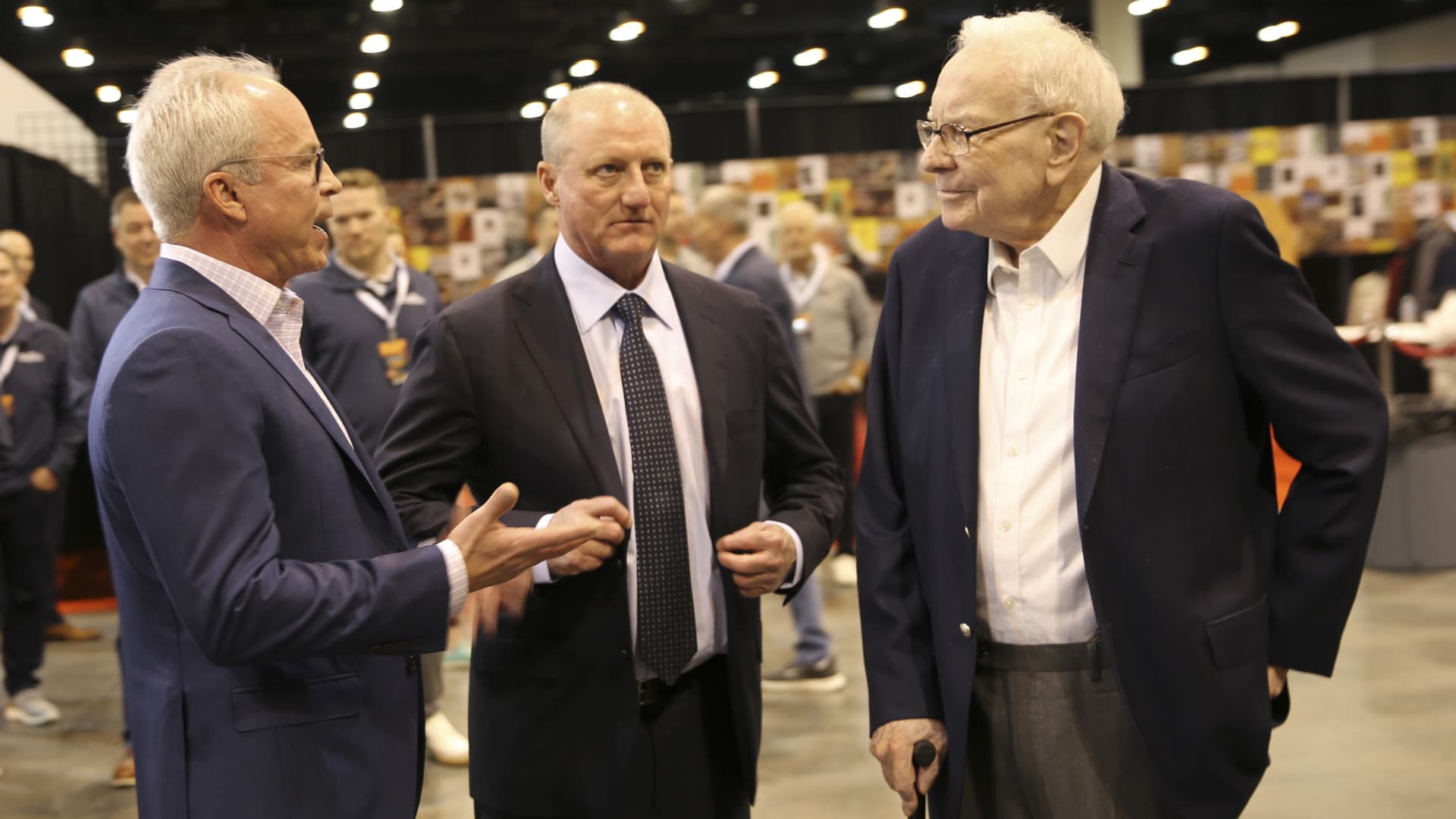
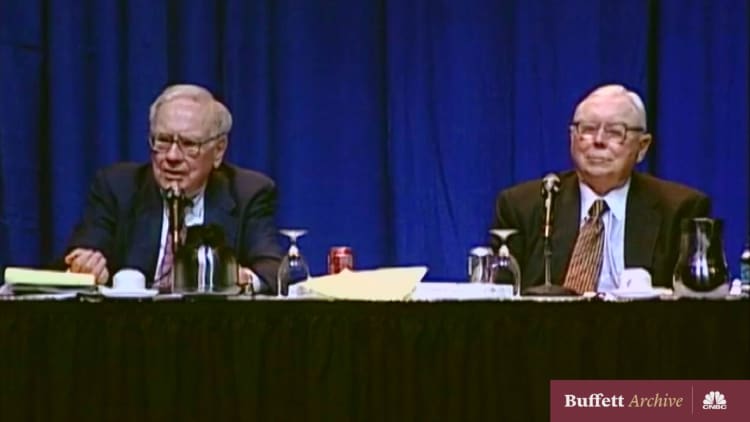
Shareholders and analysts largely gave Greg Abel high marks for his first annual shareholder letter as chief executive of Berkshire Hathaway , praising his clear commitment to preserving the company’s long-standing values and operating philosophy while addressing lingering questions about capital allocation in the post-Buffett era. Abel, who succeeded Warren Buffett as CEO at the start of 2026, used the letter to outline a clear framework of foundational values centered on financial strength and disciplined investing. For now, many investors appear satisfied that Abel has preserved the blueprint Buffett carefully orchestrated over six decades. “I think it was important that he emphasized that Warren may not be leading Berkshire, but Berkshire as an entity continues along the same path with the same values,” said Cathy Seifert, an analyst at CFRA Research. “And I think in that regard, he nailed it. I give the letter an A, because I think he did what he needed to do. It was deferential, but also gave enough specifics [on] a number of the unanswered questions that have been circling around.” Big questions answered Among those questions was who would ultimately oversee Berkshire’s stock portfolio, an issue Abel addressed directly by stating that responsibility resides with him as CEO. Shareholders also received clarity on whether the new CEO would alter Berkshire’s long-standing stance on dividends and share repurchases. Abel reaffirmed that the conglomerate has no plans to initiate a dividend, reiterating the policy that Berkshire will not pay one so long as each dollar of retained earnings is likely to create more than a dollar of market value. On buybacks, Abel signaled continuity as well, saying repurchases remain a capital allocation tool but only when Berkshire shares trade below intrinsic value and without compromising liquidity. “I thought that was an exceptional letter. Laid out the framework for how he will move Berkshire forward while acknowledging some areas for improvement. Really nice,” said Bill Stone, chief investment officer at Glenview Trust and a Berkshire shareholder. Willingness to spend cash Berkshire’s cash pile exceeded $370 billion at the end of 2025 , a figure that has fueled debate among shareholders about whether the conglomerate has been too cautious. In his letter, Abel framed the balance as strategic “dry powder,” capital that allows Berkshire to move swiftly when compelling opportunities arise without compromising its financial resilience. Abel made clear that the cash is meant to be deployed when valuations warrant, pushing back on any suggestion that Berkshire is retreating from investing. He reiterated that the company will always prefer ownership of productive businesses over holding Treasuries. “That tells me that ideally he would like to deploy more of that cash,” Seifert said. “The other thing that I thought was interesting in that regard was he mentioned the notion of dry powder. That’s a very private equity expression. I just thought it was interesting.” Macrae Sykes, portfolio manager of the Gabelli Financial Services Opportunities ETF that owns Berkshire as a top holding, said Abel delivered what he described as a “gold medal” performance in his first annual letter, noting that the CEO methodically reviewed Berkshire’s major business segments and laid out a coherent roadmap for the future. “Overall, showed humility, expressed clarity in communication and confidence in his role as the new CEO. No doubt, shareholders should be convinced he has a comprehensive understanding of the Berkshire equity,” Sykes said. The real big test Even as investors praised the tone and structure of Abel’s debut letter, analysts cautioned that the real test is still ahead. It is one thing to articulate principles and lay out a disciplined framework. It is another to deliver results, particularly after a disappointing earnings report. Berkshire reported a sharp decline in operating earnings for the fourth quarter, driven largely by weakness in its insurance business. Operating earnings totaled $10.2 billion in the period , down more than 29% from $14.56 billion a year earlier. Insurance underwriting profits fell 54% to $1.56 billion from $3.41 billion in the year-earlier quarter. The disappointing finish to 2025 raises the stakes for Abel as he begins his tenure. “You want to hear things like that. But again, there is what’s said versus what’s done,” Seifert said. “What is he going to do to improve results? And I think that’s the next grade, and the jury is still out on that. There are a number of challenges and headwinds as his tenure begins and as we continue into 2026.” For now, Abel appears to have passed the communication test. The more consequential exam, including deploying Berkshire’s massive cash pile effectively and restoring earnings momentum, is just beginning.
<