

Diesel surges to $5 per gallon as Iran war disrupts oil supplies
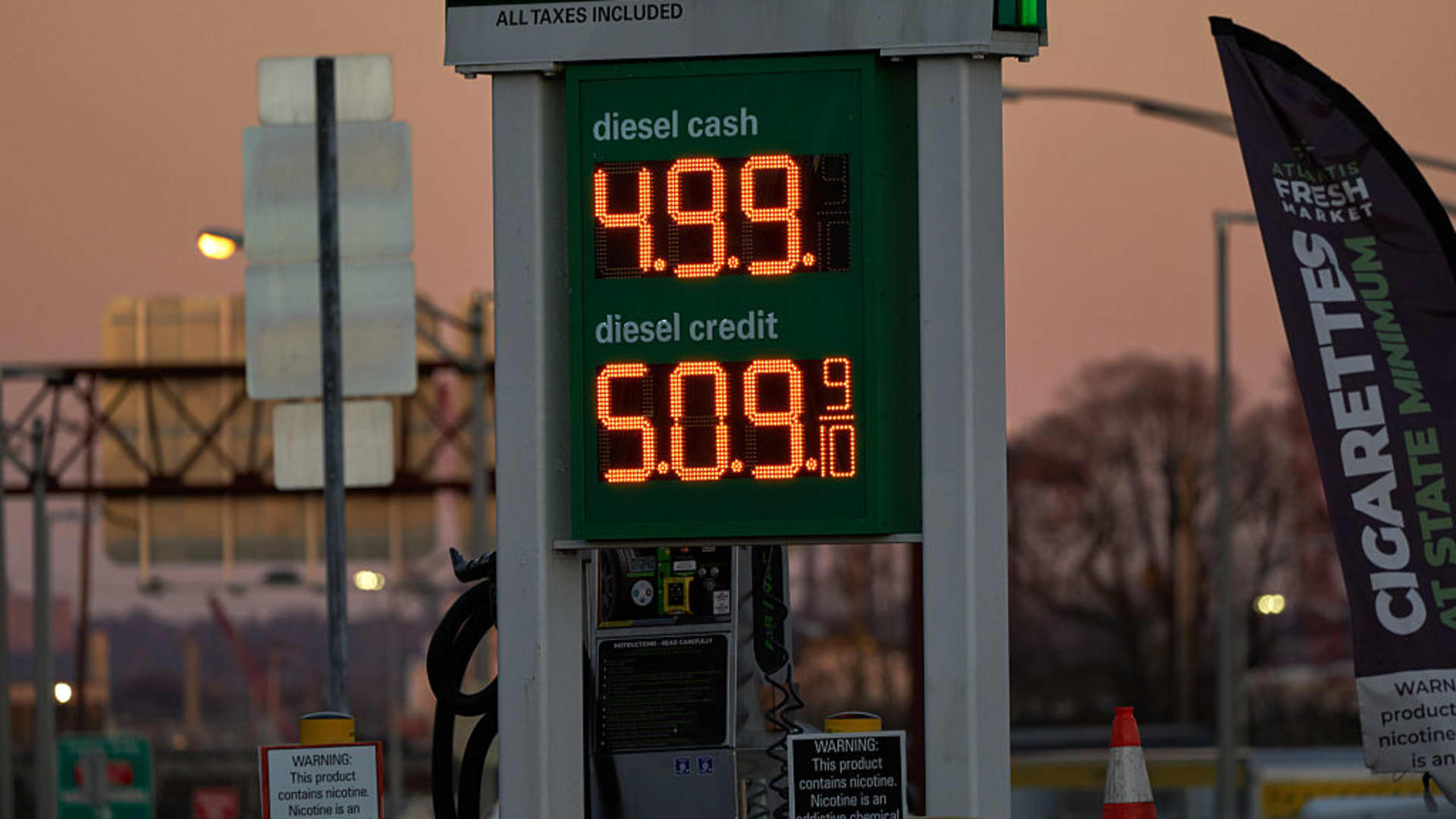
A sign displays the prices of diesel fuel at a BP gas station in Elizabeth, New Jersey, US, on Monday, March 9, 2026.
Bing Guan | Bloomberg | Getty Images
U.S. diesel prices on Tuesday topped $5 per gallon for the first time in more than three years, as the escalating war in the Middle East has triggered the biggest oil supply disruption in history.
The average price of diesel stood at $5.04 nationwide, an increase of 34% compared with the cost of a gallon the day before the U.S. and Israel launched a massive wave of airstrikes against Iran.
Diesel prices have hit the highest level since December 2022 when Russia’s full-scale invasion of Ukraine disrupted global energy markets, according to the travel association AAA.
Diesel fuel is the lifeblood of the transportation sector, making the fuel essential for the U.S. economy. It is used in trucks, trains and barges that transport goods to market.
“One should really be worried about higher diesel prices,” said Andy Lipow, president of Lipow Oil Associates, in a Tuesday note. Trucking and rail companies are increasing their fuel surchages in response, he said.
Gasoline prices, meanwhile, could hit $4 per gallon, Lipow said. Prices at the pump have surged 27% to $3.79 on average since the war started, according to AAA. Gas prices have risen to the highest level since October 2023.
Oil prices have surged more than 40% during the war. U.S. crude oil was trading around $95 per barrel on Monday while Brent prices, the international benchmark, hovered around $102 per barrel.
Prices are rising because Iran has managed to halt most oil tanker traffic through the critical Strait of Hormuz by attacking commercial vessels. The Strait is the most important trade chokepoint for oil in the world. About 20% of global oil supplies passed through the narrow sea route prior to the war.
“Until we see a meaningful resumption of oil flows through the Strait of Hormuz, upward pressure on fuel prices is likely to persist,” said Patrick De Haan, head of petroleum analysis at GasBuddy, in a Monday note.
<