
Energy, airlines and now over $50 billion in remittances to India at risk as Middle East conflict deepens
This report is from this week’s “Inside India” newsletter which brings you timely, insightful news and market commentary on the emerging powerhouse. Subscribe here.
The big story
India can’t seem to escape from the fallout of the escalating conflict in the Middle East. A significant share of the country’s energy imports risk disruptions and its aviation sector is staring at higher costs due to airspace restrictions.
But there’s another multibillion-dollar worry that the country will need to contend with: remittances.
India is the largest recipient of remittances globally and they account for nearly 3.5% of the GDP — that’s higher than the share of exports to the U.S. at 2% of the economy. More than 9 million Indians reside in the Middle East and the money they send home plays a major role in shoring up India’s finances, helping cut its current account deficit.
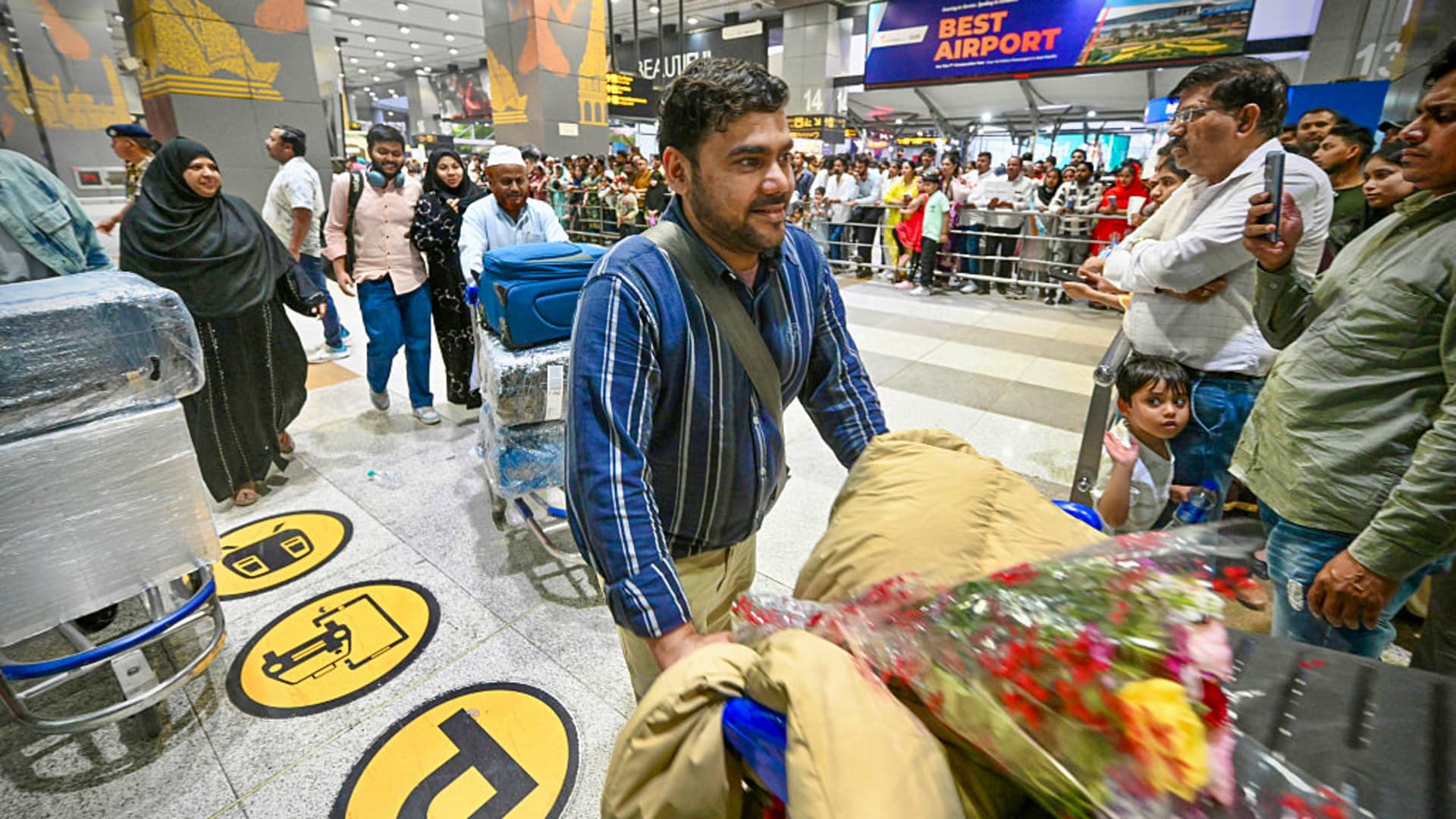
NEW DELHI, INDIA – MARCH 3: Indian passangers with relaxed expressions at Terminal 3 after their special flight from Riyadh arrive back in India at Indira Gandhi International Airport on March 3, 2026 in New Delhi, India.
Hindustan Times | Hindustan Times | Getty Images
The Indian diaspora in the Gulf countries contributes nearly 38% to India’s total remittance inflows, according to a Citi report. Based on the inflows of $135.4 billion in financial year 2025, the share of gulf countries is to the tune of $51.4 billion.
To put it in perspective: India’s total trade surplus with the U.S. was $58.2 billion in 2025.
According to experts, Indian workers in the Gulf countries are mostly employed in oil services, construction, hospitality and retail sectors, industries particularly vulnerable to the disruption caused by Iranian attacks.
“A sharp decline [in remittance inflows] – particularly if combined with higher oil prices due to the conflict – would worsen India’s external position and could put some pressure on the rupee,” said Alexandra Hermann, lead economist at Oxford Economics.
In recent years, India’s remittances have exceeded its foreign direct investment flows, with those from the UAE alone contributing nearly one-fifth of the flows, second only to the U.S (27.7%).
Collateral damage
The good news, experts tell me, is that only a prolonged conflict in the Middle East will dent India’s remittance flows enough to impact the economy. The bad news is that no one is certain if this conflict will be a short one.
Hermann told me that a “moderate and temporary disruption” is manageable but “a bigger risk” would be if the conflict leads to a slowdown in construction and services activity in the Gulf, affecting Indian migrant workers.
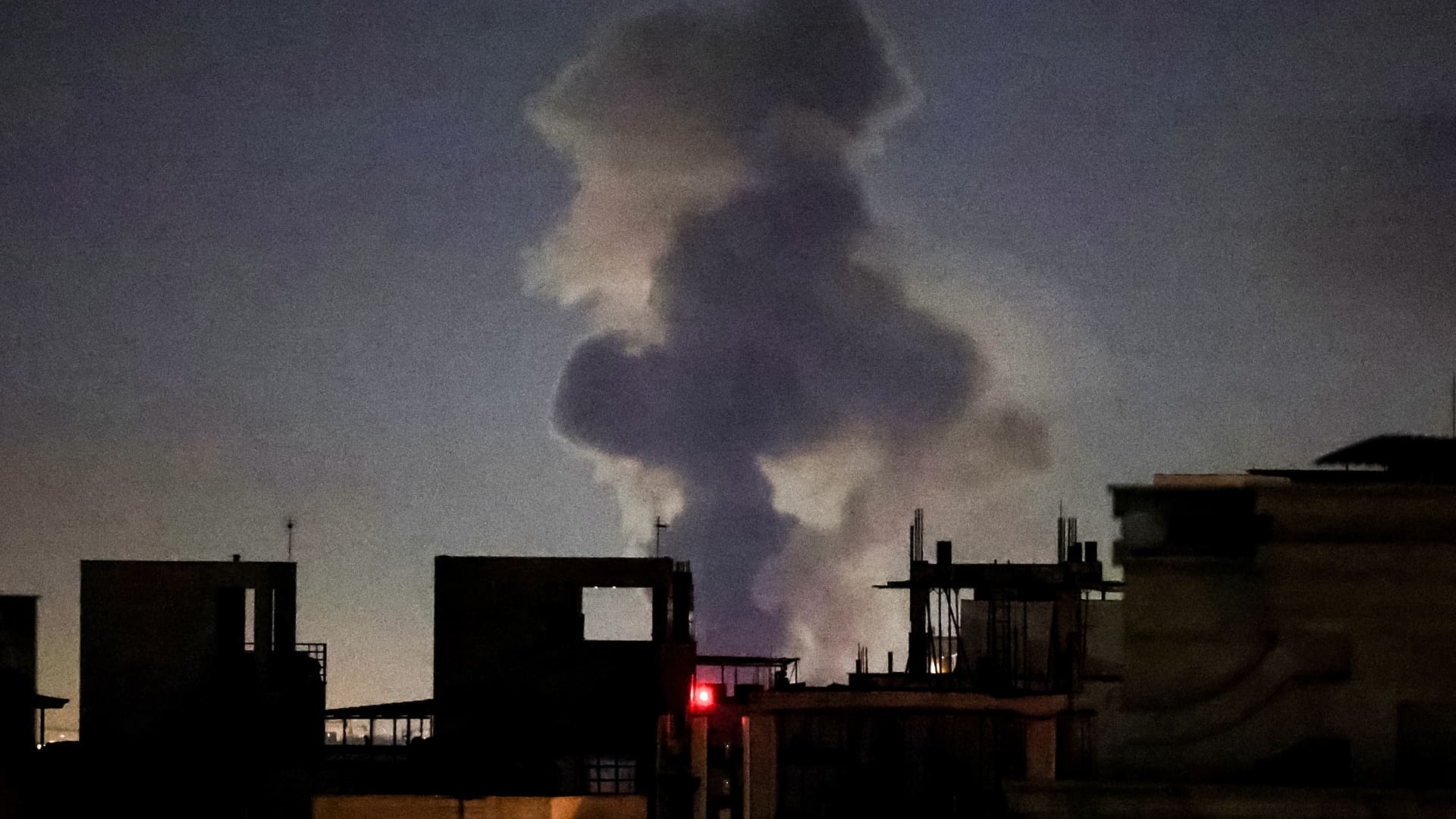
The U.S.-Iran war is in its sixth day and is spreading into the wider region with the U.S. embassies in Riyadh and Kuwait also coming under attack. The U.S. Secretary of State Marco Rubio has vowed that the United States and Israel’s offensive against Iran will increase in its scope and intensity.
Deepa Kumar, head of Asia-Pacific country risk and co-lead of India research chapter at S&P told me that if the conflict lasts beyond six months, it will have a material impact on the Indian economy.
In case of a contained conflict “there could be some initial shocks to remittances” from the Middle East but that will be limited to spot worker contracts, Kumar said. Over the next few days her team will start assessing how a prolonged conflict could affect the economy.
Chances of the hostilities lasting longer have risen as both sides intensify their attacks. U.S. President Donald Trump on Monday said the military operation in Iran could go on “far longer” than the estimated four to five weeks.
Citi in its note on Monday said that if the conflict lasts long, remittances would be “negatively impacted” as income opportunities of the Indian diaspora will get affected. In the short run, however, “there could be a perverse positive impact if ‘risk aversion’ leads to more repatriation,” the note said.
Will the country suffer collateral damage on multiple fronts from a war it has little to do with, or will the conflict end before the country sees serious repercussions? We’ll know that for sure only in the months to come — watch this space.
Need to know
New Delhi oil supply worries. India imports nearly 85% of its crude and as global oil prices increase due to the Middle East conflict, the country’s already substantial energy import bill is expected to balloon. Indian airlines are also seeing cost escalations due to restriction on use of airspace over Gulf countries.
India and Canada vow to deepen ties. During Prime Minister Mark Carney’s visit to New Delhi earlier this week the two countries put differences aside, pledged to foster closer ties and vowed to deepen trade.
India’s economy grew at a faster pace. The economy grew at a faster-than-expected rate of 7.8% during the quarter ended December. The latest print comes after the government overhauled the framework for calculating economic output to improve accuracy.
Coming up
March 4-7: President of Finland Alexander Stubb visits India.
March 9: Rajputana Stainless IPO opens
<