
Here are the 4 big things we’re watching in the stock market in the week ahead
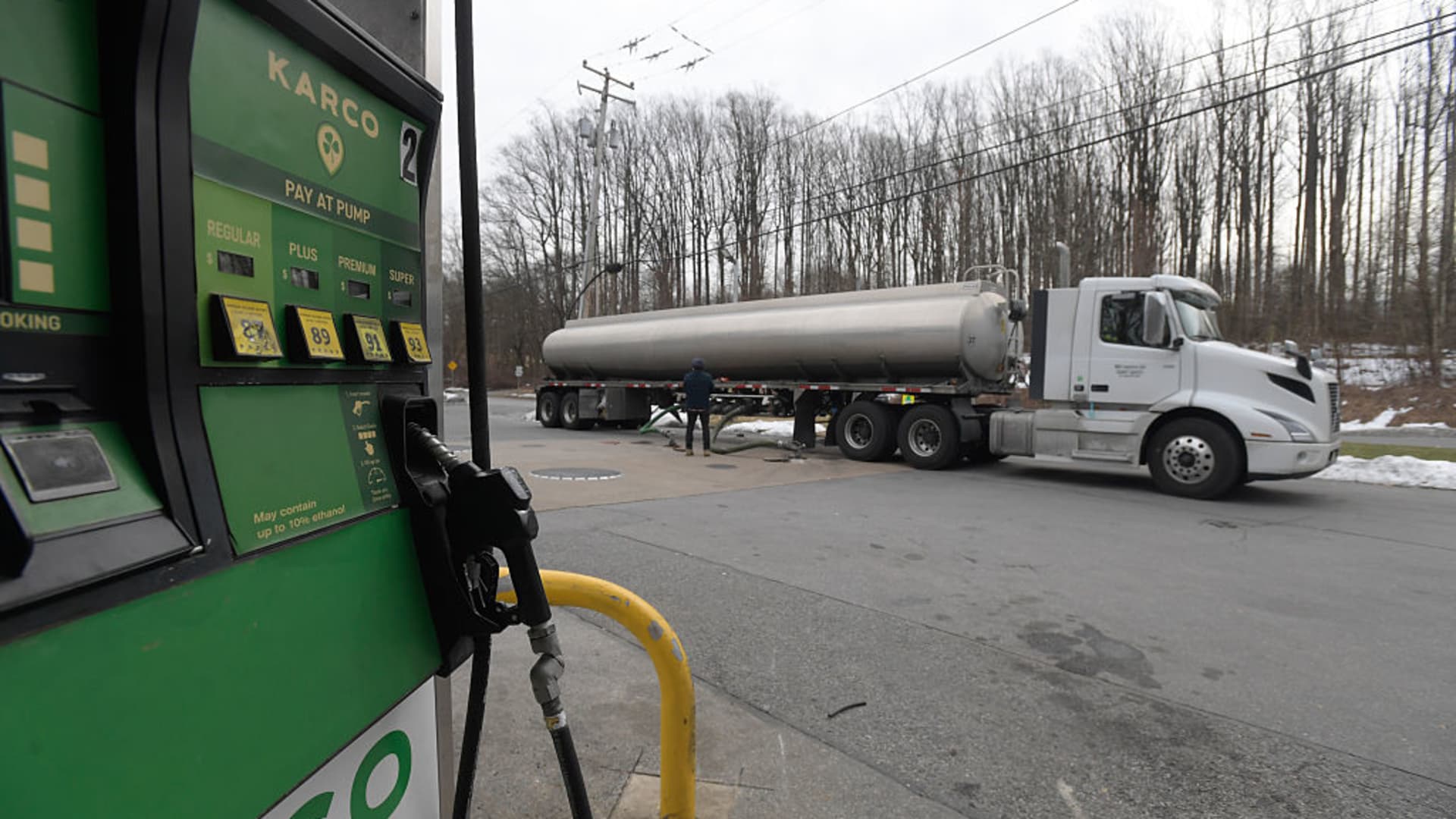
Investors will have a lot on their plate in the week ahead. Earnings season is set to wrap up, and several key economic updates are headed our way — all against the backdrop of the ongoing war in Iran. Another volatile week may be in store. 1. The U.S.-Iran war is the most important thing to monitor . Whether you’re on Wall Street or Main Street, you’re already feeling its effects as the price of energy climbs. As we explained in a piece last week , a big spike in oil prices not only squeezes consumers at the pump, giving them less dollars to spend on the products our companies sell, but it also means those companies need to confront a rising input cost and make tough choices on how to deal with it. The worsening conditions in the Strait of Hormuz has put upward pressure on oil prices, likely more so than the few documented attacks on oil infrastructure . Traders are worried about supply disruptions, and that’s exactly what we’re seeing in the Strait. This vital waterway — through which some 20 million barrels of crude pass on a typical day, about a fifth of global oil consumption — has been effectively shut down for fear Iran or its proxies may attack anything passing through. That’s obviously problematic. It’s having an impact on production because countries only have so much storage capacity to hold the oil they otherwise export via the Strait of Hormuz. Kuwait pulled back on oil production as its storage space winnows, The Wall Street Journal reported Friday , and even bigger cuts could follow. On Friday, the Trump administration announced a $20 billion reinsurance program for oil tankers, in a move designed to restart maritime traffic in the Strait. Time will tell if it works. Investors also need to consider where much of this Persian Gulf oil is destined for. A top destination? China. China is the world’s largest importer of crude . Some estimates point to more than 80% of Iranian crude going to China. Another way to think about it is that some 50% of China’s oil imports pass through the Strait. While China has reserves — and has been rapidly growing its stockpile — we’re noting this to point out the severe ripple effects for everyone. And they could be very negative for China, which has reportedly held talks with Iran about letting oil vessels pass safely through the Strait. In addition to being the world’s second largest economy, the U.S. and China already have a tense “frenemy” relationship, one that we don’t want to see strained further. Anything that angered Beijing to the point that it ratchets up pressure on Taiwan would bring a whole other set of potentially greater issues. The vast majority of the world’s most advanced chips are produced in Taiwan, so anything that roils that supply chain would be negative for the stock market and the global economy. As we continue to monitor the Middle East situation, we don’t want to minimize the human cost of this conflict. But in the context of the investing world and what it means for corporate earnings, the market is focused on how fast the Strait of Hormuz can be reopened to get global oil supplies flowing. 2. The most consequential economic report of the week arrives Wednesday morning, when we get the February consumer price index, carrying implications for Federal Reserve policy. As of Friday, according to FactSet, economists are looking to a 2.4% year over year gain at the headline CPI level. Normally, we would call out Friday’s core PCE price index as the report to watch because that is the Fed’s preferred measure of inflation. However, due to government shutdown-related delays, the PCE data out Friday is for January. That means we need to be mindful that it’s even more backward-looking than usual. In fact, we should caveat that while these two inflation reports are some of the most important monthly economic releases we get in any given month, both must be taken with a grain of salt this time around because neither will reflect the fact that America is now at war with Iran. Put another way, these reports won’t reflect the spike in oil or any changes in consumer behavior as a result of that development. However, we can use them to gauge whether other important inflationary factors, like shelter costs, were indeed coming down prior to the war. From there, we can adjust our inflation outlook based on how long the rise in oil prices lasts. Keep in mind: Markets are forward-looking. While we always pay close attention to economic data to sharpen our understanding of the present and future, it’s important to remember that how the market reacts to the data is a function of future expectations. So, any takeaway that we have from these reports will need to account for the recent geopolitical developments. Outside of these inflation updates, be sure to keep an eye on the release of the Job Openings and Labor Turnover Survey — the so-called JOLTS report — on Friday morning. Investors leverage this report to measure tightness in the labor market, which influences expectations around wage inflation; in a hot labor market, businesses need to pay up to attract talent, but when there are way more job-seekers than openings, less financial incentives are needed. The JOLTS report also measures demand for labor. Simply put, are businesses trying to hire people? It also contains the “quits rate,” a way to understand whether workers feel comfortable enough to voluntarily leave their jobs. The softer the job market, the lower you’d expect the quits rate to be. In the wake of Friday’s abysmal jobs report , investors are scrambling to understand whether the loss of 92,000 jobs in February was a blip or a foretelling of more payroll cuts to come as t he adoption of AI by corporations increases . Sure, that adoption is making workers more efficient, but the concern is that more efficiency per worker ultimately amounts to fewer workers. Some argue AI will lead to new jobs and perhaps even require more talent as productivity increases and potentially sparks more demand. Others are rightfully concerned that the opposite may be the outcome as corporations look to cut headcount as a means to offset rising costs elsewhere. There’s also a middle-of-the-road view, where AI leads to more jobs over the long term but only after a very disruptive transition period. This isn’t the kind of debate that will resolve overnight. But for now, any view that weakness in the labor market is going to be viewed negatively. Additionally, we’ll get our second look at fourth-quarter U.S. GDP growth on Friday, as well as several important updates on the housing market. On Tuesday, we’ll get the February existing home sales data, followed by January housing starts on Thursday. Within our portfolio, Home Depot is the stock that benefits most from an increase in housing market activity. 3. We’ll also be watching how the market grapples with the Fed’s newfound problem: stagflation concerns. It’s a term we should expect to hear more often following the spike in oil prices and the weak February payrolls report. Indeed, the president of the Chicago Fed, Austan Goolsbee, warned about its risks Friday afternoon in an interview with The Wall Street Journal . A combination of the words “stagnation and “inflation,” stagflation is an economic nightmare that occurs when unemployment rises alongside a pickup in inflation. The war-related spike in oil prices is fueling inflation concerns, just as we learned the U.S. economy lost jobs in February when economists were expecting to see a gain. This dynamic puts the Fed in a real bind: a weaker labor market means they should be cutting interest rates, but a sustained rise in inflation dictates they raise them. Of course, one month doesn’t constitute a trend — something Goolsbee acknowledged in that interview — and we may well come to learn that this was an aberration. But the dynamic is too important to ignore. Both Wall Street and Main Street are on edge about the impact AI will have on the job market, and the impact the Iran war will have on the energy market. So, it is a risk we are monitoring. We suspect we’ll hear more about it in the weeks to come. Just how loud the conversation becomes, though, likely depends on where oil prices go from here. 4. Finally, there are still some earnings reports on our radar, despite an absence of Club names on the calendar. We’ll get another check on the state of data center demand with Hewlett Packard Enterprise set to report on Monday evening and Oracle scheduled for Tuesday night. Drone maker AeroVironment , also out Tuesday evening, will provide additional insight into global defense spending intentions against the backdrop of war in the Middle East. Meanwhile, a basket of retailers will shine a light on the health of the consumer: Kohl’s on Tuesday morning, Dick’s Sporting Goods and Dollar General before the bell Thursday, and Ulta Beauty on Thursday night. Between the four, we’ll get a refined sense of how consumers are spending their money. We’ll be on close watch for any commentary on whether spending behavior has changed since prices at the pump started moving higher in the past week. JPMorgan retail analyst Matt Boss, one of our favorite sell-side voices, put some numbers to this dynamic Friday afternoon on CNBC: “The metric is a 30% increase in gas [prices], which is basically what you’ve seen in oil so far, is about a $9 billion headwind to consumer spending. That said … tax refunds in February are up 10%. That’s actually roughly a $9 billion to $10 billion tailwind. So, in March and April, if this were to continue, those two basically wash each other out.” Lastly, Thursday night offers fallen market darling Adobe , one of the best-known companies in the software-as-a-service (SaaS) space, the chance to make its case for why AI disruption fears are overblown. Sentiment around the SaaS group has quietly improved after a brutal sell-off to start 2026, with Adobe shares ending Friday up about 15% from their Feb. 23 low close of the year. That adds another layer of intrigue to the report. Week ahead Monday, March 9 Before the bell: ZIM Integrated Shipping (ZIM) After the bell: Hewlett Packard Enterprise (HPE), Voyager Technologies (VOYG), Zevra Therapeutics (ZVRA), Casey’s General Stores (CASY), LifeMD (LFMD), Vail Resorts (MTN) Tuesday, March 10 10:00 a.m. ET: Existing Home Sales Before the bell: NIO (NIO), Kohl’s (KSS), ABM Industries (ABM), Priority Technology Holdings (PRTH), Uranium Energy (UEC), BioNTech (BNTX), United Natural Foods (UNFI) After the bell: Oracle (ORCL), AeroVironment (AVAV), Auna (AUNA), Avino Silver & Gold Mines (ASM), Evolv Technology (EVLV), Franco-Nevada (FNV), Kodiak AI (KDK), Concrete Pumping Holdings (BBCP), Beachbody Company (BODI), Cadre Holdings (CDRE) Wednesday, March 11 8:30 a.m. ET: Consumer Price Index Before the bell: Campbell Soup (CPB) After the bell: UiPath (PATH), Netskope (NTSK), Stitch Fix (SFIX), Algoma Steel Group (ASTL), Bumble (BMBL), Descartes Systems Group (DSGX), Viant Technology (DSP), Petco Health and Wellness Company (WOOF) Thursday, March 12 8:30 a.m. ET: Initial Jobless Claims 8:30 a.m. ET: Housing Starts Before the bell: DICK’S Sporting Goods (DKS), Dollar General (DG), Li Auto (LI) After the bell: Adobe (ADBE), Rubrik (RBRK), SentinelOne (S), Nektar Therapeutics (NKTR), Ulta Beauty (ULTA), ServiceTitan (TTAN), Green Dot (GDOT) Friday, March 13 8:30 a.m. ET: Gross Domestic Product 8:30 a.m. ET: Personal Spending and Income 10:00 a.m. ET: JOLTs Job Openings (See here for a full list of the stocks in Jim Cramer’s Charitable Trust.) As a subscriber to the CNBC Investing Club with Jim Cramer, you will receive a trade alert before Jim makes a trade. Jim waits 45 minutes after sending a trade alert before buying or selling a stock in his charitable trust’s portfolio. If Jim has talked about a stock on CNBC TV, he waits 72 hours after issuing the trade alert before executing the trade. THE ABOVE INVESTING CLUB INFORMATION IS SUBJECT TO OUR TERMS AND CONDITIONS AND PRIVACY POLICY , TOGETHER WITH OUR DISCLAIMER . NO FIDUCIARY OBLIGATION OR DUTY EXISTS, OR IS CREATED, BY VIRTUE OF YOUR RECEIPT OF ANY INFORMATION PROVIDED IN CONNECTION WITH THE INVESTING CLUB. NO SPECIFIC OUTCOME OR PROFIT IS GUARANTEED.
<