
PM bruised after standing up to Trump over Greenland
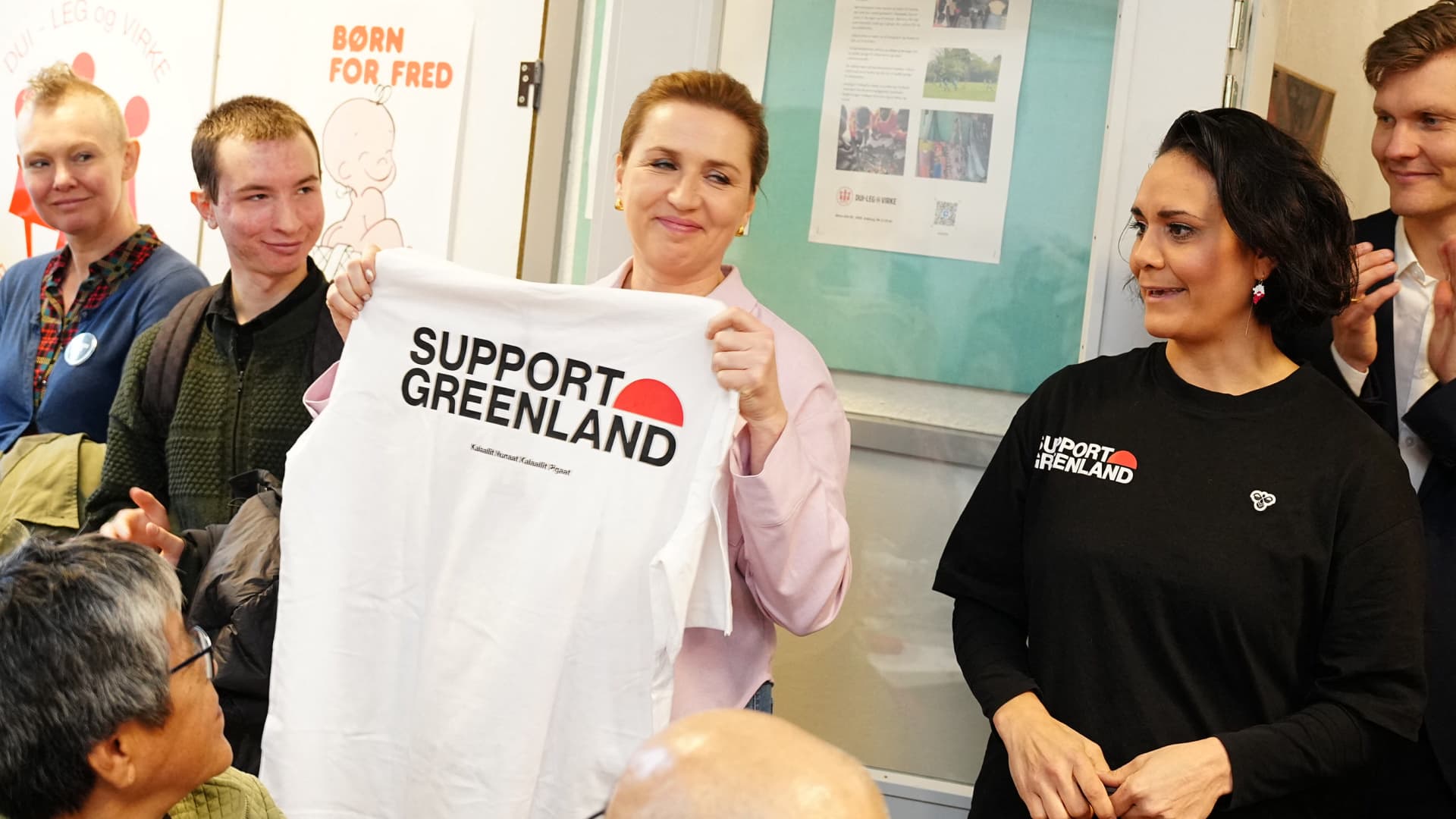
The leader of Denmark’s Social Democrats, Mette Frederiksen, is pictured on the street at Nytorv in Aalborg, on March 24, 2026 during the parliamentary election in Denmark.
Henning Bagger | Afp | Getty Images
Denmark’s Prime Minister Mette Frederiksen suffered an election setback as her left-leaning bloc appeared to have fallen short of winning enough votes to form a government, following a campaign clouded by U.S. President Donald Trump’s threats to annex Greenland.
Frederiksen’s Social Democrats received the most votes and were seen winning 38 seats in Denmark’s 179-seat parliament, results published early Wednesday showed, compared with 50 seats four years earlier.
The left-leaning grouping, or “red bloc,” was seen taking 84 seats, six short of the 90 required for a majority, while the right-leaning group, or “blue bloc,” secured 77 seats.
The election outcome sets the stage for tough coalition talks over the coming weeks, with Foreign Minister Lars Lokke Rasmussen’s center-right Moderates, which won 14 seats, seen emerging as a kingmaker.
Denmark’s Frederiksen told supporters in Copenhagen that forming a government would be “difficult” and sought to downplay the decline in her party’s popularity after several external shocks.
“We’ve had to deal with war, we’ve been threatened by the American president and in those almost seven years we’ve gone down 4 percentage points, I think that’s okay,” Frederiksen said, according to Reuters.
The prime minister had called the snap vote months earlier than expected, seeking to capitalize on popular support and secure a third successive term after standing up to Trump’s push to take control of the self-governing Danish territory.
Political parties in the Scandinavian country largely focused on domestic issues during the election campaign, including the state of the economy, clean drinking water and food and fuel prices.
Lars Lokke Rasmussen, Denmark’s Foreign Minister and Chairman of the Moderates casts his vote in Graested on March 24, 2026, during the parliamentary election in Denmark.
Keld Navntoft | Afp | Getty Images
The future of Greenland, by contrast, was less prominent given that broad agreement exists regarding its place in the kingdom.
Even so, Greenlandic Prime Minister Jens-Frederik Nielsen described the vote as the most important in the island’s history, saying the territory still finds itself in a “serious situation.”
Speaking to AFP on Monday, Nielsen said: “We are in a time where we have a superpower trying to acquire us, take us, control us.”
A geopolitical firestorm
Greenland was thrust into the center of a geopolitical firestorm at the start of the year when the U.S. president, who has long advocated for control of Greenland, renewed his interest in the territory.
Trump said at the time that the island was vital for U.S. national security and frequently cited concerns about Russia and China’s Arctic influence.
The issue ratcheted up trans-Atlantic tensions and rattled the NATO military alliance, with Denmark’s Frederiksen warning that the world order as we know it was now over.
Trump eventually defused tensions over his desire to make Greenland part of the U.S., saying in late January at the World Economic Forum that he had reached a “framework of a future deal” that would accommodate U.S. interests in the long term.
<