Sanders, Khanna to propose federal billionaires wealth tax
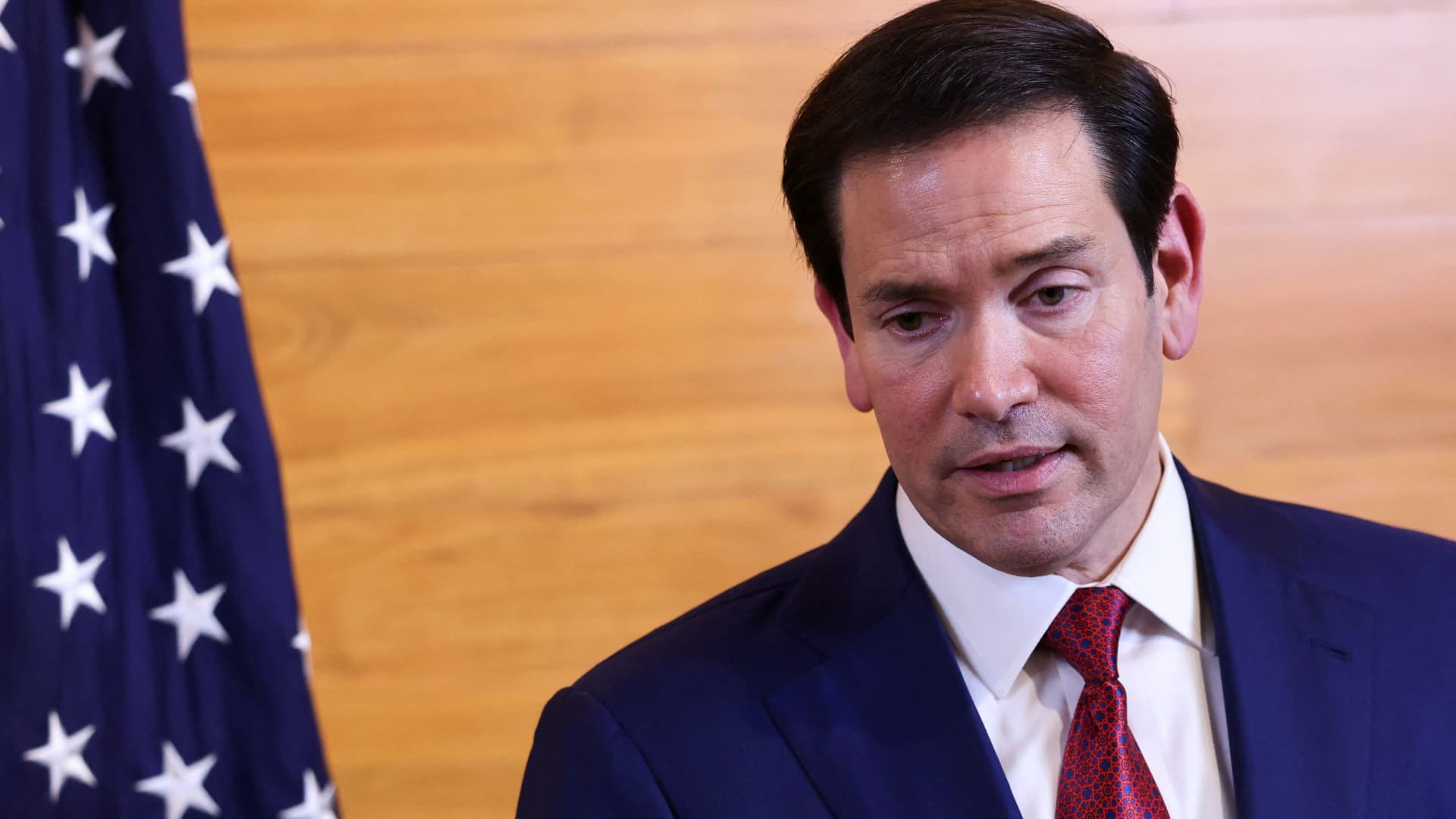
U.S. Representative Ro Khanna (D-Calif.) speaks to the media outside of the Chappaqua Performing Arts Center, on the day Bill Clinton appears for a deposition in the House Oversight Committee investigation of late financier and convicted sex offender Jeffrey Epstein, in Chappaqua, New York, U.S., February 27, 2026.
Shannon Stapleton | Reuters
Sen. Bernie Sanders and Rep. Ro Khanna plan to introduce a bill to impose a 5% federal wealth tax on billionaires, according to the senator’s office.
The push from Sanders, I-Vt., and Khanna, D-Calif., for a federal wealth tax comes as the idea of taxing billionaires gains cachet in Democratic states across the country. While progressives like Sanders have long called for taxing the rich at higher rates, many Democrats are now seizing on refreshed anti-billionaire animus as they campaign against Republicans and President Donald Trump on an affordability agenda.
“At a time of unprecedented income and wealth inequality, this legislation demands that the billionaire class in America finally pay their fair share of taxes so that we can create an economy that works for all of us, not just the 1%,” Sanders, the ranking member of the Senate Committee on Health, Education, Labor and Pensions, said in a statement.
“Enough is enough. Billionaires cannot have it all. It is time to enact a wealth tax on billionaires and use this revenue to address some of the major crises facing working families, the children, the elderly, the sick and the most vulnerable,” Sanders said.
According to Sanders’ office, the planned tax would raise $4.4 trillion in federal revenues without hiking taxes on any Americans with a net worth of less than $1 billion. The revenue would then be invested to benefit working families, children, the elderly and other vulnerable populations.
The new federal tax windfall would be used specifically to send a $3,000 direct payment to “every man, woman and child living in a household making $150,000 or less,” according to a bill summary document provided by the lawmakers.
It would also be used to reverse cuts to Medicaid and healthcare included in the Republicans’ tax cut and spending law known as the “one big beautiful bill,” and expand Medicare to cover dental, vision and hearing.
Other revenues would be used to build, rehabilitate and preserve affordable housing; cap childcare costs at 7% of a family’s income; put a $60,000 floor on teacher salaries and ensure that Medicaid covers home health care for the disabled and seniors.
The federal measure comes as Democratic-led states explore their own wealth taxes to make up for budget shortfalls after federal cuts to healthcare.
A potential California ballot measure to tax billionaires in the state has spooked some of the state’s wealthy and prompted some of its elites to flee. Khanna’s support for the proposed California ballot measure to impose a wealth tax on billionaires recently caused some of the Silicon Valley representative’s longtime tech supporters to threaten to drop their support of him.
In a statement for his new bill, Khanna said the U.S. “can tax billionaires a modest amount to make sure everyone has a fair chance while keeping our innovative engine.”
“On one side, places like Silicon Valley are generating extreme wealth,” Khanna said. “On the other side, families are struggling to cover the cost of health care, housing, and basic needs.”
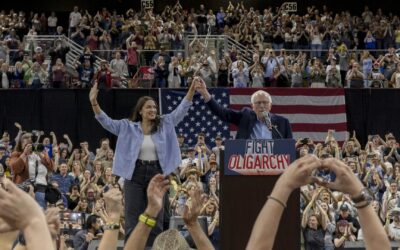
Sanders has recently travelled to California to stump for the potential ballot measure.
The lawmakers provided some estimates for how much notable billionaires would owe under the new policy.
Elon Musk, the Tesla and SpaceX owner who served in the government last year leading President Donald Trump’s DOGE initiative, would owe about $42 billion. Jeff Bezos, the founder of Amazon, would owe roughly $11 billion. And Meta chief Mark Zuckerberg would also owe about $11 billion under the bill.
<