
‘Sometimes you have to hold your nose’ and buy stocks

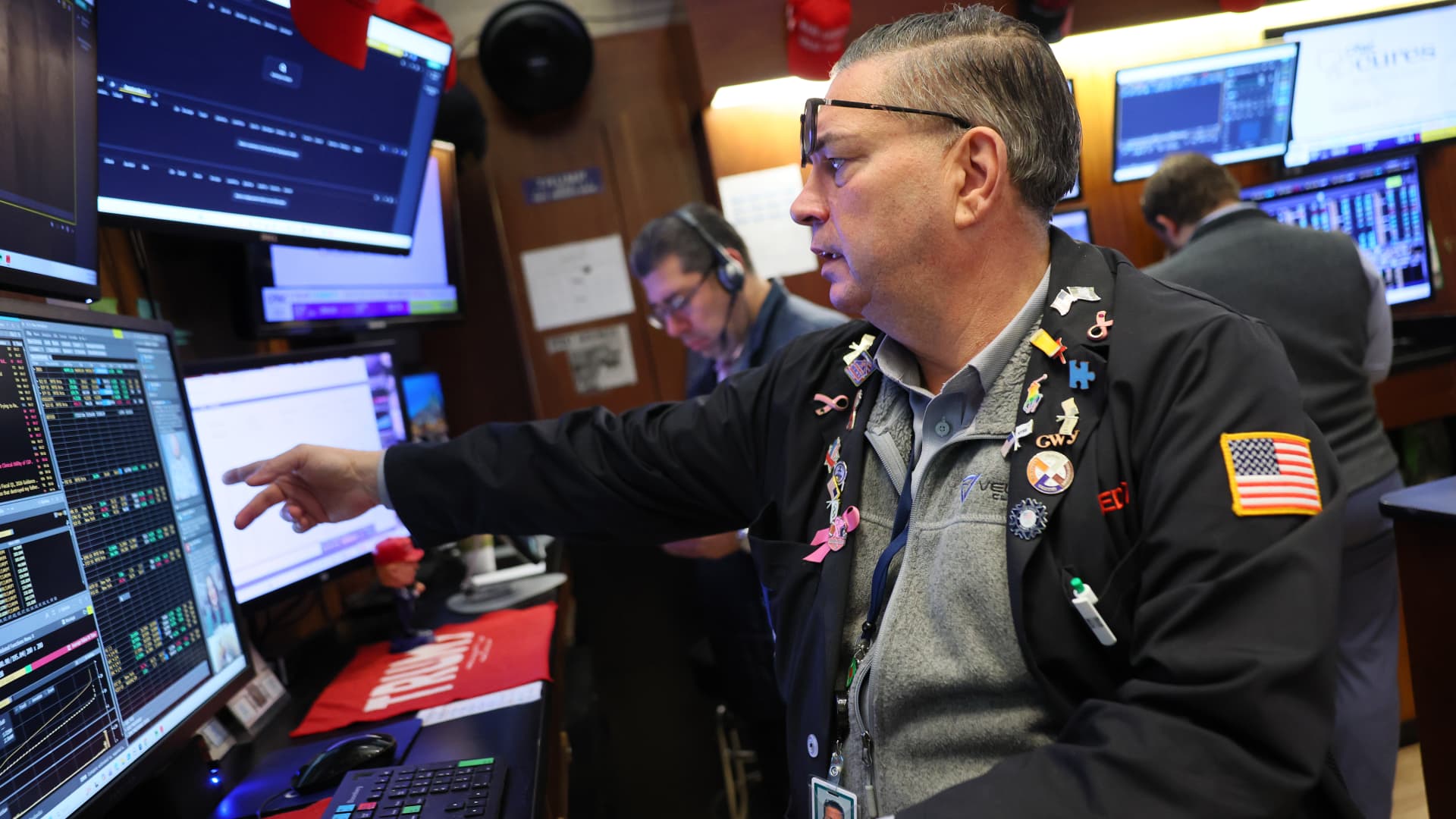
While buying stocks in highly volatile periods might not feel like the right move, history often proves it’s exactly what investors should do, CNBC’s Jim Cramer said Thursday.
“Sometimes you have to hold your nose and buy,” Cramer said on “Mad Money,” acknowledging that it’s tough to keep your emotions in check. It’s also tough because you could see short-term losses before longer-term gains. “When the averages come down too far, too fast, history says you need to be a buyer because when the market gets oversold, it will inevitably bounce.”
Cramer’s advice follows a second consecutive day of losses on Wall Street, fueled by the escalating Iran war. The Dow Jones Industrial Average, the S&P 500, and the Nasdaq all closed lower, but well off their worst levels of the session, as international crude settled up 1.2% to $108.65 per barrel. Brent briefly hit $119 as energy facilities in Qatar and Iran were attacked. Oil prices eased later in the day after Israeli Prime Minister Benjamin Netanyahu said his country was aiding U.S. efforts to open the Strait of Hormuz, the vital Mideast waterway for oil transport that Iran has vowed to keep closed.
To help identify these historical buy signals, Cramer uses the S&P Short Range Oscillator — a momentum indicator that he has trusted for decades. As of Thursday’s close, the Oscillator has been oversold for eight straight sessions. For the CNBC Investing Club, Cramer looks to buy when the Oscillator is this oversold. Club members got a trade alert on two stocks around midday. (In overbought markets, which we have not seen since July 2025, Cramer looks to lock in profits.)
“I’ve been studying this Oscillator since 1987 … and it’s rarely steered me wrong. If you buy into an extremely oversold market … you tend, over the next 30 days, to begin to make out like a bandit,” Cramer said. Pointing to an even more severely oversold pattern in April 2025 — following President Donald Trump’s “liberation day” tariff announcement — Cramer said that 30 days later, the S&P 500 was higher.
“History says that when we get this oversold, there will be a meaningful rally, something lasting,” Cramer said. “I’m going with history. It’s too stark, too accurate to do otherwise.”

<