Stock market today: Live updates
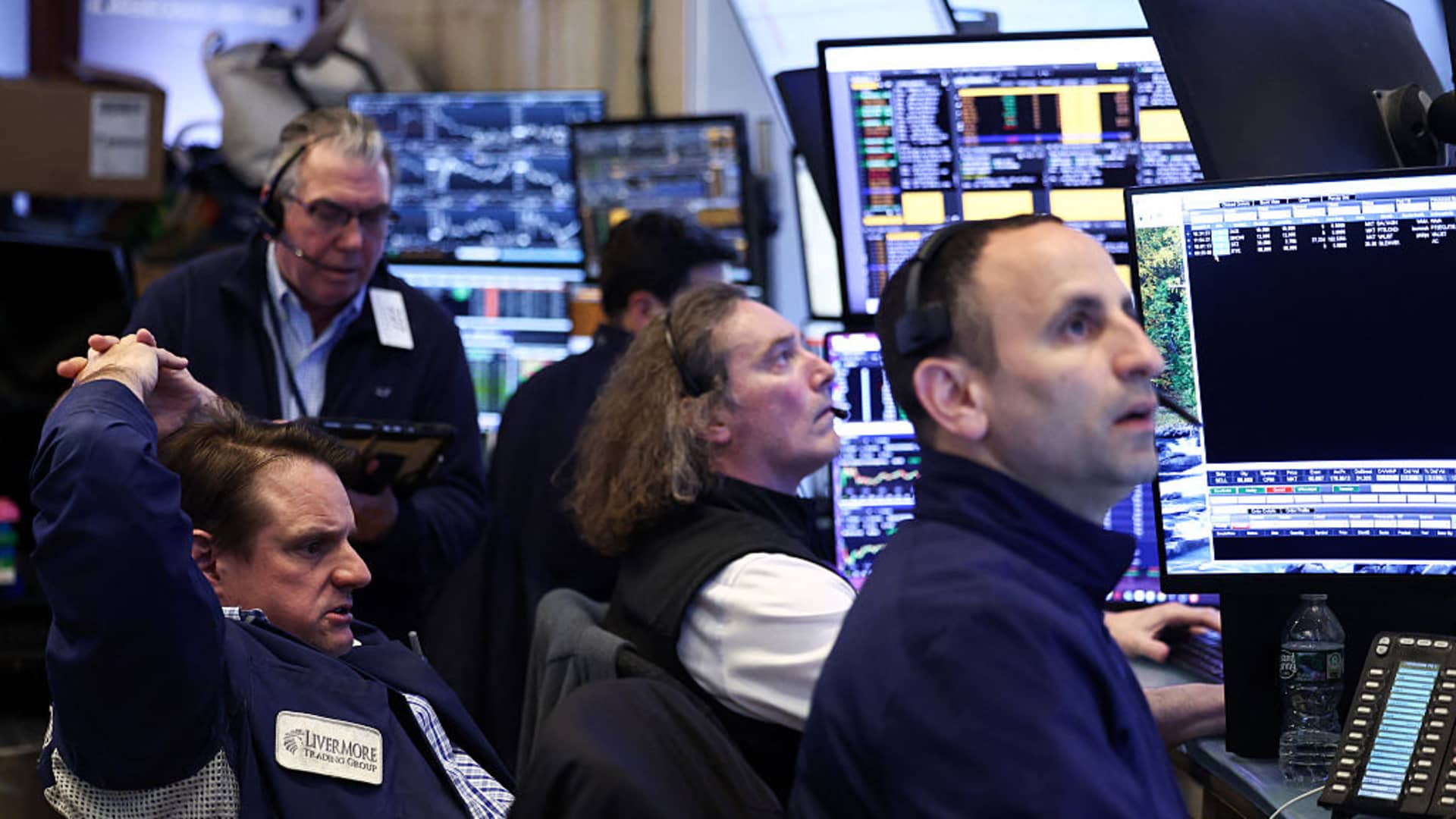
Traders work on the floor of the New York Stock Exchange (NYSE) before the closing bell in New York City on April 8, 2026.
Charly Triballeau | AFP | Getty Images
U.S. stock futures were little changed on Wednesday night after a massive comeback following President Donald Trump’s decision to suspend attacks on Iran for two weeks.
S&P 500 futures and Nasdaq 100 futures slipped 0.1%. Futures tied to the Dow Jones Industrial Average fell by 10 points, or less than 0.1%.
During Wednesday’s regular session, the S&P 500 climbed 2.51%, and the Nasdaq Composite popped 2.8%. The Dow Jones Industrial Average surged more than 1,300 points, or 2.85%, for its best day since April 2025 — back when Trump softened his stance on some of his lofty initial tariffs.
On Tuesday night, Trump agreed to pause attacks on Iran. The Middle Eastern conflict has been going on for five weeks and has resulted in the closure of the crucial Strait of Hormuz.
“I agree to suspend the bombing and attack of Iran for a period of two weeks,” Trump wrote in a Truth Social post. “We received a 10-point proposal from Iran, and believe it is a workable basis on which to negotiate.”
The “double sided” ceasefire, however, was contingent on Iran agreeing to reopening the strait. Tehran agreed to reopen the waterway for the next two weeks as long as all attacks are halted, according to a statement from Iran’s Foreign Minister. Media reports said that Israel has also agreed to the ceasefire.
But later on Wednesday, Iran’s parliamentary speaker Mohammed Bagher Ghalibaf accused the U.S. of already violating the ceasefire agreement. The violations are Israel’s continued attacks on Lebanon, a drone’s entry into Iranian airspace and the denial of the Islamic Republic’s right to enrich uranium, he said.
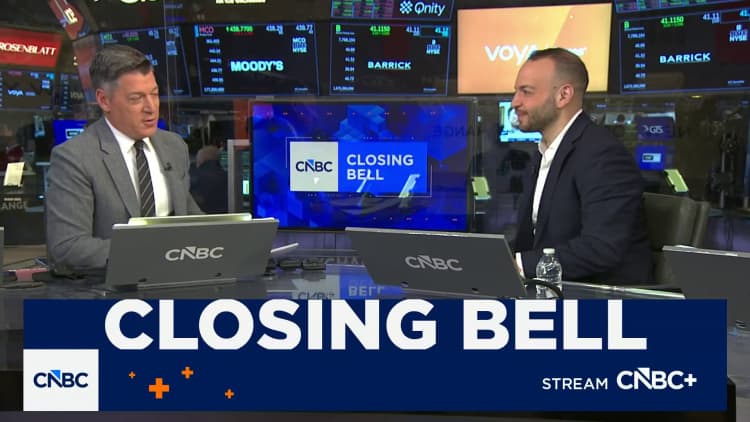
Even as the market rebounded on Wednesday, there are still potential pitfalls around negotiations in the Middle East, according to Eric Johnston, chief equity and macro strategist at Cantor Fitzgerald. He spoke on CNBC’s “Closing Bell: Overtime” Wednesday afternoon.
“I do think, from a short-term perspective, that there are still risks that are still there,” he said. “You have a lot of players involved and, so far, Hormuz is not open. So there are still risks and so I think for the coming couple weeks, we’ll see how this plays out. But yes, broadly we think this is a buying opportunity.”
A couple of catalysts await traders on Thursday morning. First, there’s the 8:30 a.m. reading of the personal consumption expenditure price index, the Federal Reserve’s preferred measurement of inflation. Weekly jobless claims are also due.
<