This options strategy gets into defense and oil stocks that have surged
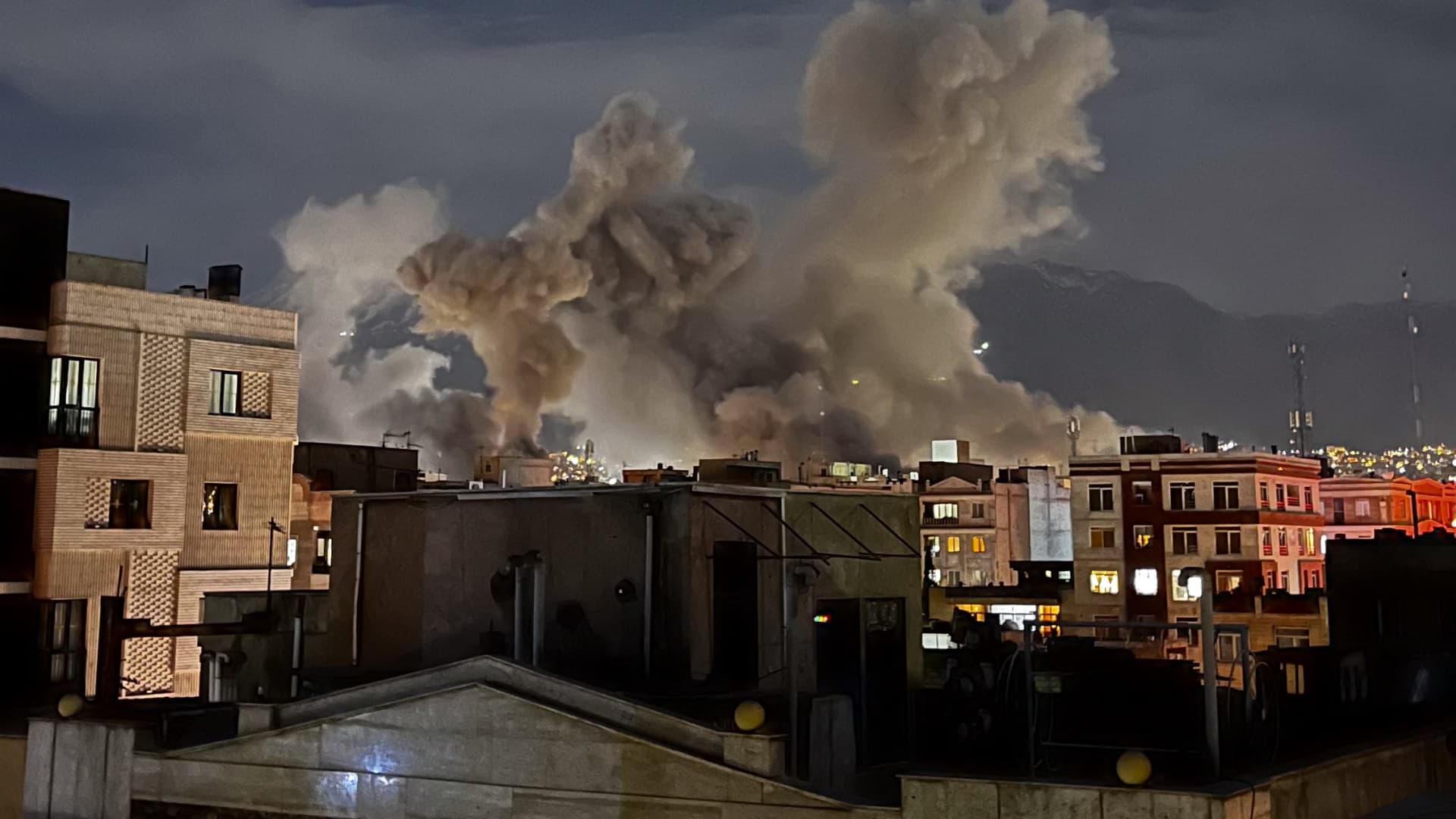
The strikes on Iran over the weekend changed the near-term demand for two markets at once: Defense, specifically missile defense and precision munitions, and oil. Iran retaliated with a barrage of attacks against Israel, the UAE, Bahrain, Qatar, Kuwait, Saudi Arabia, Iraq, Jordan, and Oman, targeting not only Israeli and U.S. military installations but also commercial and civilian targets. Whether or not diplomatic talks are productive, the need for defense systems in the region has only grown. While U.S. and Israeli air and missile defense systems have proven fairly effective thus far, if the conflict continues and Iran counterattacks using missiles and drones aimed at regional targets, existing defense assets will be strained, increasing demand on the military contractors that supply them. When ballistic missiles and one-way drones fly in large salvos, inventory matters; the more the better. Also, missile defense is a layered architecture: Terminal High Altitude Area Defense (THAAD) “is a highly effective, combat-proven defense against short, medium and intermediate-range ballistic missile threats…designed to intercept targets outside and inside the atmosphere,” according to prime contractor Lockheed Martin . Phased Array Tracking Radar to Intercept on Target (Patriot) surface-to-air missiles (SAMs) made by Raytheon , a unit of RTX, serve a similar role at closer ranges and lower altitudes. Quadrupling THAAD capacity In late January, Lockheed announced a framework agreement to more than quadruple THAAD interceptor capacity. A month ago, Lockheed’s CEO Jim Taiclet said, “We are committed to further building on the Department of War’s vision for advancing acquisition reform with additional framework agreements for the critical munitions needed by the U.S. military and our allies. [The] agreement to quadruple THAAD production means we will have more interceptors available than ever before to deter our adversaries.” The military activity in the Middle East over the past few days suggests these are needed for more than deterrence, but instead to meet an immediate defensive need in an active region. Meanwhile, many of Iran’s attacks were via one-way drones, rather than missiles. Depending on the type, drones may be less expensive or more complicated to produce and would typically be targeted by more conventional anti-aircraft systems. But existing systems, such as the Patriot, are nowhere near cost-parity with the latest trends in UAVs. Put simply, it’s not effective in the long run to use a Patriot missile battery that could cost $1 billion (including missiles, which may cost millions each) to counter a wave of UAVs that cost $50,000 each. It’s likely that efforts to produce counter-UAV defense systems with comparable cost-per-engagement, such as the UAV-based interceptors recently proposed by Diehl Defence and Anduril, are at full tilt, but Raytheon’s systems may be the most effective for now. Oil spike Meanwhile, oil prices, possibly anticipating this conflict, had already been rising on Friday. Overnight, Brent crude spiked to over $82 a barrel, but has since fallen back considerably and is now ~7% higher than a week earlier, at ~$76/bbl as I write this. The surge in oil prices reflects investors’ pricing in the risk of prolonged conflict and potential disruption at the Strait of Hormuz — one of the world’s key chokepoints, accounting for 20% of global oil and LNG shipments . “War Risk” insurance providers that shipping companies carry have reportedly been issuing 48-hour cancellation notices. Even if the ships’ crews were willing to pilot an oil tanker through a war zone, ship owners are probably unwilling to permit them to proceed without insurance. For an oil investor, the commodity is priced globally but, in this instance, it’s best to have local exposure (outside the Middle East). Occidental Petroleum is one way to express that view, using a producer operationally anchored in the U.S., particularly the Permian and Rockies basins, while maintaining a global footprint. Higher oil helps quickly: upstream (exploration and production) cash flows will re-rate higher alongside the price of crude. While OXY does have Middle East-linked assets/partnerships, its core growth engine is U.S. shale, which may reduce direct operational disruption risk compared with producers whose barrels physically sit in higher-risk geographies. Better positioned These companies are better positioned in the current climate than others. But the challenge is that the military rhetoric had been ongoing for some time before this weekend’s strikes, and investors may have anticipated these companies would benefit if talk became action, as it now has. RTX has total returns of nearly 21% since December 1. Lockheed has rallied nearly 50%, and Occidental is up about 26%. All three also had implied volatilities well above the past six-month average. Were these moves the result of expected strikes? The move in oil possibly was, as it was actually lower from early December to early January, when the President first threatened to intervene if the Iranian regime “violently kills peaceful protesters,” but the defense names were climbing before then. Investors may well think they’re late to the trade in these names after the sharp moves already seen. Buying calls is a challenge because where options implied volatility often falls for equities as they rise, in commodity stocks, supply/demand imbalance can elevate both price and volatility and, at least in recent months, the same can be said for defense stocks, and likely for similar reasons. Consequently, using spreads to press bullish bets may make more sense here, given the high(er) prices seen in both these stocks and their options chains. Call spreads may risk less than buying the stock after the recent sharp run. For those willing to risk owning shares at slightly lower prices, call spread risk reversals could also be appropriate. But my thinking is instead to leg one’s way into the trade. How? Let’s use OXY as an example. One could purchase the June 52.5/60 call spread for ~$2.75 as of Friday’s prices. If OXY continues to run, great. However, if diplomacy gains a toehold, it’s likely oil prices could settle down a bit, and many energy companies with them. If they do pull back a bit, one could then look to enter the short put portion of the call spread risk reversal, targeting premium collection approximately equivalent to the $2.75 debit of the call spread. That’s the thing about options spreads. They don’t have to be all or nothing; one can trade one leg of a potential spread, or two to get started, and only look to add to a position as conditions warrant. DISCLOSURES: None. All opinions expressed by the CNBC Pro contributors are solely their opinions and do not reflect the opinions of CNBC, or its parent company or affiliates, and may have been previously disseminated by them on television, radio, internet or another medium. THE ABOVE CONTENT IS SUBJECT TO OUR TERMS AND CONDITIONS AND PRIVACY POLICY . THIS CONTENT IS PROVIDED FOR INFORMATIONAL PURPOSES ONLY AND DOES NOT CONSTITUTE FINANCIAL, INVESTMENT, TAX OR LEGAL ADVICE OR A RECOMMENDATION TO BUY ANY SECURITY OR OTHER FINANCIAL ASSET. THE CONTENT IS GENERAL IN NATURE AND DOES NOT REFLECT ANY INDIVIDUAL’S UNIQUE PERSONAL CIRCUMSTANCES. THE ABOVE CONTENT MIGHT NOT BE SUITABLE FOR YOUR PARTICULAR CIRCUMSTANCES. BEFORE MAKING ANY FINANCIAL DECISIONS, YOU SHOULD STRONGLY CONSIDER SEEKING ADVICE FROM YOUR OWN FINANCIAL OR INVESTMENT ADVISOR. Click here for the full disclaimer.
<