Trump is paying TSA agents — but where is the money coming from?
Travelers wait in line to go through security in Terminal 5 at John F. Kennedy International Airport on March 27, 2026 in New York, New York.
Michael M. Santiago | Getty Images
After weeks of long lines at airports and bickering in Congress, Transportation Security Administration agents began to receive pay earlier this week thanks to an executive order by President Donald Trump.
Trump’s move to bypass Congress — which under the U.S. Constitution is granted power over federal spending — and unilaterally pay the airport security agents is a momentary reprieve. Negotiations over funding for the Department of Homeland Security, which has been shut down since February, are largely stalled while Congress is on recess for two weeks.
The paychecks raise a series of questions: Where does the money Trump is using come from? How much is available? And for how long can Trump continue to pay TSA agents if Congress doesn’t soon come to a deal?
Trump’s executive order directs Homeland Security secretary and the White House Office of Management and Budget director “to use funds that have a reasonable and logical nexus to TSA operations to provide TSA employees with the compensation and benefits that would have accrued to them if not for the Democrat-led DHS shutdown.”
The Trump administration has confirmed the money is coming from last year’s Republican tax and spending bill, dubbed the One Big Beautiful Bill Act.
“Not unlike actions taken during the first Democrat-shutdown (i.e., paying the troops), President Trump has determined that congressional Democrats have created an emergency situation that cannot be allowed to continue,” a senior administration official said via email.
The White House has not laid out exactly where within the tax and spending bill the money is coming from, but Bobby Kogan, senior director of federal budget policy at the Center for American Progress, said there is only one plausible section that the administration could be citing.
Buried deep in the more than 300-page measure is a section that sets aside $10 billion “for reimbursement of costs incurred in undertaking activities in support of the Department of Homeland Security’s mission to safeguard the borders of the United States.”
“They do have a pot of money. It is a giant slush fund. But you couldn’t use it for [just] anything,” Kogan said.
Trump has gotten creative to pay certain federal employees in the past. During the full government shutdown last fall, he tapped into unspent research and development funds, as well as a $130 million gift from a donor to pay the U.S. military. While Trump didn’t identify the private donor, The New York Times reported that it was billionaire Trump backer Timothy Mellon.
While Democrats also say they want TSA agents to be paid, Trump’s latest unilateral move to pay federal workers without Congress first allocating the money raised alarms.
“I am glad that this administration has finally chosen to pay these workers, after choosing not to for 41 days. The administration must provide an explanation as to what funding it is using to pay these workers after falsely claiming it could not do so,” House Appropriations Committee ranking member Rosa DeLauro, D-Conn., said in a statement the day Trump announced his plans.
Kogan believes the bulk of the $10 billion in the DHS fund from last year’s tax and spending package is still available. He estimated the cost to fund TSA could be around $140 million per week, meaning the White House could continue to fund the agency for a year and not run out of money.
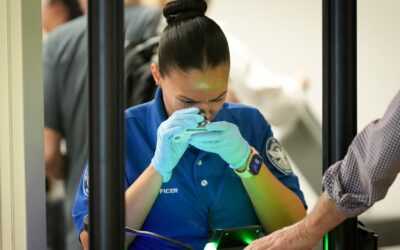
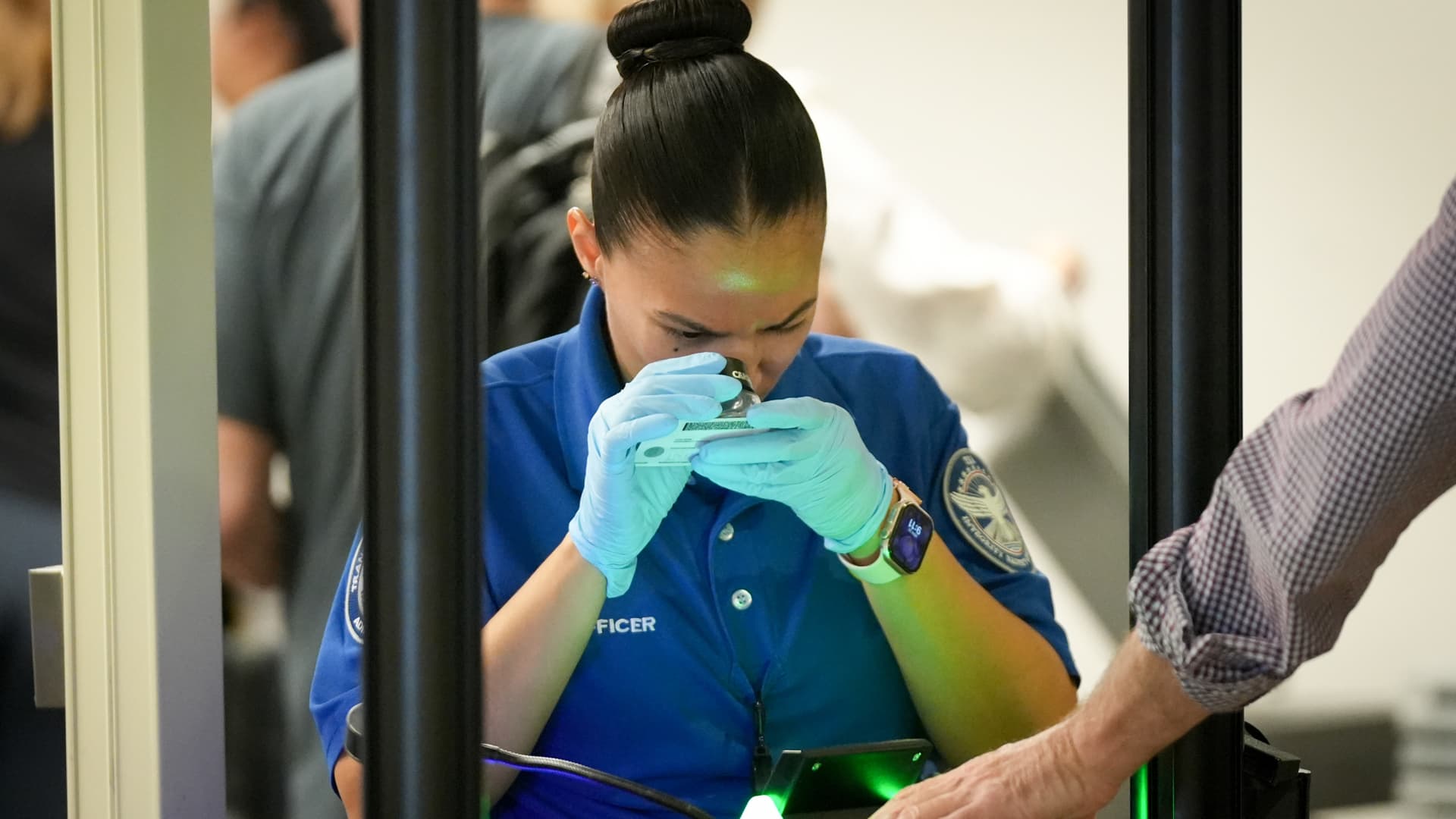
A TSA officer checks identification at the South Terminal at Austin-Bergstrom International Airport in Austin on Monday, March 30, 2026.
Jay Janner | The Austin American-Statesman | Hearst Newspapers | Getty Images
But should it?
Devin O’Connor, a senior fellow at the Center on Budget and Policy Priorities, said there are real questions about the legality of such a move.
“The administration’s provided no real clarity about what they’re doing publicly that would allow someone to even figure out whether what they’re doing is legal or not legal,” O’Connor said. “They haven’t made the case for it in any kind of public way.”
“It’s obvious that when Congress provided that $10 billion, it was not with the intention that those funds would be used to pay TSA workers,” O’Connor said.
Kogan was more pointed. He views it as a clear violation of the Antideficiency Act, a law dating to the 1800s that prohibits federal agencies from spending funds that Congress has not appropriated.
The White House, when asked to respond to the charge that it was violating the law, referred to its Office of Management and Budget. An OMB official defended the legality of the funding via email, citing a Department of Justice memo that states that agencies have “considerable discretion in determining whether expenditures further the agency’s authorized purposes and therefore constitute proper use of general or lump-sum appropriations.”
According to Kogan, no one has ever been prosecuted under the Antideficiency Act. And congressional Democrats — normally eager to take Trump to task — are not likely to want to challenge the move and risk stopping pay for TSA agents given the political unpopularity of lengthy airport lines.
“No one has standing. No one can stop this. Similarly, no one had standing to stop Trump from illegally paying the military last time,” Kogan said. “It’s just going to be one of his bajillion illegal budgetary actions.”
TSA agents have been paid
Trump’s executive order appears to have eased wait times at airport security this week, at least for now.
Acting Assistant DHS Secretary for Public Affairs Lauren Bis said in an email that “Most TSA employees” received a retroactive paycheck this week “that included at least two full paychecks” for recent missed pay periods.
More than 500 officers left TSA as a result of the missed checks triggered by the shutdown and thousands called out of work, Bis said.
“A small population might see a slight delay due to a variety of reasons, including financial institution processing times or issues with their direct deposit. We are working aggressively with USDA’s National Finance Center to complete processing for the half paycheck they are owed from pay period 3 as soon as possible,” Bis said.
It is unclear how long the TSA will continue to be paid via the DHS fund, as Congress continues to struggle to coalesce around a deal.
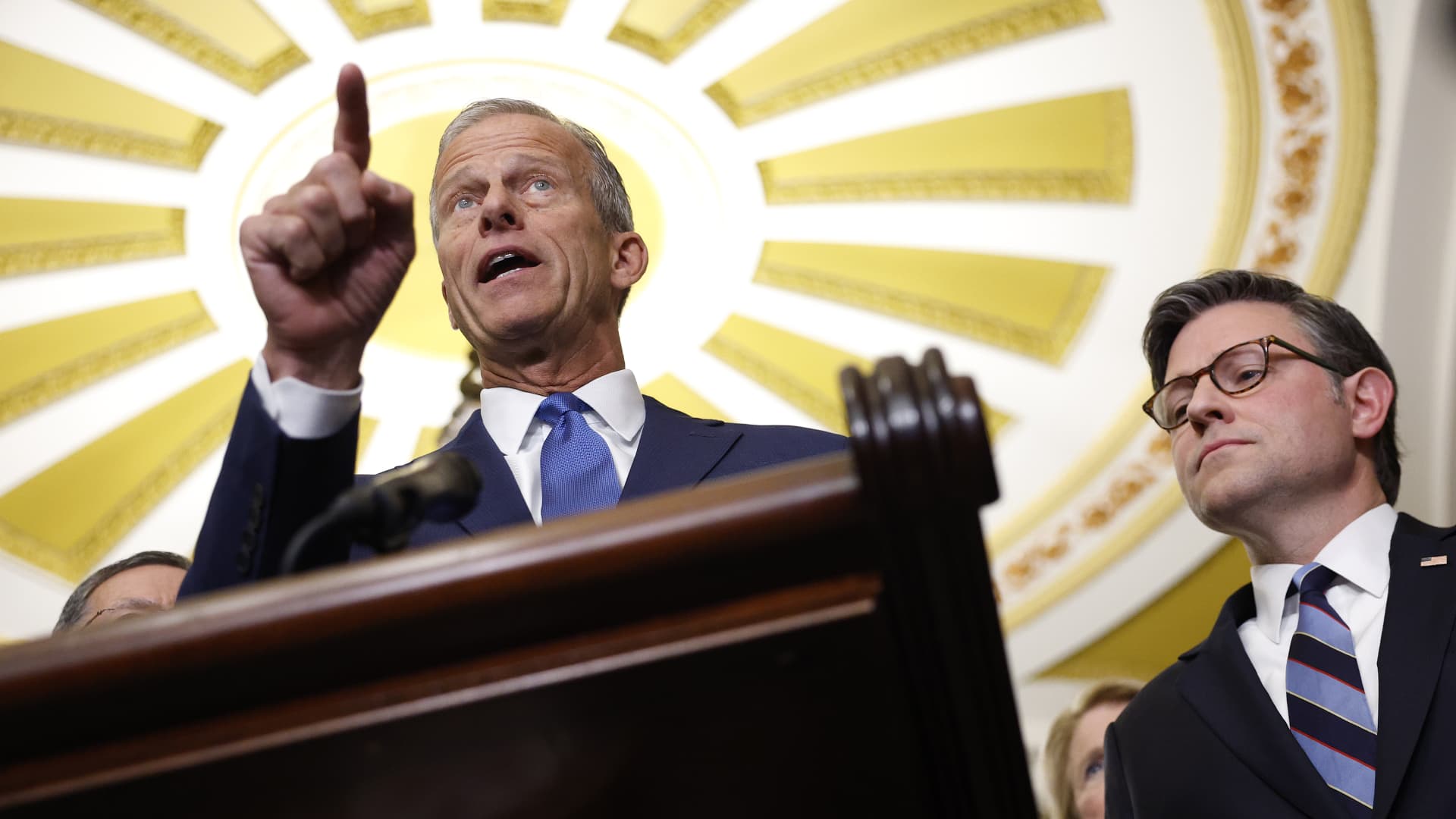
Last week, no senators objected to a proposal to fund all of DHS except for Immigration and Customs Enforcement and parts of Customs and Border Protection, sending it to the House for final approval. The move allowed the Senate to effectively end the shutdown and leave town for its preplanned recess, while also alleviating the long waits at airports throughout the country ahead of a time of heavy travel in early April for Easter and Passover.
That deal enraged House Republicans, who refused to consider the Senate’s compromise and instead opted to pass their own stopgap spending measure that would continue funding for all of DHS — including ICE and CBP — through May 22 and sending it back to the Senate.
The Senate, by that time, had already left Washington, guaranteeing an extended shutdown. Democrats vow to block any package that includes immigration enforcement funding without changes to the agency’s practices, and senators are spread out around the country and the world for the recess.
The White House has urged Congress to return early from its break, but leaders in both chambers have not signaled any plans to do so.
Trump on Wednesday weighed in via TruthSocial, calling on congressional Republicans to use the budget reconciliation process — a procedural tool for spending-related measures that requires only a simple majority in the Senate to pass — to bypass Democrats and fund ICE and CBP.
“I am asking that the Bill be on my desk NO LATER than June 1st. Our Law Enforcement Officers and the American People should not have to wait until the Democrats see reason or, learn the hard way through the Polls,” Trump wrote.
— CNBC’s Megan Cassella contributed to this story.
<