Trump’s threats to U.S. elections loom large at House Dems policy retreat
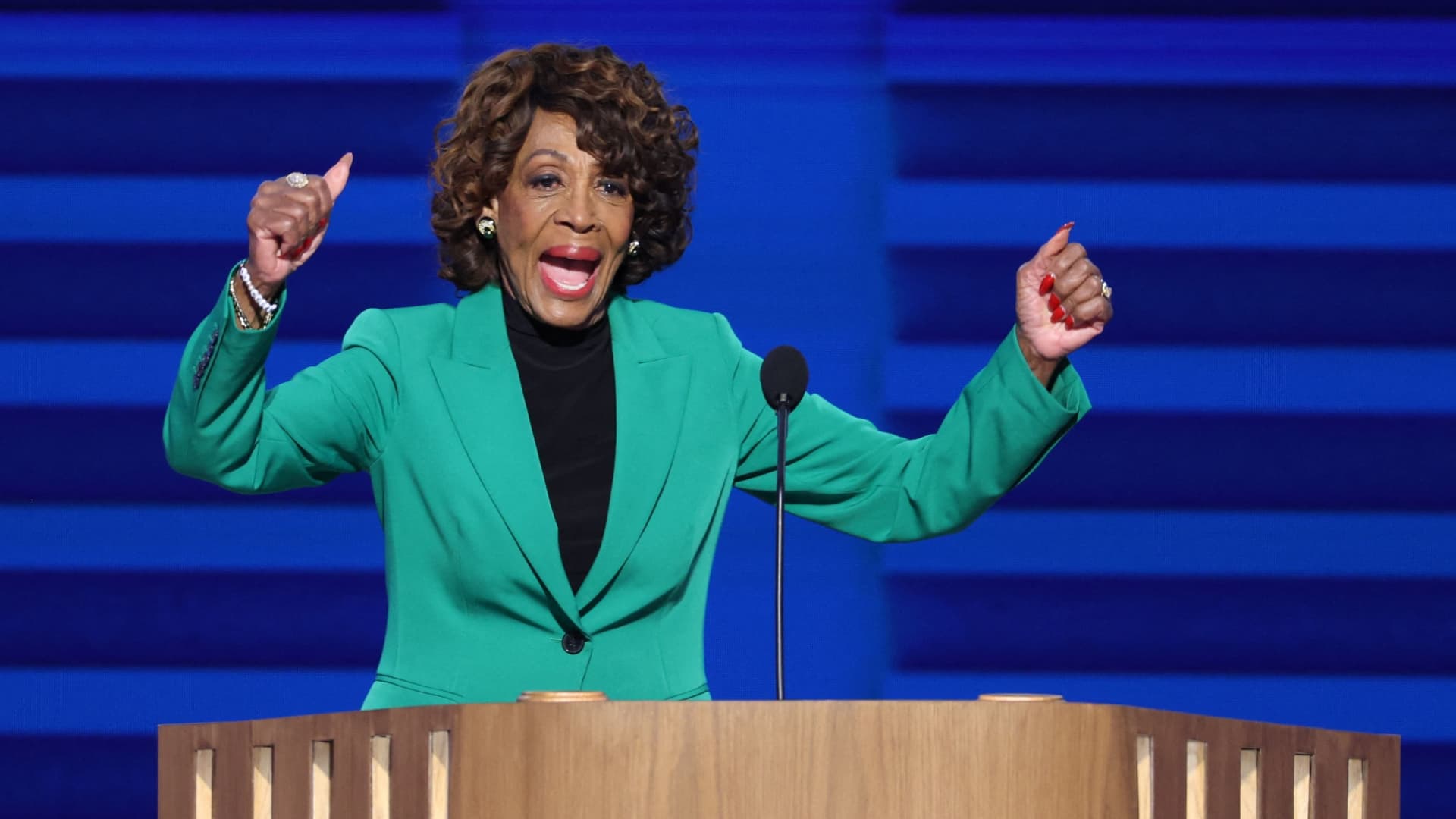
Rep. Maxine Waters, D-Calif., gestures at the United Center, on Day 1 of the Democratic National Convention in Chicago, Aug. 19, 2024.
Mike Segar | Reuters
House Democrats this week laid out their plans to counter President Donald Trump’s rhetoric about “nationalizing” this year’s elections ahead of the 2026 midterms.
The lawmakers convened at their annual policy retreat, where they set their agenda for the year and hone campaign messaging. They met in northern Virginia this week following Trump’s escalating calls for voter-ID requirements at the polls and his desire to require presenting documents to register to vote, both changes that would likely disenfranchise voters across the U.S. A pending Supreme Court decision on the Voting Rights Act also looms large, and Trump has said he is considering ways of imposing the changes he wants even if Congress does not pass legislation.
“This is a five alarm fire,” Rep. Terri Sewell, D-Ala., said at a Congressional Black Caucus press conference at the retreat’s close on Friday. “We are going to fight back, and we are going to use every tool in the toolkit.”
Sewell, who is also a member of the House Administration Committee that has jurisdiction over federal elections, said options include litigating, legislating and mobilizing. But with a minority in both chambers, Democrats are somewhat limited in the run-up to the pivotal 2026 midterm elections that will decide control of the House.
Trump in recent months has again become laser-focused on elections, rehashing some of his old, unfounded claims about the 2020 presidential contest being “rigged” and noncitizens voting. It is illegal for noncitizens to vote in federal elections and instances are rare. The FBI in January seized ballots in Fulton County, Ga., a precinct that Trump lost to Joe Biden.
The president has recently called to “nationalize” elections. He has pushed for the Senate to pass a controversial bill that would require proof of citizenship to register and photo identification to cast a ballot. Trump threatened earlier this month to unilaterally impose voter ID restrictions ahead of November’s elections.
MS NOW reported Thursday that he has instructed White House lawyers to review the feasibility of such an order. And the Washington Post reported that a group of pro-Trump activist is circulating a draft executive order to effectuate that goal that is premised on Chinese interference in the 2020 election.
Rep. Joe Morelle, D-N.Y., said these attempts have “shaky” legal footing.
“I’m deeply skeptical of any evidence that they suddenly have six years later,” Morelle said in an interview at the retreat.
Morelle, in his capacity as the top Democrat on the House Administration Committee, is leading House Democrats’ response to the Trump administration’s elections priorities. He’s also preparing for the potential fallout from a challenge to a section of the Voting Rights Act of 1965 that, if upheld, could eliminate some majority-minority Democratic-held districts. The Supreme Court is expected to release its decision on that case sometime between now and June.
That Democratic effort includes war-gaming different potential election scenarios, working on litigation and crafting messaging, Morelle said. Sewell, meanwhile, said the CBC has held several all-day sessions on the topic of voting rights to help hone its response.
“One of the things I think we really need to focus on, especially in the wake of the seizure of the ballots in Fulton County, is there’s got to be a strong legal basis that we lay out now that’s in objection to what they’re doing on that front,” Rep. Glenn Ivey, D-Md., said at the CBC press conference.
Democrats also articulated fears that Trump could deploy Immigration and Customs Enforcement agents and National Guard members to polling places as a means of voter suppression in November.
“Every year we do a grassroots piece where you have people, poll watchers and the like. But it’s got to be supercharged, on steroids this time around,” Ivey said. “We’ve seen this movie before. It’s been a long time since it was this overt, but I think we have to have people who are trained and ready to be in all of these polling places.”
Saving democracy vs. affordability?
Democrats were laser focused on cost-of-living issues throughout the retreat, which included appearances by Virginia Gov. Abigail Spanberger and organized labor leaders. Affordability is already shaping up to be a key message to voters for Democrats this year.
But Morelle said members are “acutely attuned” to potential threats to elections. Most of the conversations he had during the retreat were related to election security, he said.
Still, after their message on Trump’s threats to democracy fell flat in the 2024 cycle, they face a strategic challenge: Does raising the election issue take away from their messaging on the economy?
“You can walk and chew gum at the same time,” Rep. Maxine Waters, D-Calif., a member of the CBC and the Congressional Progressive Caucus, said in an interview. Affordability is the top concern, Waters said, but “Democrats have to be very concerned about what the president is doing — it is literally voter suppression.”
Rep. Jamie Raskin, D-Md., the ranking member on the House Judiciary Committee and a former member of the House Jan. 6 Select Committee, and Morelle both said Democrats do not have to choose one or the other.
“I don’t buy the argument that we either have to talk about popular democracy or we have to talk about middle-class affordability,” Raskin said in an interview. “To me, these are the same issue. We need government that is going to be an instrument for the common good of all the people, and not an instrument for the corrupt self enrichment of the guy who gets in and his family and his friends.”
“I don’t think [Americans] think about it sort of in an esoteric, theoretical way, ‘democracy needs to be defended,'” Morelle said. “I think what they are growing in their awareness is, our access to the ballot has a great deal to do with the decisions that will affect the bottom line for my family.”
<