
What humanoid robots taught me about risk, jobs and the economy: CEO
An Apollo humanoid robot prototype, made by Apptronik Inc., demonstrates its dexterity during a media day at the Mercedes-Benz Digital Factory Campus in Berlin, Germany on Tuesday, March 18, 2025.
Bloomberg | Bloomberg | Getty Images
Recently, Apptronik announced a $520 million funding round at a valuation north of $5 billion, with Alphabet‘s Google DeepMind as a partner. Today, their market position within the humanoid robot category sounds inevitable.
In 2019, it didn’t.
I was on a YPO forum trip to Austin and had arranged for our group to visit Capital Factory to hear startup pitches. As usual, most were forgettable. Interesting ideas, thin moats. No technical talent.
Then Jeff Cardenas walked in, holding an interesting looking robotic arm.
Apptronik was spinning out of The University of Texas at Austin. The pitch: build general-purpose humanoid robots capable of operating in real-world industrial environments.
It sounded borderline insane.
But within minutes, our group — all founders and operators — knew we wanted in, and we became the second investor at a $15 million valuation.
Here’s why.
1. The problem was very real
Most startups solve minor friction. Humanoid robotics addresses labor itself.
The developed world is aging. Manufacturing and logistics companies struggle to hire. Labor costs continue rising. Entire supply chains depend on physically demanding work that humans increasingly don’t want — or physically can’t — do long term.
If you can build a humanoid that performs repetitive, dangerous, or ergonomically brutal tasks, you’re not creating a convenience product. You’re altering a cost structure that sits at the core of global GDP. Structural pain creates structural demand.
2. The ambition justified the risk
Early-stage investing is binary. It can go to zero, and usually does. If I’m taking that risk, the upside must be non-linear.
Labor is one of the largest input costs in the global economy. A scalable humanoid platform represents a trillion-dollar category if it works.
Jeff wasn’t pitching a feature. He was pitching a platform with an almost limitless total addressable market. Small markets cap outcomes. Big markets forgive early mistakes.
3. The technical depth was authentic
Hard tech is ruthless. Physics doesn’t respond to charisma.
Apptronik wasn’t a software wrapper. Jeff and his co-founders emerged from deep robotics research at UT Austin. The engineers understood actuation, balance, power systems — not just slideware.
Too many founders outsource the hard part and hope capital fills the gap. In robotics, there are no shortcuts.
4. Founder durability mattered more than polish
Hardware startups face near-death moments routinely: supply chain delays, cost overruns, missed milestones, skeptical customers.
Jeff had something I look for in every founder: steadiness. Not hype. Not bravado. Durability and humility.
You cannot build something this ambitious if you transmit panic every time something breaks — and in robotics, things break constantly. Durability compounds over time.
Apptronik founder and CEO Jeff Cardenas (background center) in 2025 with investor Ravin Gandhi (front right) and co-investors from the 2019 financing round (left to right) John Sapiente, Sean O’Scainlain, and Greg Tepas. Not pictured: Additional 2019 co-investors Al Goldstein, Tony Davis, Andrew Taitz and Rich Heise
Ravin Gandhi
5. The risk was obvious — and that was the opportunity
I have invested in many hardware deals in my career, and there is a reason for the expression “hardware is hard.” Scaling is brutally difficult because of the capital expenditures with an uncertain payoff.
Plus standing up manufacturing is hard, driving unit economics down is hard, integrating hardware with advanced AI is hard, and delivering at scale is hard.
That’s precisely why the opportunity exists.
Today, Apptronik has more than $1.2 billion in sales pipeline discussions with major global companies.
6. AI changed the timing
But pipeline doesn’t equal production. The real test will be manufacturing discipline once deliveries scale.
In my experience, manufacturing is the ultimate moat. Vision attracts capital. Execution builds companies.
Apptronik struggled for years, and faced numerous existential threats.
Then artificial intelligence arrived.
With advanced AI systems — and now a partnership with Google DeepMind — the intelligence layer finally matched the hardware ambition.
Robots without intelligence are expensive machines – but robots with intelligence are labor. That distinction changed everything.
7. This is bigger than venture returns
Humanoid robotics will influence manufacturing, logistics, defense and national competitiveness.
Other countries are aggressively funding this category. Sovereign wealth funds are watching closely. Capital is global. Leadership does not have to be.
Apptronik is an American story: university research, private capital, ambitious founder, industrial focus.
Apptronik ranked No. 33 on the 2025 CNBC Disruptor 50 list.
If this category is inevitable — and I believe it is — then it matters who leads.
The U.S. has the ingredients: world-class universities, deep capital markets, and founders willing to take uncomfortable risks. We should use them, and give them every support.
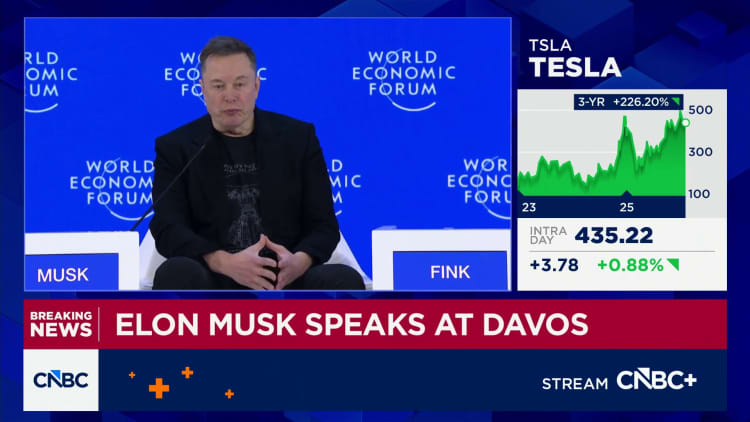
Elon Musk says that there will eventually be more humanoid robots than humans. And these robots might be the key to interplanetary travel and many other almost unimaginable advances.
But just a few years ago, Apptronik was just a founder with conviction, a real technical bench, and a problem large enough to matter. That’s usually how the best bets begin.
Humanoid robotics may take longer than optimists expect. It will almost certainly cost more than projected. Manufacturing scale will separate winners from dreamers.
But if it works, it won’t just create a large company. It will change how work gets done.
And those are the kinds of risks worth taking.
—By Ravin Gandhi, CEO of investment firm Glenborn Partners and former CEO and founder of GMM Nonstick Coatings, a global manufacturing company. Gandhi co-hosts the “Forged In America” podcast.

<