3 ways the pros are trading markets right now

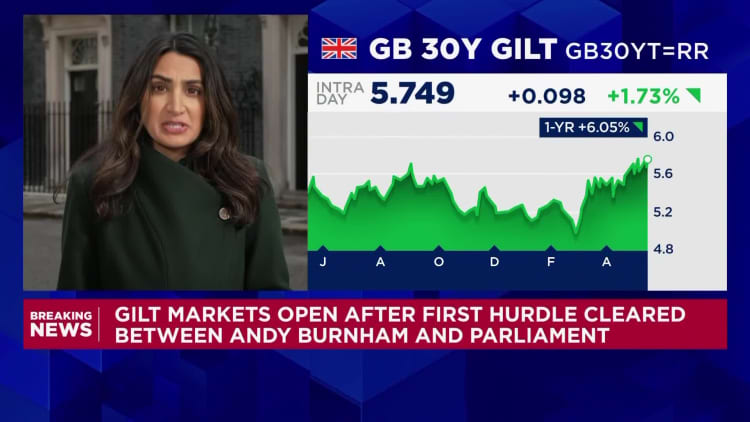
A sell-off in global bond yields is putting equities under pressure again, with yields of 10-year bonds of Japan, Germany, the U.K. and the U.S. all at levels not seen in years. The 30-year U.S. Treasury yield has hit its highest level in nearly 19 years. Here are three investment strategies we heard in CNBC’s Singapore, Abu Dhabi and London studios on Wednesday to help navigate the noise. ‘Be greedy when everyone’s being fearful’ Bryn Jones, head of fixed income at Rathbones, said the recent bond sell-off has provided a “huge amount of value to investors”. Jones added that the traditional 60-40 equities/bonds approach to portfolios was no longer a reliable hedge because, when bonds have sold off in previous years, equities have also softened. He warned of complacency in risk markets, saying that “concerns start to rock through risk markets” when yields and the cost of financing rise too much. “If you think going back over the last 30 years, if this is the highest yield that you’ve ever had, then … be greedy when everyone’s being fearful and be fearful when everyone’s being greedy,” he said, quoting Warren Buffett. The 30-year Japanese bond Gareth Nicholson, CIO of FAB Asset Management, said he was considering investing in 30-year Japanese bonds, adding their current level “is something we’ll consider fading into.” He added he was also eyeing the shorter end of the U.S. yield curve. “We want to remain flexible. We like the three-to-seven-year duration part. We think that’s exciting, and don’t forget that this is the first time in a very long time that bonds are actually starting to offer us decent value compared to equities,” he said. Chinese deeptech Winnie Wu, head of APAC equity strategy at BofA Global Research, said that, despite outflows from China into South Korea and Taiwan, the country is better positioned from a flow perspective. Wu added that Chinese semiconductor and hardware-related stocks were diverging from consumer, internet and software-related stocks. She added that foreign investors were often discouraged because they were “not patient enough to look deep down into the Asia names,” including “some of these Asia AI semiconductor names” which are on U.S. sanction lists.
<