Warsh pushes his plan for ‘regime change’ at Senate hearing: Analysis
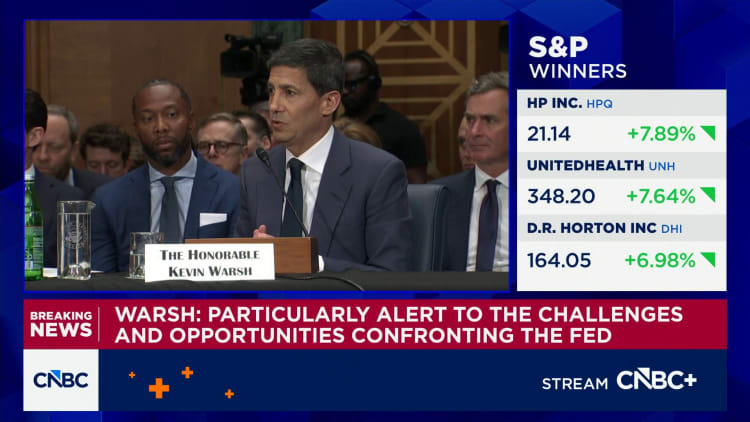

Kevin Warsh faced searching questions at his Senate confirmation hearing Tuesday. Democrats and even at times Republicans challenged his complicated finances, his relationship to President Donald Trump and what often seems like a wide-eyed endorsement of the promise of artificial intelligence. But one core issue for Warsh went all but unquestioned: his plan for what he calls “regime change” at the Federal Reserve.
Warsh has planned for years to sharply change the way the Fed operates, down to the very definition of the word “inflation.” That plan came through the hearing largely intact, leaving Warsh in a strong position if confirmed quickly to attempt an overhaul of the Fed. Any attempt at major changes will certainly spark dissent and disagreement within the Fed, as will his efforts to quickly lower interest rates. But Warsh said Tuesday he welcomes a “good family fight,” and objections from the Fed’s other policymakers may only be an advantage in Warsh’s eyes as he seeks to overturn their way of doing business.
Warsh has faced attacks on his credibility since Trump nominated him in January. The president has publicly demanded interest rates be lowered to as low as 1%. He attempted to fire one Fed governor and has encouraged his Department of Justice to move ahead with an investigation of current Fed Chair Jerome Powell. The courts are adjudicating those issues.
Warsh tried to dispel worries about Trump. “The president never generally or specifically instructed me or suggested I should commit to any interest rate path whatsoever,” he told senators under repeated questioning about what he may have said to Trump.
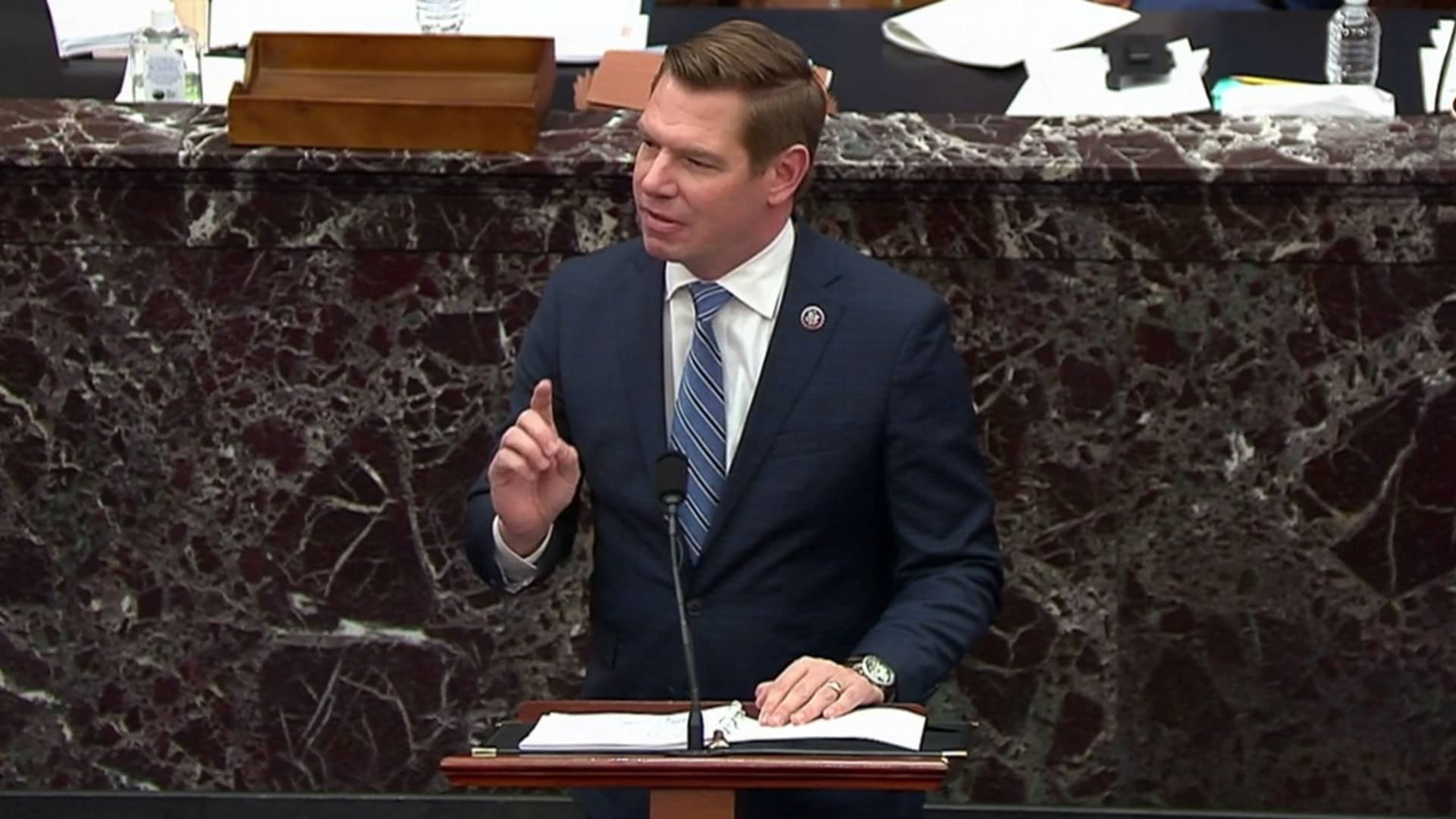
Kevin Warsh, U.S. President Donald Trump’s nominee to be next chair of the Federal Reserve, testifies before a Senate Banking Committee confirmation hearing on Capitol Hill in Washington, D.C., U.S., April 21, 2026.
Kevin Lamarque | Reuters
But that followed a number of difficult exchanges.
“I must commend you on the way you can circularly go around questions and not answer them,” Sen. Jack Reed, D.-R.I., told Warsh. “It’s a skill. Unfortunately, it’s not a good skill for the chairman of the Federal Reserve Board.”

Some prominent former Fed officials have also expressed doubts. Former Chair Janet Yellen said recently that she believes Warsh would have a hard time swaying the Federal Open Market Committee, where he would need a majority of 11 other votes to change rates. “I really don’t see the FOMC accepting this in the short run,” Yellen said.
Perhaps not, and while Warsh can’t totally ignore other Fed officials, he has spent his time since leaving an earlier stint on the Fed in 2011 defining himself in opposition to them.
“Milton Friedman had a phrase that always stayed with me,” Warsh said at the hearing. Warsh once worked as a research assistant for Friedman, an influential conservative economist. “He always worried about government officials that lured and hung around with what he called the tyranny of the status quo. Status quo practices and policies are especially harmful when the world is changing this fast,” he said.
Warsh would break that status quo. He declined at the hearing to commit to continuing with regular press conferences, which the Fed has held since the financial crisis. He would abandon forward guidance, the Fed’s way of signaling to the markets where it wants interest rates to go. He would even move away from the Fed’s preferred measure of inflation, the core personal consumption expenditure measure, which he dismissed as a “rough swag as to what was going on” with prices. “We don’t have to do a rough swag any more.”
These ideas aren’t just window dressing for Warsh. They are how he brings down the long-term interest rates that trouble Americans in the form of higher mortgage and credit-card rates. Warsh believes markets have driven those rates up in response to muddled policy from the Fed, including the recent spike in inflation after Covid — but going much further back, too. The Fed, he argues, has lost credibility.

Warsh left the Fed in 2011 because, he said at the time, he objected to a set of programs that left the central bank too deeply entrenched in the U.S. economy. A large part of that was the Fed’s asset-buying program, called quantitative easing, that has left $6.7 trillion in financial assets on the Fed’s balance sheet. That program was important to stemming the financial crisis, Warsh said at the time, but should have long since been dismantled.
“Winning the battle against the Panic of 2008 was a necessary but insufficient condition to win the peace and ensure a strong foundation for economic prosperity,” Warsh said in a September 2009 speech. The Fed needed to pull back from its micromanagement of the economy, Warsh argued. The Fed has neglected “market discipline,” or allowing ailing firms to fail, he argues. The result is an economy that runs far weaker than it should, with officials who are prone to jump in at any sign of trouble.
In 2023, after Silicon Valley Bank and other institutions failed and were rescued by the Fed and other government institutions, Warsh blamed the episode on the Fed’s coddling of the economy. “A decade-long period of free money, negative real interest rates, and large asset purchases by the world’s central banks from their own treasury departments leads to deep complacency in financial markets, among regulators, and [among] market participants,” he said an interview that year.
Warsh’s diagnosis of the Fed’s problems isn’t that it has interest rates wrong. Rather he believes the institution’s entire way of seeing the world since the financial crisis is wrong. That isn’t fixed, in his mind, by getting interest rates a quarter-point higher or lower. Rather, it is fixed by coming into the Fed and showing to the market and the public that a new sheriff is in town.
It is too early to say whether Warsh can immediately make the case for the rate cuts Trump has demanded, though he has the advantage of time. The longer his nomination drags on, the greater the chance that the Fed and other central banks will be able to look past the Iran war’s oil-price shock and get back to worrying about a weakening labor market. That would argue for cuts.
Regardless, if Warsh is brought into the Fed amid cries of discontent from the central bank, they may only help to make his case to the public that this is an institution that has lost its way. The Senate, at least, showed little sign it disagrees.
<