U.S. judge blocks Trump administration actions stymieing wind, solar projects
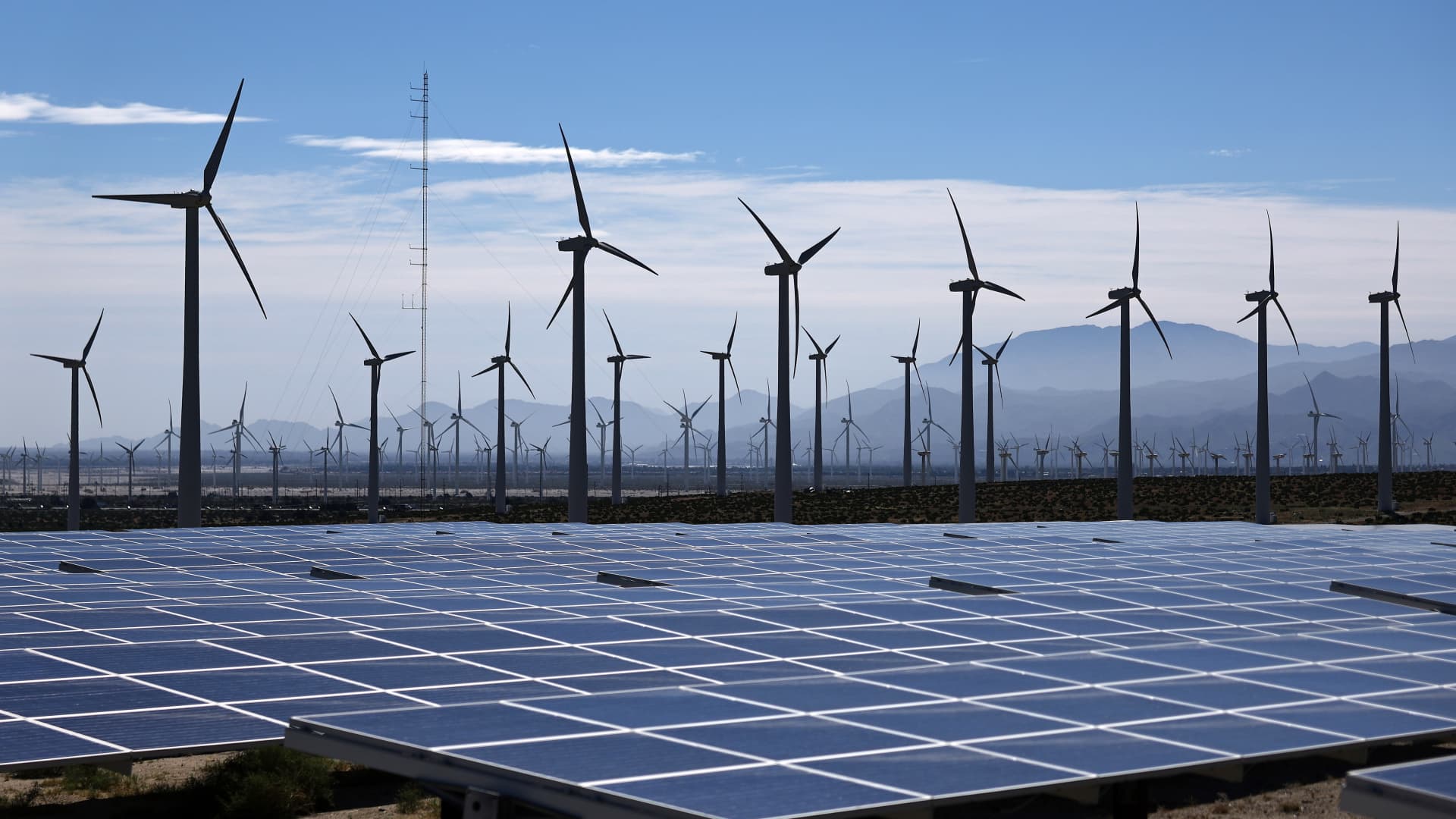
Wind turbines operate at a wind farm near solar panels near Palm Springs, California, on March 6, 2024.
Mario Tama | Getty Images
A federal judge on Tuesday blocked President Donald Trump’s administration from enforcing a series of permitting policies that wind and solar energy industry groups say have stymied the development of new energy generation projects.
Chief U.S. District Judge Denise Casper in Boston issued a preliminary injunction sought by nine advocacy groups and industry trade associations that argued the administration had imposed unlawful roadblocks that have halted the development of wind and solar energy projects nationwide.
The ruling was the latest in a series of judicial rebukes to the Trump administration’s efforts to block federal approvals for wind energy projects or stop work on multi-billion-dollar offshore wind farms under construction on the East Coast.
Trump has sought to boost government support for fossil fuels and maximize their output in the United States, the world’s top oil and gas producer, after campaigning for the presidency on the refrain of “drill, baby, drill.”
Groups including RENEW Northeast and Alliance for Clean Energy New York sued in December, seeking to block actions by the U.S. Department of the Interior and other agencies that they said placed wind and solar technologies into what their lawyer called “regulatory second-class status.”
At a March 4 hearing, Daron Janis, a lawyer for the plaintiffs, focused on a policy the Interior Department adopted in a July memorandum that requires nearly every step in the wind and solar permitting process to receive approval from three senior political appointees, including Interior Secretary Doug Burgum.
The memorandum cited directives and orders Trump had signed aimed at blocking offshore wind development and directing the Interior Department to eliminate “preferences” for “expensive and unreliable energy sources like wind and solar.”
Janis said that policy created a “complete bottleneck” that grinds permitting to a halt. He said it was adopted without any explanation for why it was needed, in violation of the Administrative Procedure Act.
The plaintiffs also challenged policies disfavoring energy projects that are “capacity dense,” as wind and solar ones would be deemed, and the Interior Department’s adoption of an interpretation of the Outer Continental Shelf Lands Act that imposes stricter standards for offshore wind projects.
U.S. Department of Justice lawyer Paul Turcke countered at the hearing that Burgum had the statutory right to exert more oversight over the permitting process and that the industry trade groups lacked standing to challenge his department’s actions, which do not directly affect them.
<