Family investors turn to old-economy businesses to avoid AI disruption
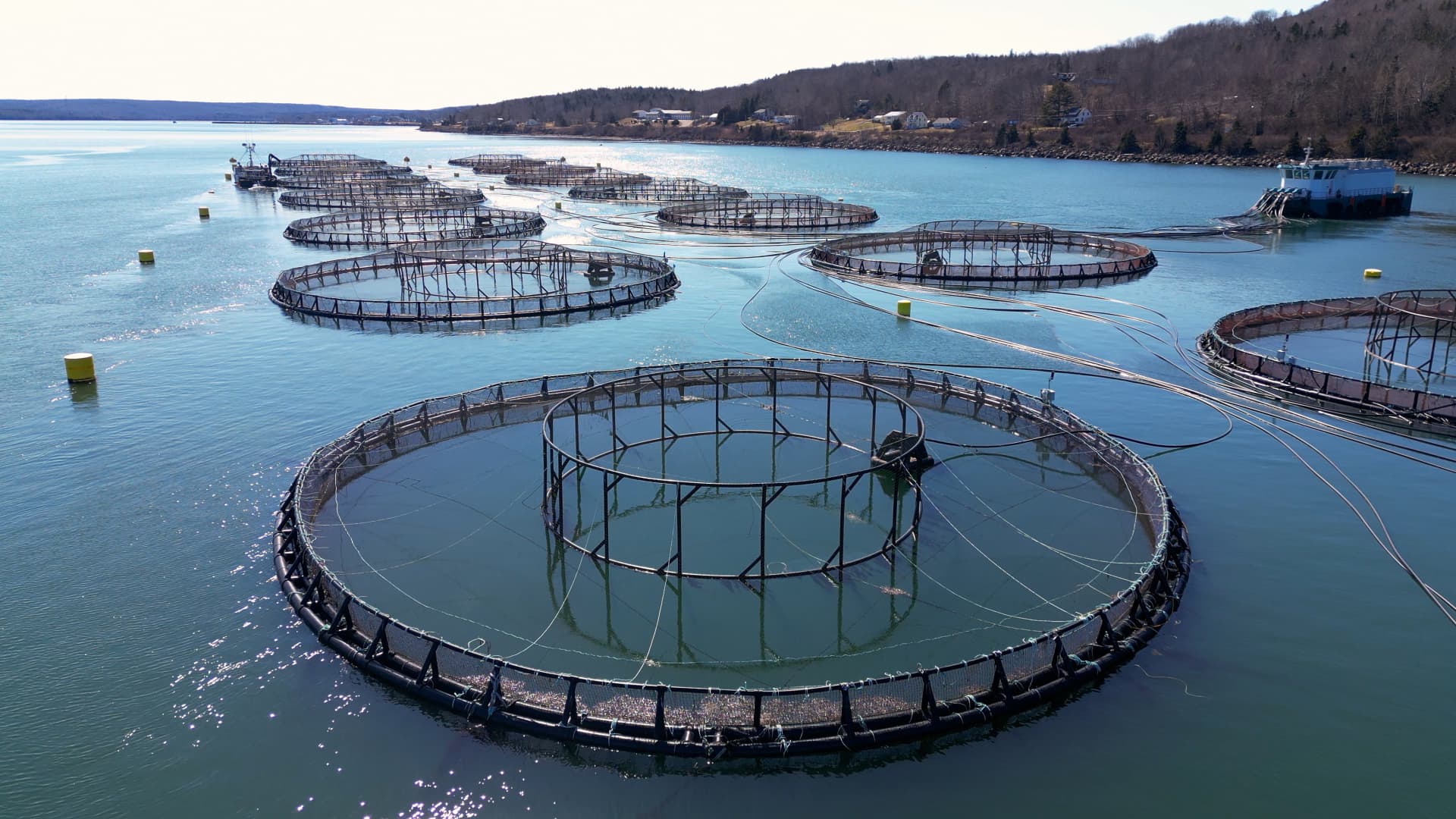
Fish farm nets on the East coast.
Shaunl | E+ | Getty Images
A version of this article first appeared in CNBC’s Inside Wealth newsletter with Robert Frank, a weekly guide to the high net worth investor and consumer. Sign up to receive future editions, straight to your inbox.
Equity Group Investments, backed by the family of late billionaire Sam Zell, owns a John Deere dealership, a bluefin tuna fishery and a pedestrian bridge that connects San Diego to Tijuana International Airport.
While those holdings sound entirely unrelated, what unites the private investment firm’s wide-ranging portfolio is a focus on old-economy businesses that are less susceptible to disruption from artificial intelligence and other technologies, according to EGI’s president, Mark Sotir.
“We tend to put our capital to work for a longer duration than most [private equity] firms. If you’re thinking out 10 years, 12 years, you have to start with picking a company in an industry that you know will be around,” he said. “That’s why we shy away from some tech and some startups. It’s not because we don’t like doing them. It’s just very hard for me to tell you where software is going to be 10 years out.”
The anti-AI trade gained steam on Wall Street earlier this year, dubbed “HALO” for “heavy assets, low obsolescence.” Family offices already employ the same strategy with private markets as they invest for generations and value the cash flow that often comes with old-economy businesses, according to Sotir. Economic uncertainty and tax reform has also made backing these asset-heavy companies more attractive.
Asset-heavy businesses tend to deter traditional PE investors who are looking to buy and sell within three to seven years, giving family offices opportunities to acquire at a discount, according to Sotir.
“Everybody gets so enamored with asset-light, but I like to say, ‘If you’re paying an asset-light premium, then I’m not sure where the advantage is,'” he said.
The “one big beautiful bill” law also provided a boon to owners of these businesses by renewing bonus depreciation, enabling companies to deduct the full cost of qualifying assets like machinery or vehicles the first year they are used.
“It’s a very material change that can make a big difference in terms of the tax benefit,” said Brian Hans, who leads the tax efficiency strategists for UBS’ advanced planning group. “Family office clients are increasingly approaching investing in general with more proactive tax planning, looking at the after-tax return, calculating what the return from the investment is going to be, and factoring that in when making the decision to invest.”
If the business is an active investment, the depreciation can be used to deduct against income on other active investments like stocks, Hans added. This is a sizable benefit for families that have highly appreciated stock holdings, he said.
Auto and equipment dealerships are ripe for taking advantage of bonus depreciation and check off other important boxes for families like reliable cash flow, according to Joe Mowery, head of dealership investment banking at Stephens.
“It’s very simple. They like a tax-advantaged income stream,” Mowery said.
While inflation and other economic trends can weigh on consumers’ ability to buy vehicles and equipment, the parts and service business is resilient and has high margins, according to Mowery.
“It’s not a nice-to-have. It’s a must-have. You know, you got to get to work, you got to take the kids to school, whatever the case may be,” he said.
Old-economy businesses aren’t immune to disruption, but they can come with geographic moats, limiting competition, according to Sotir. For instance, EGI owns John Deere and Kenworth dealerships. Thanks to the franchise terms, Sotir said he does not have to worry about another dealership of the same brand opening nearby.
As for EGI’s bluefin tuna fishing and farming business in Baja California, there are substantial barriers to entry due to quotas on fishing, according to Sotir.
EGI isn’t under pressure to deploy capital, unlike traditional PE firms, as it’s family backed, Sotir said, noting the firm typically makes one to two deals a year. Sotir said the firm is receiving more inbound queries from business owners who are pressured by tariffs, inflation and other factors.
“The amount of uncertainty that people are dealing with has oddly turned into a benefit for us,” he said.
There are attractive opportunities in agriculture, with farms under tremendous stress, Sotir said. The challenges are real, such as the rising costs of fertilizer and fuel, but EGI can afford to wait for a payoff, he said.
“People are worried about the space, and that’s the perfect time for us to step in to buy,” he said. “Even if the value doesn’t come in the first two, three years, that’s okay, as long as we know it’s coming, because we’ve got that duration.”
<