Nvidia’s post-earnings gains may hinge on sales to China. Here’s why
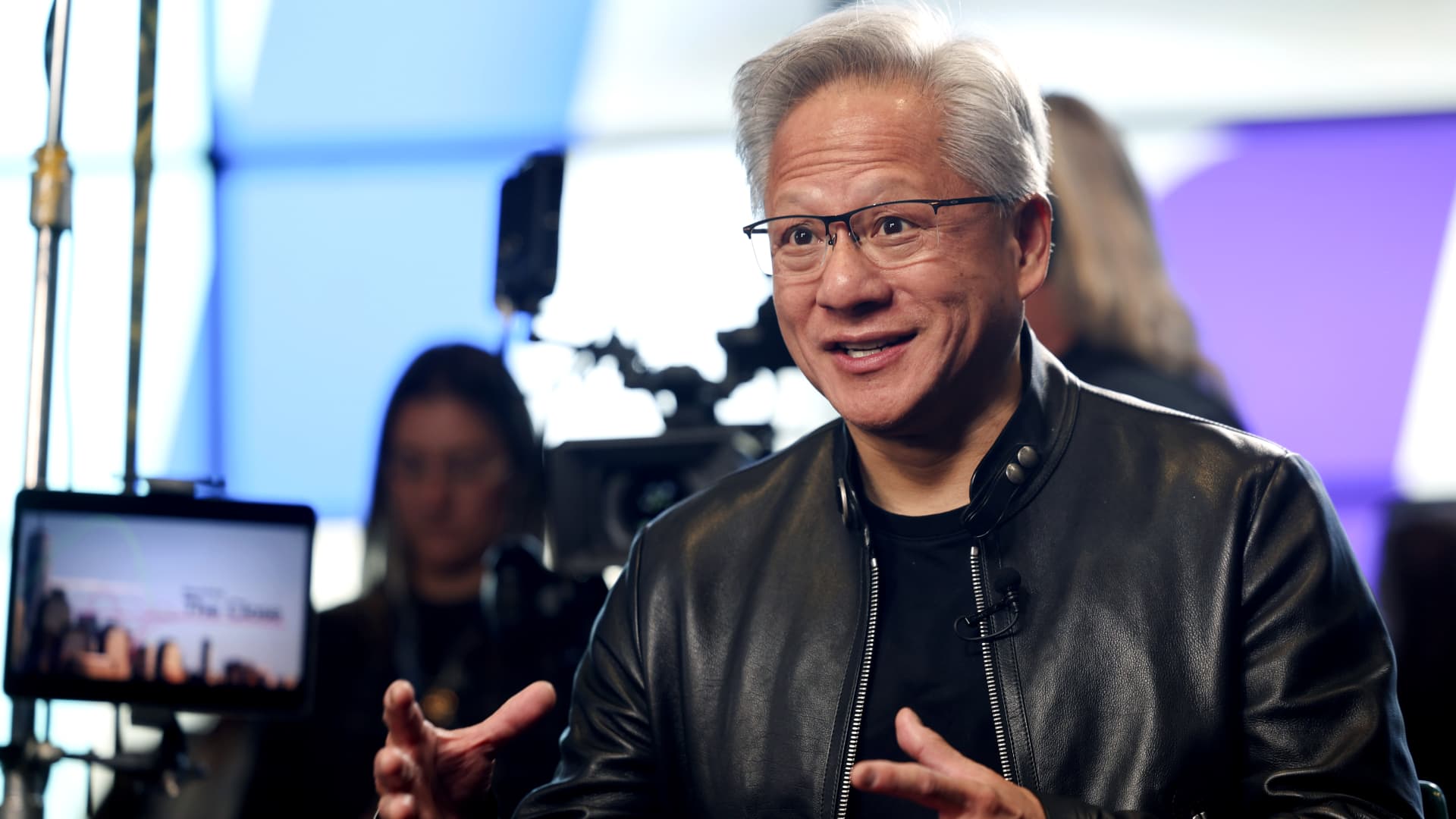
Nvidia’s quarterly report after the bell Wednesday is the most anticipated of the earnings season. Yet, what the chipmaker says regarding graphics processing unit sales in China could have a bigger impact on how the stock trades. U.S. trade authorities approved about 10 Chinese companies as customers for Nvidia’s second-most powerful H200 GPU chip, news agency Reuters reported on Thursday. No deliveries have been confirmed, and it’s not clear whether the 10 firms have been cleared by Chinese trade authorities to make the purchases, though three internet companies in China were reportedly allowed to purchase the chips earlier this year . CEO Jensen Huang, who traveled last week to Beijing with President Donald Trump earlier this month, said Monday he believes the Chinese market will reopen to Nvidia after remarking last year that the company’s Chinese market share had dropped to zero. “The Chinese government has to decide how much of their local market they want to protect,” Huang said in an interview with Bloomberg News on Monday. “My sense is that over time the market will open.” Trump said Friday China hasn’t allowed purchases of the H200s “because they chose not to, they want to develop their own. He said the subject “did come up and I think something could happen on that.” The specifics of that timing are of keen interest to investors and analysts. “H200 sales into China will be an important watch item,” Kevin Cassidy wrote Tuesday for Rosenblatt Securities, seeing it “less as a revenue-magnitude story and more strategic in Chinese AI developers standardized on Nvidia GPUs.” Analysts for Truist are also keeping their eye on sales into China, noting the uncertainty about whether Chinese customers had gotten licenses from Chinese trade authorities. “Sales to China remain a significant upside potential that we believe remains a potential, for now,” Truist analyst William Stein wrote on Monday. “We do not believe these customers have been awarded import licenses from the Chinese government.” Asked about H200 approvals into China, a spokesperson for the Chinese embassy in Washington told CNBC on Tuesday that last week’s discussions between President Xi and President Trump are “pointing the direction and providing safeguards for economic and trade cooperation between the two countries.” Wall Street wants to see a broader customer base The rising tide of AI capex is lifting all boats in the semiconductor space but could submerge some of Nvidia’s dominance as chip demand widens amid greater disaggregation in AI systems architecture. Nvidia needs to show that it’s diversifying away from the cloud providers like Microsoft, Amazon, Alphabet and Oracle, investors say. “Is this company broadening out its customer base? Because that is a big risk,” John Belton, Gabelli Funds portfolio manager, told CNBC. “Half the business is basically from five large companies, which have collectively taken free cash flow to about zero now. So how durable is growth within that part of the business? Are they broadening out the customer base? Are they broadening out the product set?” AI query-response workloads are becoming more decentralized, which is translating to more specialized system designs that require more CPUs relative to GPUs. “Nvidia now has to share the capex with memory makers, AI networking, and server CPU vendors. Nvidia needs to show evidence of diversifying its non-cloud service provider customer base to fuel its AI GPU momentum,” HSBC analyst Frank Lee wrote to clients. More competition from CPUs Semiconductors started booming at the end of March, with CPU-focused chipmakers like Intel, AMD and South Korean manufacturers going parabolic in April before falling back this month. The boom was due in part to expanded capex plans and revenue growth from the cloud service providers, but it was also because of architecture changes that put more focus on coordinated CPU clusters and memory components like DRAM and NAND. As a result, Nvidia missed out on some of the action, and questions remain about how much it stands to gain from the ongoing buildout in capacity. “AMD and INTC have a good chance of growing into their numbers, but NVDA remains constrained by high expectations and serious supply constraint,” Seaport analyst Jay Goldberg wrote Monday. Updates to frontier AI models requiring customized architectures could also lead to revisions in Nvidia’s outlook. “NVDA’s moat may erode at the very high-end, where large customers can justify dedicated teams for AMD, TPU, Trainium, Cerebras, internal ASICs, etc.,” Mark Lipacis of Evercore ISI wrote. The consensus estimate for Nvidia is for an 80% year-over-year boost in revenues and 120% annual growth in EPS, according to a Monday note from Ulrike Hoffman-Burchardi, global head of equities at UBS. “Investors also anticipate its results to beat expectations, with the chipmaker likely to offer guidance above analysts’ forecasts,” she wrote.
<