Bank of America says stocks just went through an ‘upside crash.’ What happens next
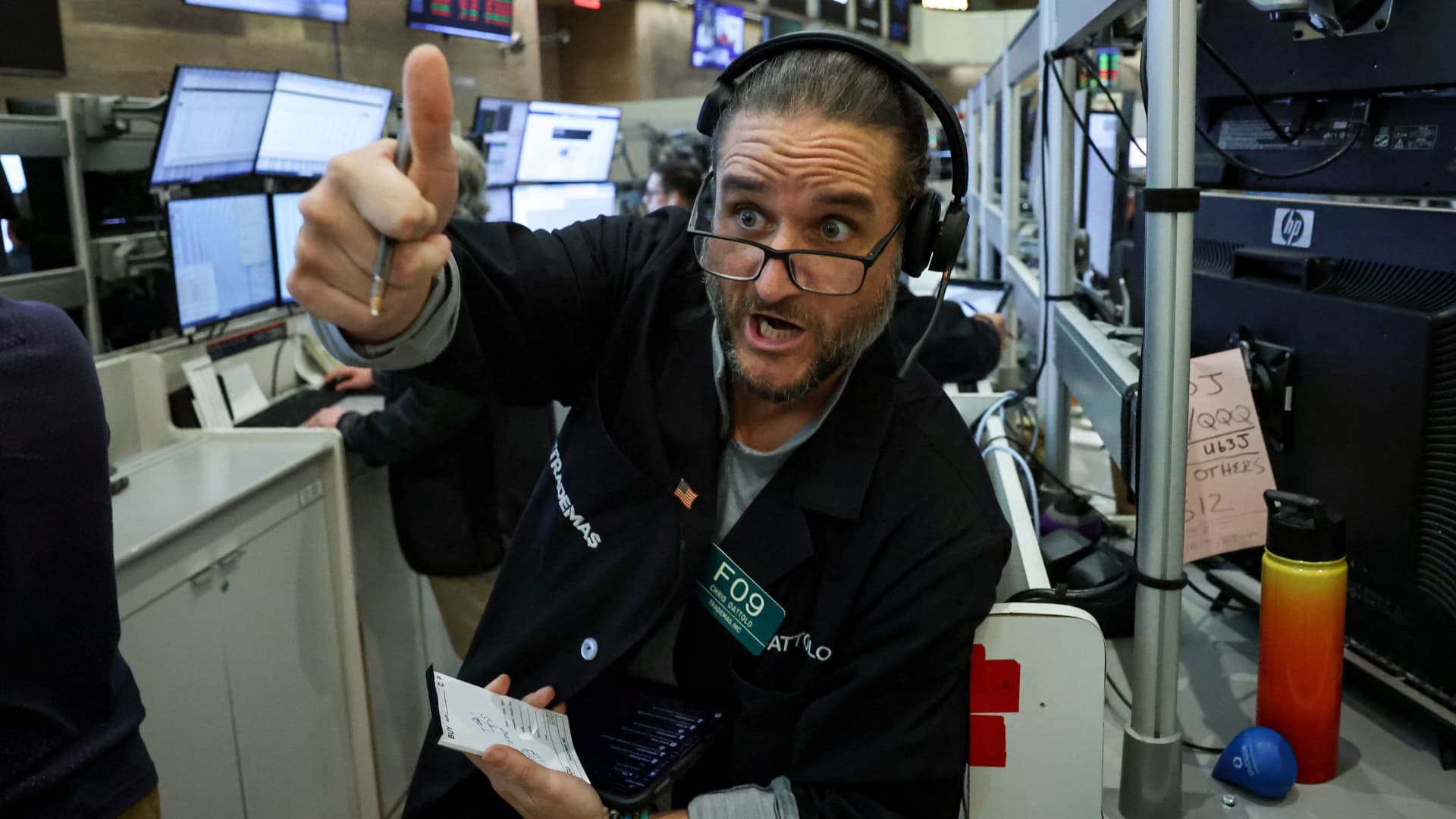
The recent stock market rally that sent prices to all-time highs was an “upside crash,” and Bank of America Securities warned investors to proceed with caution. An “upside crash” describes a sudden surge in prices, one that could potentially form a bubble as traders find themselves chasing unexpected rallies in a volatile market. It’s been used to describe the rapid recovery in the stock market in 2020, following the start of the Covid pandemic. It could also be used to describe the recent stock market advance, with the Nasdaq Composite last week extending its longest winning streak going back to 1992 — 13 consecutive days of gains — and the S & P 500 reaching an all-time high above 7,100, despite the continuing war in the Middle East. “The Nasdaq’s historic 13 consecutive up days on near-record 25% realized volatility — and the S & P’s rally rivaling periods like Covid despite far less preceding stress — highlight a pronounced ‘upside crash’ dynamic in U.S. equities, consistent with our 2026 call for more bubble-like price action,” read a note Monday from Bank of America’s global equity derivatives research team led by Arjun Goyal. “Pockets of the AI trade such as semiconductors at ChatGPT-era highs on our Bubble Risk Indicator, alongside equity vol showing support on last week’s rally, further align with expected bubble dynamics,” Goyal wrote. .IXIC 1M mountain Nasdaq Composite over the past month In such an environment, it’s important for investors to remain flexible, the bank said. The firm recommended buying call options on the Nasdaq-100 ETF (QQQ) as well as the Cboe Volatility Index (VIX) , considered Wall Street’s “fear gauge,” to profit during major spikes, while simultaneously capping risk. Over the longer term, Bank of America said it’s better to hold options in the Nasdaq-100 over volatility variance spreads in the S & P 500 as the tech-heavy index is more likely to benefit from AI beneficiaries, though traders should also hedge against the potential downside. Volatility variance spreads measure the difference between implied volatility and realized volatility , or between different timeframes of implied volatility. “In a reflexive environment where fundamentals give way to uncertainty, optionality remains critical in our view,” read the note. “QQQ call spreads and VIX call spreads benefit from attractive skew entry points and hedge near-term right & left tail risks, respectively.” “Longer-term, we continue to favor owning NDX over SPX var spreads, as the Nasdaq’s asymmetric exposure to the tech IPO pipeline (given new fast-entry) should make it a more effective hedge against both an AI boom and an eventual bust,” the Bank of America note continued.
<