Defense contractors would be barred from buying back their stock in bill approved by Senate panel
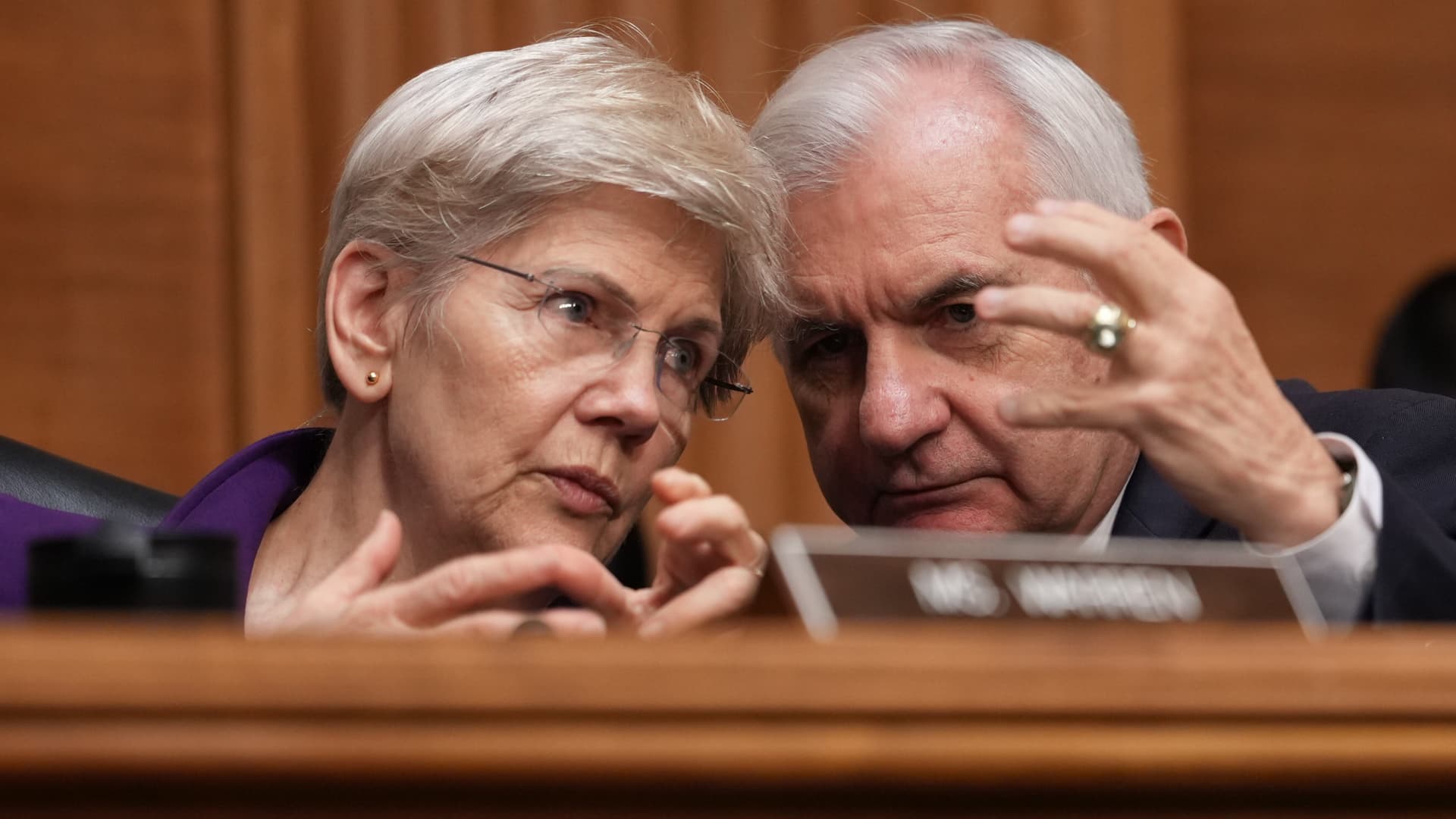
Senator Elizabeth Warren, a Democrat from Massachusetts and ranking member of Senate Banking, Housing, and Urban Affairs Committee, left, and Senator Jack Reed, a Democrat from Rhode Island, speak during a confirmation hearing in Washington, DC, US, on Thursday, Oct. 30, 2025.
Eric Lee | Bloomberg | Getty Images
The Senate Armed Services Committee approved a must-pass bill with a provision that could bar some defense contractors from executing stock buybacks or paying dividends unless they have Defense Department approval.
The measure, an annual bill known as the National Defense Authorization Act, was approved 18-9 in a closed-door committee meeting last week. The stock buyback provision’s inclusion in the committee’s bill greatly increases its chances of becoming law and sets up a potential sea change in how the Pentagon interacts with some of the country’s largest businesses.
Its bipartisan nature also underscores how Republicans under President Donald Trump have abandoned some of their free-market orthodoxy to join with more interventionist Democrats. The mandate is expected to face fierce blowback from the companies to which it would apply, such as Lockheed Martin, Northrop Grumman and Boeing.
Sen. Elizabeth Warren, D-Mass., a committee member, helped secure the measure’s inclusion in the committee’s bill. In an interview, she said it’s intended to “bring a small amount of discipline to these defense contractors who have been running wild for years.”
“These giant defense contractors buy back their own stock for the sole purpose of plumping up the stock price and improving the pay of the corporate executives,” she said. “The restriction in the NDAA says if you’re a company that’s not even performing on your government contracts, you don’t get to do that.”
The provision in the bill, Section 815, specifically would prohibit the Pentagon from entering into contracts with contractors unless the contractor agrees in writing not to “purchase an equity security of such entity, or any parent entity of such entity, that is listed on a national securities exchange” or “pay dividends or make any other capital distribution with respect to the equity securities of the entity.”
The provision would take effect June 15, 2027. The defense secretary could agree to waive the limitation if the contractor provides a “qualifying defense investment plan.”
The Pentagon would be required under the bill to start a review process to find out which contractors are violating the provision by engaging in stock buybacks or paying dividends without a waiver. Waived contractors could also be in violation if they are “underperforming with respect to prioritization, investment, or production.”
Contractors who are in violation could be whacked with a number of penalties for noncompliance, including suspension of contract payments and loss of eligibility for contracts and competitive grants.
Sen. Jack Reed, D-R.I., the ranking member of the Senate Armed Services Committee, said the provision was included in the NDAA on a bipartisan basis.
“It was generally bipartisan,” he told CNBC. “We establish contractual requirements and when they can’t meet them, to then turn around and buy back stock rather than reinvesting in their production facilities and other aspects is wrong.”
Asked whether he thinks the measure will make it through negotiations in the House, he said he hopes the lower chamber will “appreciate” that “if we sign a contract, we expect that it will be fulfilled.”
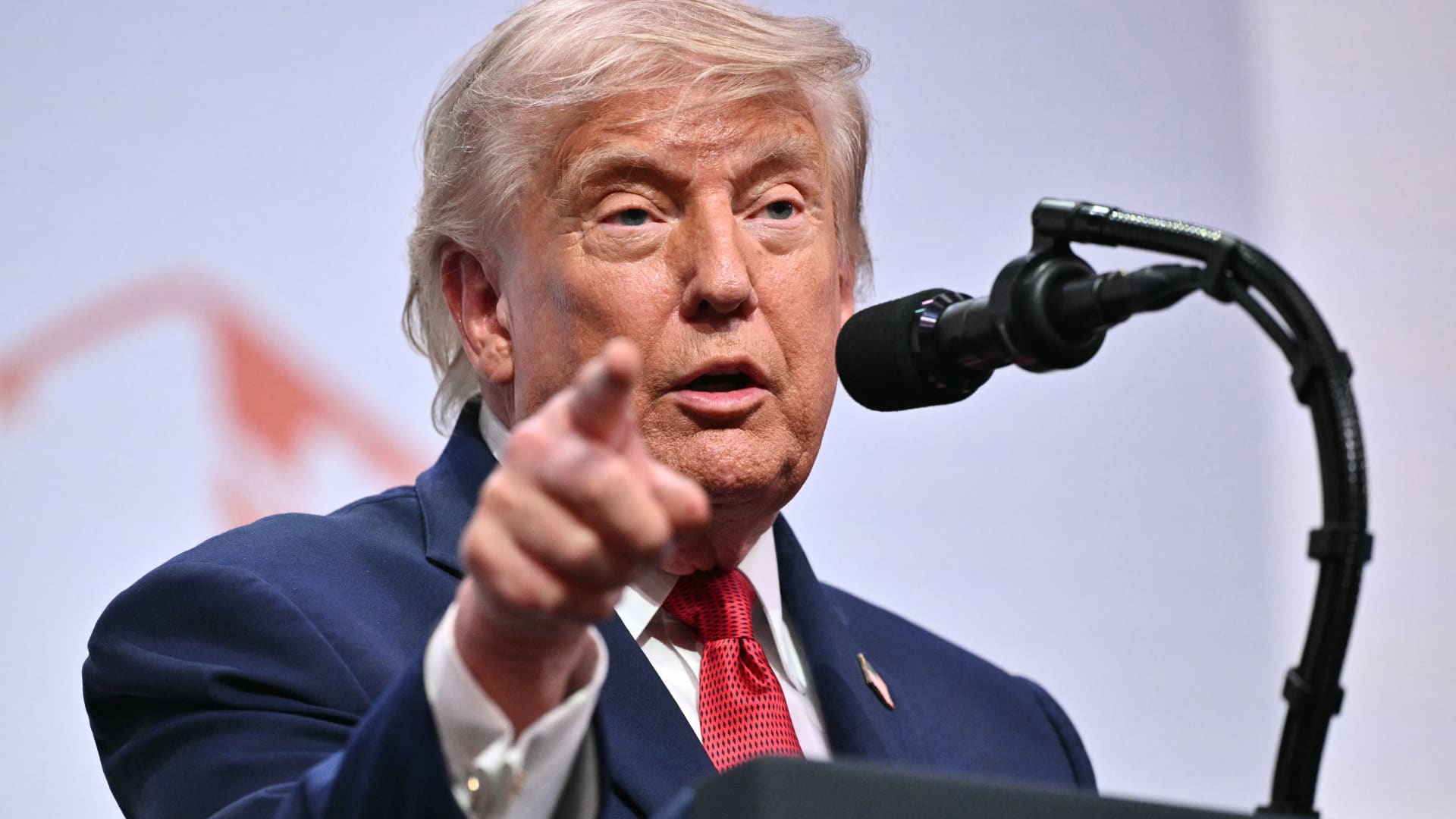
The measure will likely garner a significant amount of Republican support. Earlier this year, Trump signed an executive order barring defense contractors from conducting stock buybacks or paying dividends, making it more difficult for Republicans to oppose it.
Sen. Rick Scott, R-Fla., who sits on the committee, offered his support when he spoke with CNBC on Tuesday.
U.S. Senator Rick Scott (R-FL) walks on Capitol Hill on the day U.S. Senate Republicans meet to vote on leadership positions, including Senate Majority (Republican) Leader, for the 119th Congress in Washington, U.S., November 13, 2024.
Leah Millis | Reuters
“If you’re making money off the federal government, you shouldn’t be giving shareholders a return before we get our stuff done,” said Scott, who was previously CEO of a publicly traded health company.
A chunk of the text in the NDAA comes from Warren’s bill, the “Prioritizing the Warfighter in Defense Contract Act” with Sens. Josh Hawley, R-Mo., and Mike Lee, R-Utah, which would similarly block buybacks and dividend payments.
Sen. Tim Sheehy, R-Mont., another member of the Armed Services Committee, responded with a thumbs up when asked about the provision on Tuesday. Sheehy’s office didn’t respond to a request for comment on the context of his thumbs up or how he feels about the measure.
The House of Representatives did not include the stock buyback and dividend provision in its version of the NDAA. Rep. Chris DeLuzio, D-Pa., withdrew an amendment to add it, citing procedural issues when the House Armed Services Committee approved its version of the measure, but it could be included in a later amendment or after final negotiations between the House and Senate.
Even so, there is expected to be resistance to the measure, which would be an unusual reach of the federal government into private-sector business practices. The Pentagon does business with tens of thousands of contractors, meaning the implications for business could be widespread.
Major trade organizations representing defense contractors have vocally opposed it, warning it would amount to an unprecedented reach into the market by the government.
The U.S. Chamber of Commerce wrote a letter to the House of Representatives, saying it “respectfully but firmly opposes any such legislative effort.”
“Reduced stock price volatility, enhanced market liquidity, lower transaction costs, and greater stability for retail investors during periods of market turbulence are all proven benefits of stock buybacks,” the Chamber wrote in the letter. “Legislating restrictions on this practice represents a flawed and unwarranted intrusion into free market mechanisms and would not address the underlying challenges the Executive Order seeks to remedy.”
The Aerospace Industries Association also opposes the measure.
“Capital allocation tools like dividends and buybacks are essential for attracting the private capital that funds innovation, production, and workforce growth across the defense sector,” Eric Fanning, the group’s President and CEO, said in a statement to CNBC. “Arbitrary restrictions would make the industry less competitive for investment, reducing the flow of capital at a time when policymakers are aiming to expand the industrial base.”
“Over time, that would shrink the very market policymakers are trying to strengthen — undermining both economic growth and national security. We urge the Senate to reconsider,” he said. Fanning is a former secretary of the Army.
Warren said she hopes the measure will survive, but noted that knives will be out for it.
“It’s a very popular provision, but I never kid myself, the lobbyists are coming out of the woodwork to protect the defense industry,” she said. “There’s never a similar kind of lobbying power to protect the U.S. taxpayer, so we’ll see.”
<