
Digging Into MLB’s ‘Loose Bodies’ Problem — And The Technology To Address It
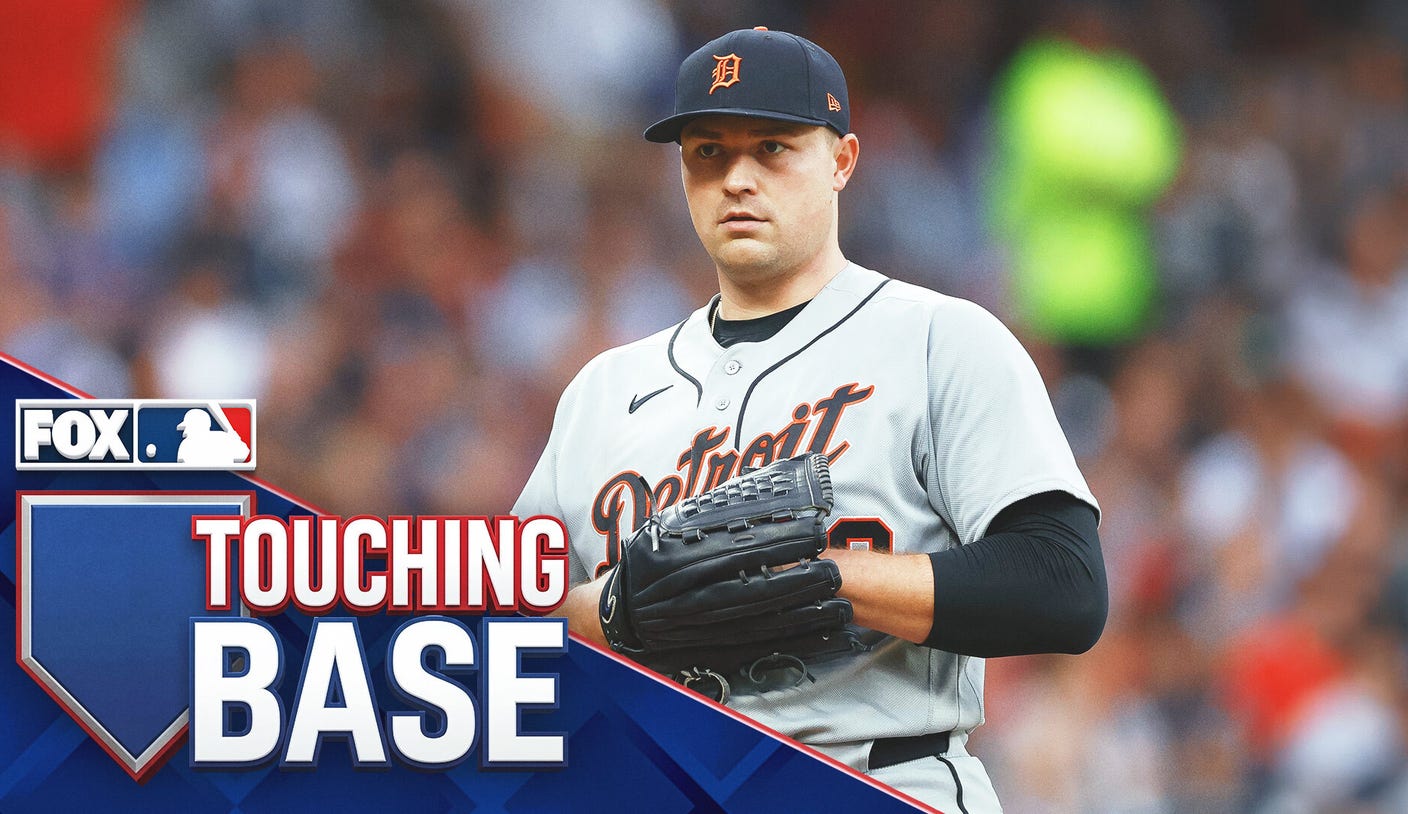
What began primarily as a new tool for use in pediatric orthopedics might now be the next groundbreaking surgical innovation for professional athletes, including big-league pitchers with “loose bodies” in their elbow, who are hoping to expedite their return to the field.
Last year, the NanoNeedle scope 2.0 was used successfully on a 13-year-old baseball player dealing with a labrum tear. The technology, developed by Arthrex, is a minimally-invasive arthroscopic device that includes a tiny camera at the tip of a needle-like instrument 1.9 millimeters in diameter, about a third of the size of a standard pencil.
The device offers higher-quality imaging than previous iterations and is smaller and less disruptive than the traditional arthroscope, making it ideal for use on smaller joints in pediatric patients.
But Dr. Neal ElAttrache, among other surgeons, started thinking bigger.
After successfully operating with the new NanoNeedle on shoulder capsule and knee meniscus repairs, ElAttrache was waiting for the right case to use it on a major-league arm.
“I wanted to do it where I could say, ‘This would definitely change the outcome,’” ElAttrache told me last weekend, in the aftermath of his procedure on the best pitcher in baseball.
This year, a spate of procedures to remove “loose bodies” have resulted in some of the game’s most prominent arms being sidelined for months. In February, it was Braves pitchers Spencer Schwellenbach and Hurston Waldrep. In March, it was Reds ace Hunter Greene. At the end of April, it was Dodgers closer Edwin Díaz. None of them have returned to action yet.
Greene hopes to be back in July, while Díaz is targeting a second-half return. ElAttrache performed the arthroscopic elbow procedures on both of those players, but he was still waiting for the right situation to use the new NanoNeedle 2.0.
In back-to-back Cy Young Award winner Tarik Skubal, he found the ideal subject.
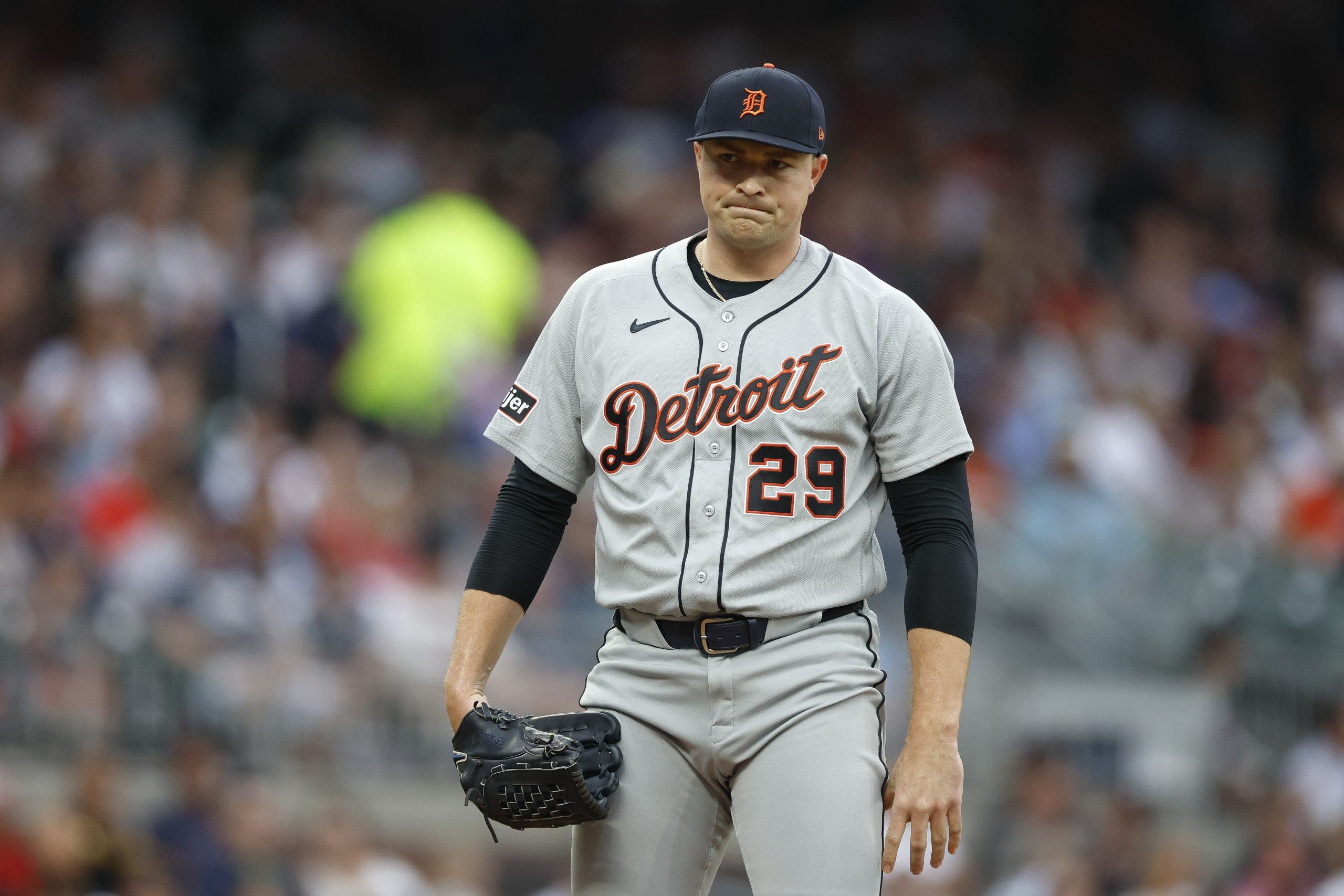
(Photo by Brandon Sloter/IOS/Getty Images)
Unlike Díaz’s surgery, all that Skubal needed to be removed was a single loose body. ElAttrache did not need to shave or sculpt or clean up a bone spur, which could have required a larger instrument. Time was of the essence in the middle of Skubal’s contract year, and ElAttrache felt certain the new scope would work.
“The more I can sneak in there and get out of there without leaving a trace, the better off this guy would be,” ElAttrache thought. “I was waiting for this particular kind of case, because I knew it would be really, really useful and helpful to be able to decrease the downtime.”
A typical arthroscopic elbow surgery to remove loose bodies can sideline a pitcher for two to three months or more, depending on swelling, stiffness, bleeding and the progression of the throwing program after the procedure.
The inflamed joint lining and tissue take time to “calm down,” as ElAttrache describes it. But it’s also vital to get the elbow moving as quickly as possible after the procedure — often within a day or two, according to Dr. Jason Snibbe, an orthopedic surgeon and consultant for multiple Los Angeles area professional sports teams — to avoid the elbow getting stiff.
Doctors will also focus on a patient’s shoulder strength after the procedure, since those muscles can get weak or problematic if the loose body was making a player compensate. Due to various factors, the timetable for return can vary dramatically.
“Sometimes you have an elbow surgery where they remove a loose body in a pitcher, and he’s back, let’s say, in three months,” Snibbe told me. “Sometimes, he’s back in six to nine months. Sometimes, it can be really long because it takes them a long time to get their mechanics and get their sequencing and be able to throw 95 or 100 mph.”
Providing a less-invasive option, the NanoNeedle 2.0 might be revolutionary.
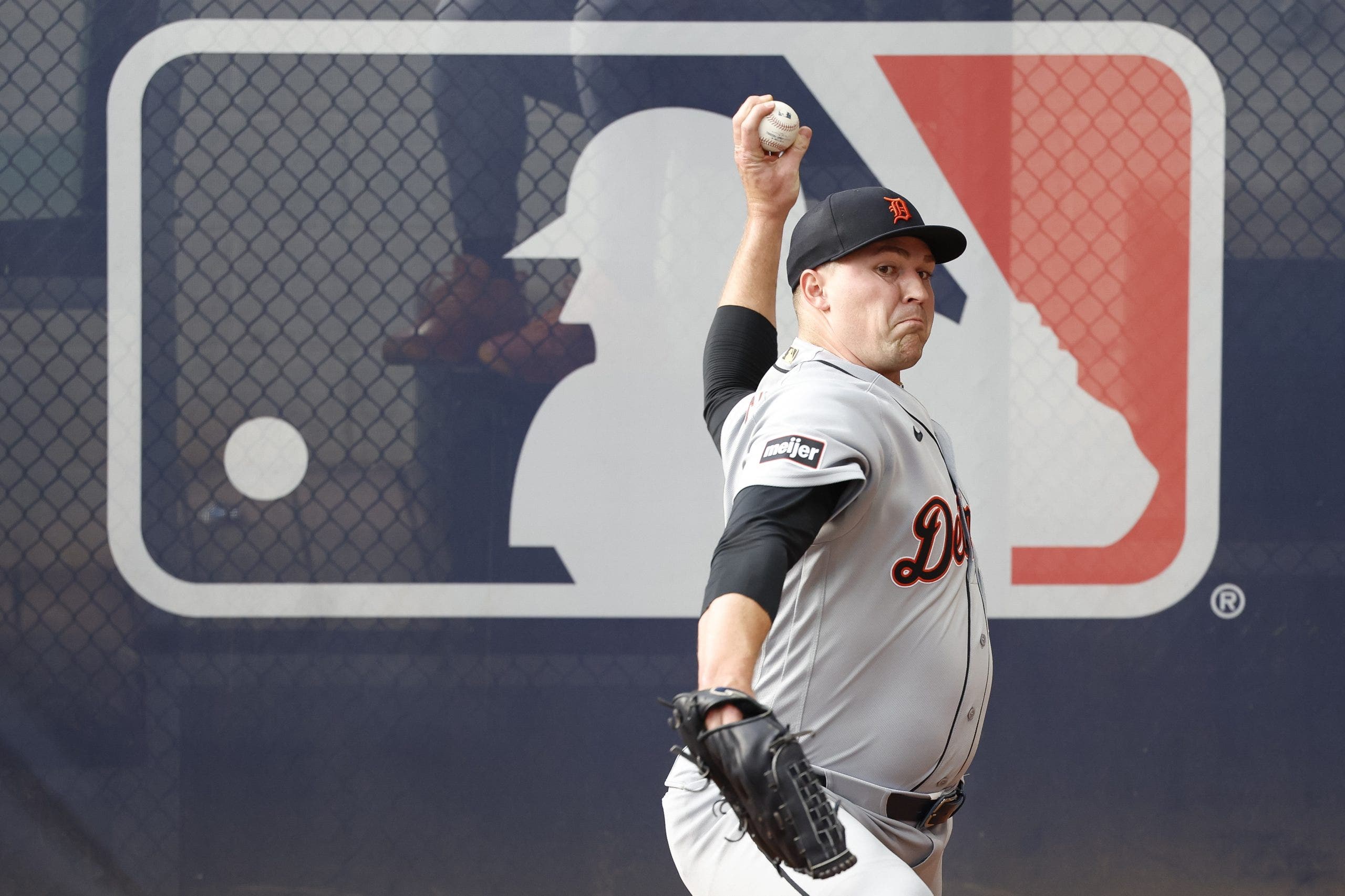
Just 12 days after Skubal’s procedure — or the “Skubal scope,” as it has been referred to — the Tigers ace was already throwing a full, symptom-free bullpen session at Comerica Park. It was the second time he had thrown off a mound since the innovative procedure.
While there’s no set timetable for his return to action, Skubal appears to be weeks ahead of schedule, just as ElAttrache predicted.
“The less and less invasiveness we’ve been able to use to accomplish getting these chips out,” ElAttrache said, “the better and better these guys do.”
(Photo by Brandon Sloter/IOS/Getty Images)
Explaining ‘Loose Bodies’
Skubal had been dealing with a strange, uncomfortable feeling in his elbow throughout the start of the season, but he assumed it was the result of the typical soreness that can arise while building up for a season.
Sometimes, his symptoms would disappear for weeks, only to then return again.
“Not knowing when that’s going to happen is very distracting,” ElAttrache said. “These guys, generally when that starts happening, they want to get rid of it because they can’t really perform.”
Occasionally, Skubal could be seen shaking out his arm, trying to get the sensation to go away. One such occasion occurred on April 29, after he fired a 96-mph sinker past Matt Olson in the seventh inning. Skubal waved over catcher Dillon Dingler and the training staff, then was seen rubbing the back of his elbow during a mound visit.
Skubal stayed in the game and struck out the side, but the discomfort was reaching a point where something needed to be done. Scans revealed a loose body — a small piece of bone or cartilage — that had broken off in his elbow.
He was relieved, at least, to get an answer to his problem. ElAttrache, meanwhile, was pleased to offer a new solution in the NanoNeedle 2.0, a scope that could limit swelling and allow Skubal to start building back up much more quickly.
“If something happens like that later in the season, they can tolerate a couple weeks of no throwing and gradually getting their motion back and come back and do an abbreviated throwing program because they’ve had all season to ramp up,” ElAttrache explained. “But if you do it at this time of the year, it’s really tough. It really sets them back. So, I was waiting for a case like this that would be very, very useful for the patient — rather than using the technology as the primary reason.”
Over time, the constant friction of bones that occurs from throwing with enormous force at a high velocity can cause stress on the elbow joint and lead to bone spurs, a sort of defense mechanism for the body. Those spurs can then break off and form loose bodies.
When they’re small or remain attached to the bone, they might be asymptomatic. But if they become bigger or free-floating in a player’s elbow, they can migrate into areas that cause discomfort or limit a pitcher’s range of motion. Sometimes, a pitcher might not be able to extend his arm or follow-through properly.
“And not having a good follow-through can put more stress on your shoulder, it can actually make you put more stress on your ulnar collateral ligament, and the other thing is it can cause inflammation,” Snibbe said. “Your elbow can feel sore and full of fluid and inflamed and irritated. It’s sometimes just annoying, like a rock in your shoe. You’re shaking your elbow all the time, trying to get the loose body to kind of break away within the joint itself.”
In Skubal’s case, the loose body was causing his elbow to lock or catch.
While the loose piece is trapped, the joint lining of the elbow is simultaneously being stimulated to make fluid — ElAttrache compared it to a motor being able to make its own motor oil — which can lead to swelling and stiffness. A cortisone shot can help get that inflammation down, but it doesn’t get rid of the cause.
“You still have that offending loose piece or spur in there,” ElAttrache said. “If it’s causing enough problems to where it’s big enough that it’s getting caught, it’s very unsettling.”
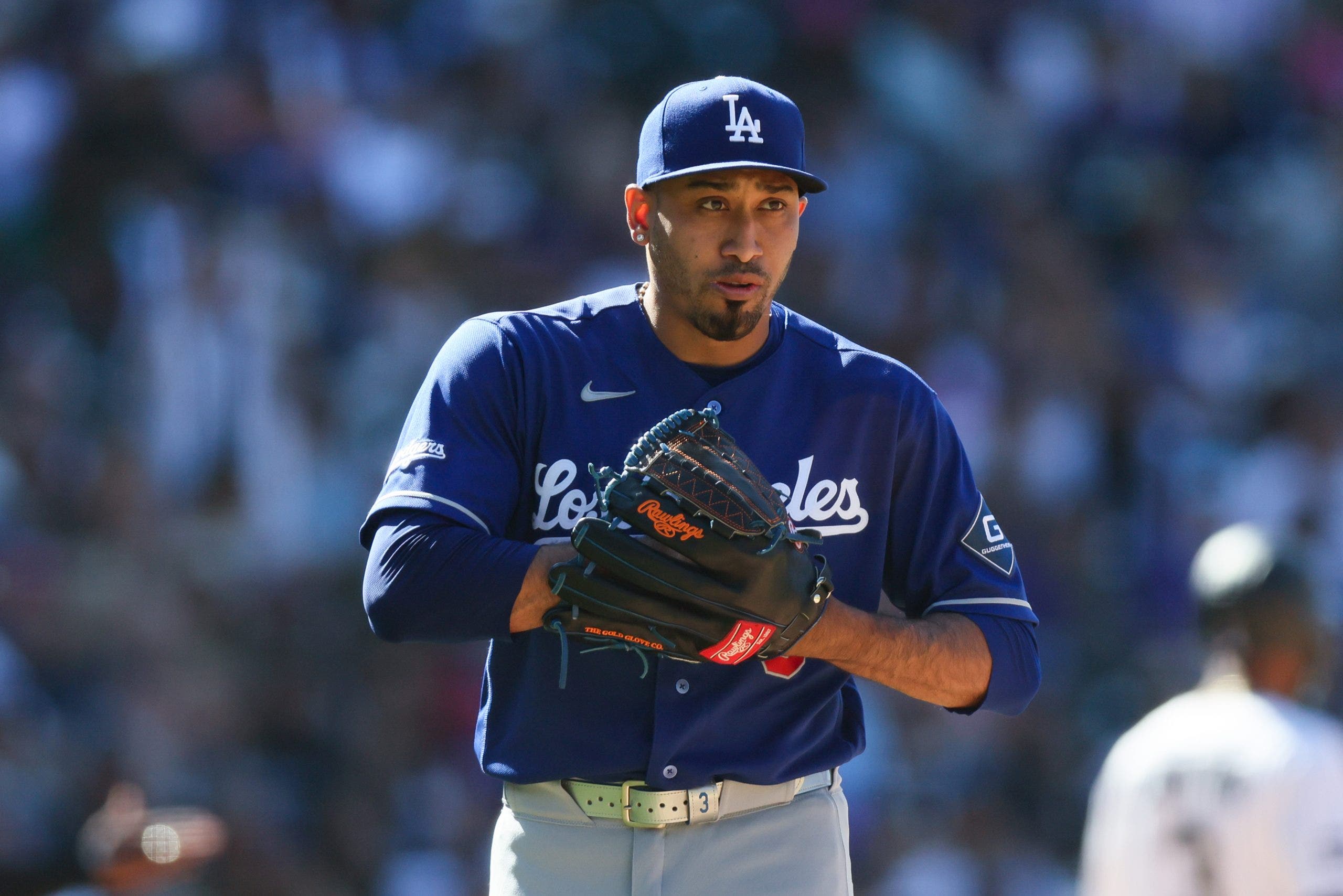
Skubal’s issue wasn’t going away, but his circumstance required less work than Díaz’s procedure. The Dodgers closer had five loose bodies removed from several different places in the elbow in late April. ElAttrache also had to clean up a piece of spur that was cracking and about to fall off, which required a bigger instrument than the NanoNeedle.
Díaz said he had known about the loose bodies in his elbow throughout his professional career. It wasn’t until his last outing on April 19 that he said the issue became symptomatic. Though he wasn’t a prime candidate for the NanoNeedle scope, he still felt relief almost immediately after his traditional arthroscopic procedure. Within days, his range of motion had returned. He expressed “100%” confidence that he’ll be able to get back to his usual dominant form later this year.
(Photo by Justin Edmonds/Getty Images)
ElAttrache, who’s the head team physician for the Dodgers, said Díaz’s current timeline for return — sometime after the All-Star break — might even be conservative; he just didn’t want to rush the 32-year-old back in a suboptimal condition.
“The worst thing for him and for the Dodgers would be you bring him back a little too soon, either he doesn’t perform like you’d expect him to perform or he expects himself to perform, or he gets injured again and then you lose him for possibly the rest of the time,” ElAttrache said. “So, I just wanted to make sure that we were OK with that, and from the looks of how he’s recovered, if anything, maybe I was a little too conservative. He’s feeling good and progressing without the pressure of having to rush it back. I think all is going to turn out well with that.”
Skubal, meanwhile, is on track to return far sooner than any other big-league pitcher who has undergone the surgery, thanks to the new procedure.
It’s a stunningly positive development both for Skubal, who could have a record-setting contract ahead if he looks like himself the rest of the year, and for the Tigers, who entered Thursday 10 games under .500 and needing their ace.
“I wanted the first time I used it on a professional pitcher to really be a big, big difference from what the standard stuff would be,” ElAttrache said. “That way, I could really see the benefit, and I could see if indeed our hunch was right that this would make a big difference.”
A Tommy John Precursor?
Snibbe said a lightbulb goes off in an orthopedic surgeon’s mind when a player has loose bodies in their elbow.
The long-term concern for any pitcher dealing with the issue is not the loose body itself but what might be on the horizon.
“Usually, loose bodies in the elbow is a sign that there may be laxity or looseness or damage to your ulnar collateral ligament,” Snibbe said. “The people that have loose bodies removed from their elbow, about 12% end up with ulnar collateral ligament surgery.”
ElAttrache agrees that there’s a relationship between the two. Bone spurs can form in the elbow as a response to gradual laxity. Sometimes, ElAttrache explained, too much sculpting of a spur during a procedure can tip the scales from laxity to instability.
“You’ve taken away the compensation where the overgrowth of bone is stabilizing the elbow just enough that the person’s not feeling instability,” ElAttrache said. “When that guy goes back to throwing 95 mph, now all of a sudden he doesn’t have that compensating buttress in the back there, and then he develops symptoms of medial elbow pain — the typical findings you see in a patient that needs a Tommy John.”
In one of ElAttrache’s studies, he found a “linear relationship” between the amount of bone removed from the olecranon — the pointy part at the end of the elbow — and how much strain is added to the ligament.
“What is the critical amount? That varies from player to player,” ElAttrache said. “The general rule of thumb is if you’re taking off spurs, only take off the spurs or the pieces of bone that are offending the player. If there’s a crack in it, if there’s a fracture in it where it’s going to come off or there’s a little bit of toggling because it’s partially loose, take that off. But don’t take off any firmly, well-attached bone.”
Skubal has already undergone Tommy John surgery once before in his career.
But because ElAttrache did not have to sculpt or remove any bone spurs during Skubal’s loose-body procedure, “there’s no reason to think that he has any increased exposure of the ligament or the medial structures that would be at risk now,” according to his surgeon.
“There’s no evidence in there that he’s got an ongoing, enlarging bone spur that’s trying to keep up with a loosening elbow,” ElAttrache said. “I would be able to know by stressing that side of the elbow if that is a currently symptomatic problem, and it’s not.”
So, What Next?
ElAttrache isn’t surprised to see an increasing number of symptomatic loose-body issues, considering the mileage that pitchers have on their arms by the time they reach the major leagues and the efforts those pitchers are taking to gain velocity.
For the pitchers who’ve undergone the surgery to address loose bodies — a group that now includes Dodgers starter Blake Snell, who also used the less-invasive NanoNeedle scope 2.0 earlier this week in an effort to shave time off his recovery — the question is how quickly they can return this season and if they’ll perform to their capabilities when they do.
Snibbe believes it’s possible.
“Absolutely, it’s possible,” he said. “I also think it’s everything else. If a guy has a loose body in his elbow and he’s got a bum shoulder or a bad knee or other things that are going on affecting his mechanics, that might take a long time for him to recover. I would say, it’s not just an elbow. It’s about the mechanics of the whole body and how those are being affected.”
For the surgeons performing the procedure, the question is also how the new NanoNeedle 2.0 scope might revolutionize arthroscopic procedures moving forward.
“Any time a surgeon uses this technology, things are going to enter that surgeon’s head about how he can use it,” ElAttrache said. “Because this thing is small enough and can get into places and see things that we couldn’t see before — and it’s not taking up room in these joints, it’s not overcrowding the joints — now they can use it and use instruments that they couldn’t use before, and now all of a sudden you’re going to see new things develop around it.
“A really useful new piece of technology like this usually causes a mushrooming, rapid expansion of new techniques and new technology and new equipment.”
<