
How INDYCAR drivers navigate the Grand Prix of Long Beach’s unique 11-turn track
In Driver’s Eye with James Hinchcliffe, the six-time INDYCAR winner will bring you inside the mind of a racer while breaking down the nuts and bolts of the sport for fans.
I am itching to get back to the track, and I don’t think I’m alone in feeling that way after INDYCAR’s two-week break (decidedly not a vacation, though). And what a track we are going to…
The Acura Grand Prix of Long Beach is the fifth stop for INDYCAR this season, and it is easily near the very top of the best race weekends of the year.
In Southern California, it’s one of the longest-running races we have, and, after the Indianapolis 500, has to be at the top of the list of races drivers want to win the most. That is in equal parts because of the decades of history, the incredible crowds and atmosphere and the unique challenges of the race track itself.
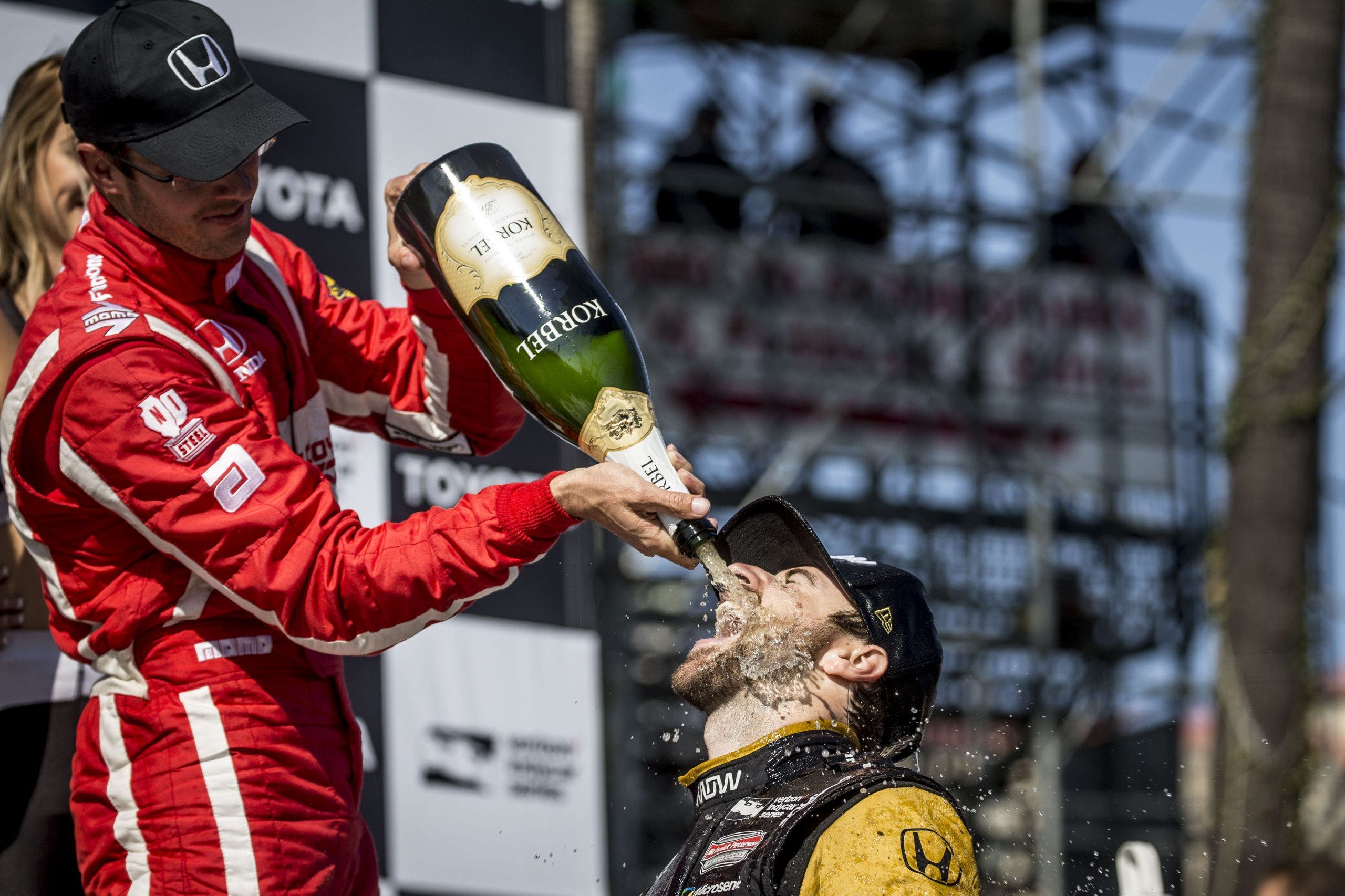
Runner-up Sebastien Bourdais pours champagne on race winner James Hinchcliffe after the 2017 Grand Prix of Long Beach. (Photo by Brian Cleary/Getty Images)
I was fortunate enough to have a lot of success at Long Beach. There, I got my first Indy NXT (then called Indy Lights) pole position and win, my first INDYCAR top-5 finish and podium, and I managed to take the checkered flag back in 2017. That win stands as one of the biggest of my career because of the status that this race holds in motorsports world.
That said, let’s talk about what makes this track so much fun for drivers.
THE GOOD, THE BAD AND THE FAST: LONG BEACH
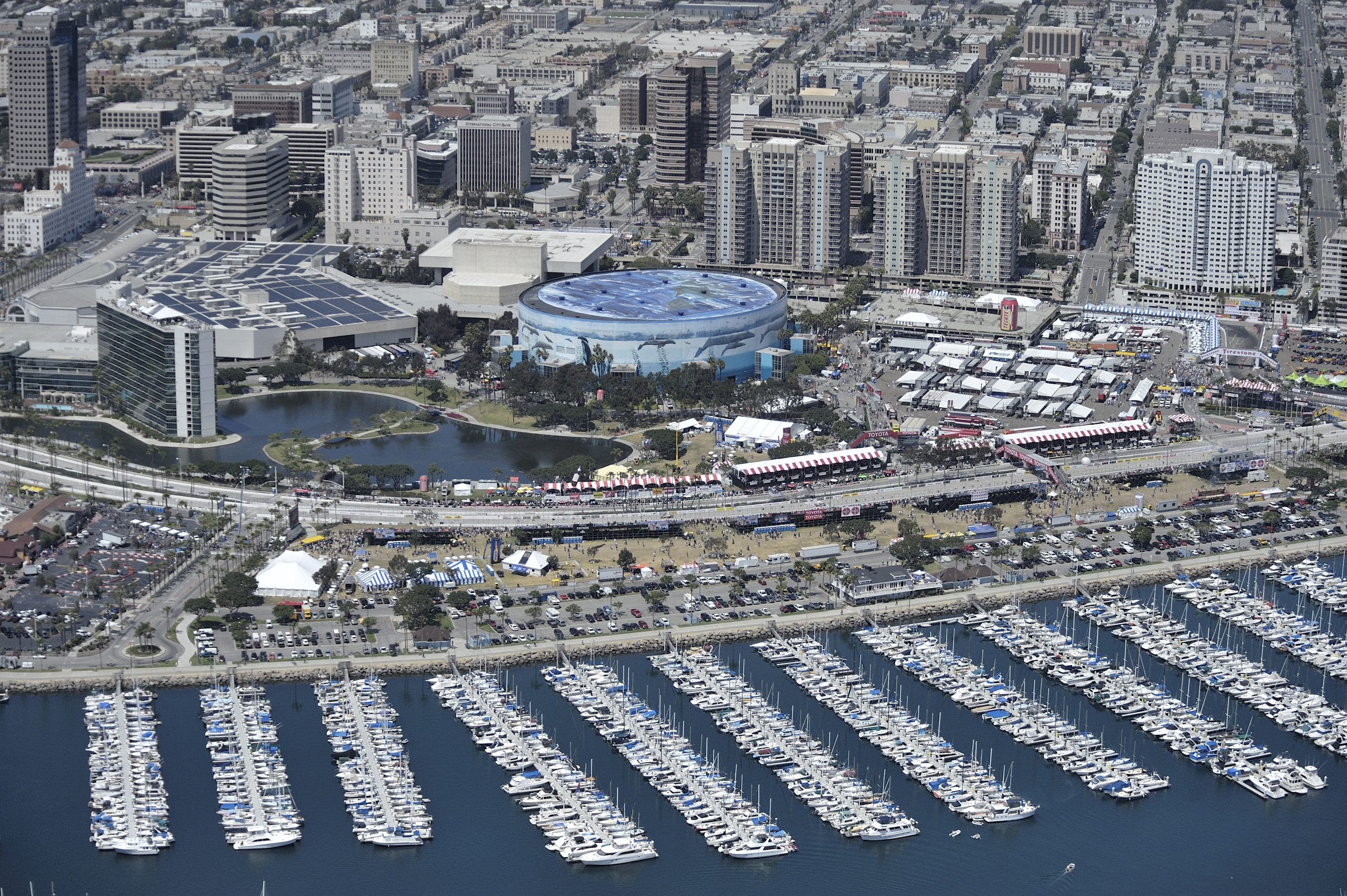
An aerial view of the Grand Prix of Long Beach. (Photo by Jeff Gritchen/Digital First Media/Orange County Register via Getty Images)
Long Beach has a lot of unique qualities for a street track. Yes, it has walls, bumps and surface changes, which we see on pretty much all street courses. But there are a few standout attributes that make it different — and difficult — from behind the wheel.
First, you have a decent amount of elevation for a street course. TV doesn’t always do it justice, but as soon as you head into Turn 4, the track starts to fall down quite a bit. That really affects the balance, as it has a tendency to make the front end wash out and lose grip, which pushes you closer and closer to the exit wall.
We normally see a lot of drivers brush — or smash — the exit wall there.
If you survive that, then you’re dealing with a quick change as the track shoots uphill on the brake zone for Turn 5, which totally changes how you approach that corner. Obviously, going uphill means the car stops faster for the same brake pressure (thanks, gravity!), so you have to recalibrate your brain a bit to make sure you get the braking just right.
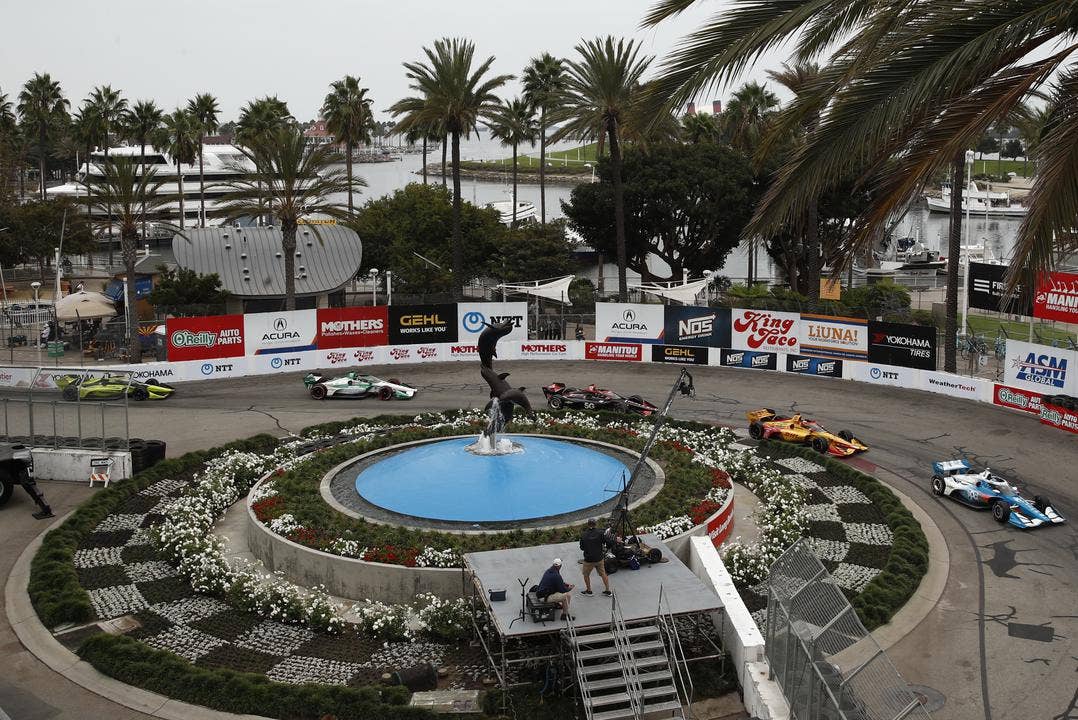
INDYCAR drivers around Turns 2 and 3. (Chris Jones, Penske Entertainment/INDYCAR)
If uphill makes the car stop faster, you guessed it, downhill makes the car harder to slow down!
Welcome to Turn 6. The track goes downhill aggressively on the entry, which means it is so easy to carry too much speed and end up very wide, or worse, in the run-off.
Then mid-corner, it climbs again as you’re getting to power before falling away again on the entry to the next corner, Turn 8. Bit of a roller-coaster feeling in that section of track.
Next, this track has a few important curb strikes — literally, purposely, hitting the curb — that are key for faster lap times.
When you think of tracks like the streets of St. Petersburg or Arlington, the curbs are either painted on the track — so not an issue to drive over — or so big you can’t even think of touching them in an Indy car.
Long Beach has two curb-strike opportunities, Turn 1 and Turn 5, that you can really use to pick up speed. Turn 5 is especially critical to nail.
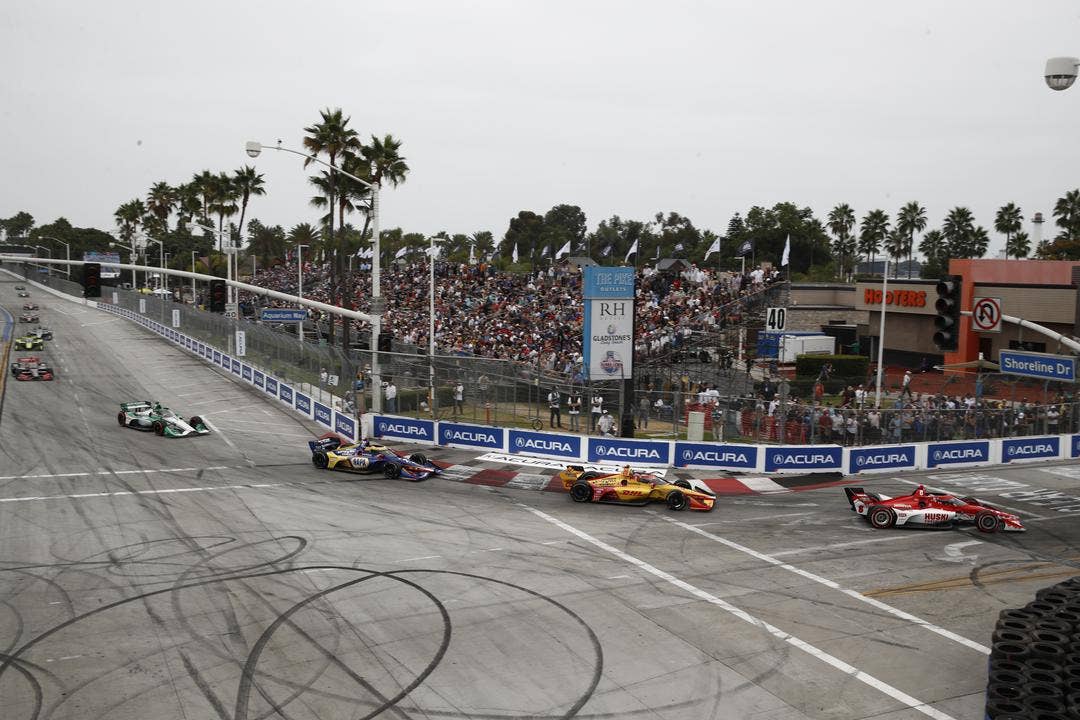
INDYCAR drivers navigate Turn 1 at the Grand Prix of Long Beach. (Chris Jones, Penske Entertainment/INDYCAR)
Too little curb means you don’t get the car turned enough and risk hitting the outside wall. But too much curb and the car bottoms out, lifts the front wheels off the ground and… you risk hitting the outside wall!
It’s tough to be consistently fast through there, especially on cold or old tires.
And finally, the geometry of the corners themselves stand out. Many street tracks feature a lot of 90- and 180-degree corners because you are pretty restricted by the literal streets you’re driving on, which tend to be straight roads.
But Long Beach has a unique curved front straightaway and some great corners — like the 2-3 complex, Turn 6 and Turn 10 — that are unlike any other corners on the calendar.
Oh, and let’s not forget the famous hairpin, Turn 11. It is the slowest corner of the entire season — slower than pit lane speed — at around 30 miles an hour. And it feels terrible.
Indy cars are not designed to go 30. They are designed to go 230! So getting through one of the most iconic corners of the year is so tough and not friendly behind the wheel of one of these beasts.
SOUND LIKE AN INDYCAR EXPERT
On Sundays on the broadcast, you always hear us talking about the push-to-pass system — as long as we are on a road or street track, because we don’t use it on ovals!
At a place like Long Beach, where passing is at a premium, there are a few different ways you can use this tool to help your race.
The most obvious one is using it to make a pass. The run out of Turn 11, along Shoreline Drive, is the best place to use it and set up a pass into the first turn.
But you have to be careful because you only get 200 seconds, and that’s a long run down the front straight. Get a little too eager, and you might not have enough left for the other times in a race where you need it.
For instance, you might need some seconds banked to play defense when a car gets a good run on you or during your in-and-out laps of a green-flag pit stop. The time — and, as a result, positions on the track — you can gain back by having strong in-and-out laps is huge, so drivers will often spend a whole lap spraying the P2P on their way into the pits, and then again on the out lap to get back up to speed.
But you don’t want to burn it all on the last pit stop of the day, just in case you have a late restart and need some to attack or defend before the checkered flag. Showing discipline on the button is harder than it looks, but it’s crucial.
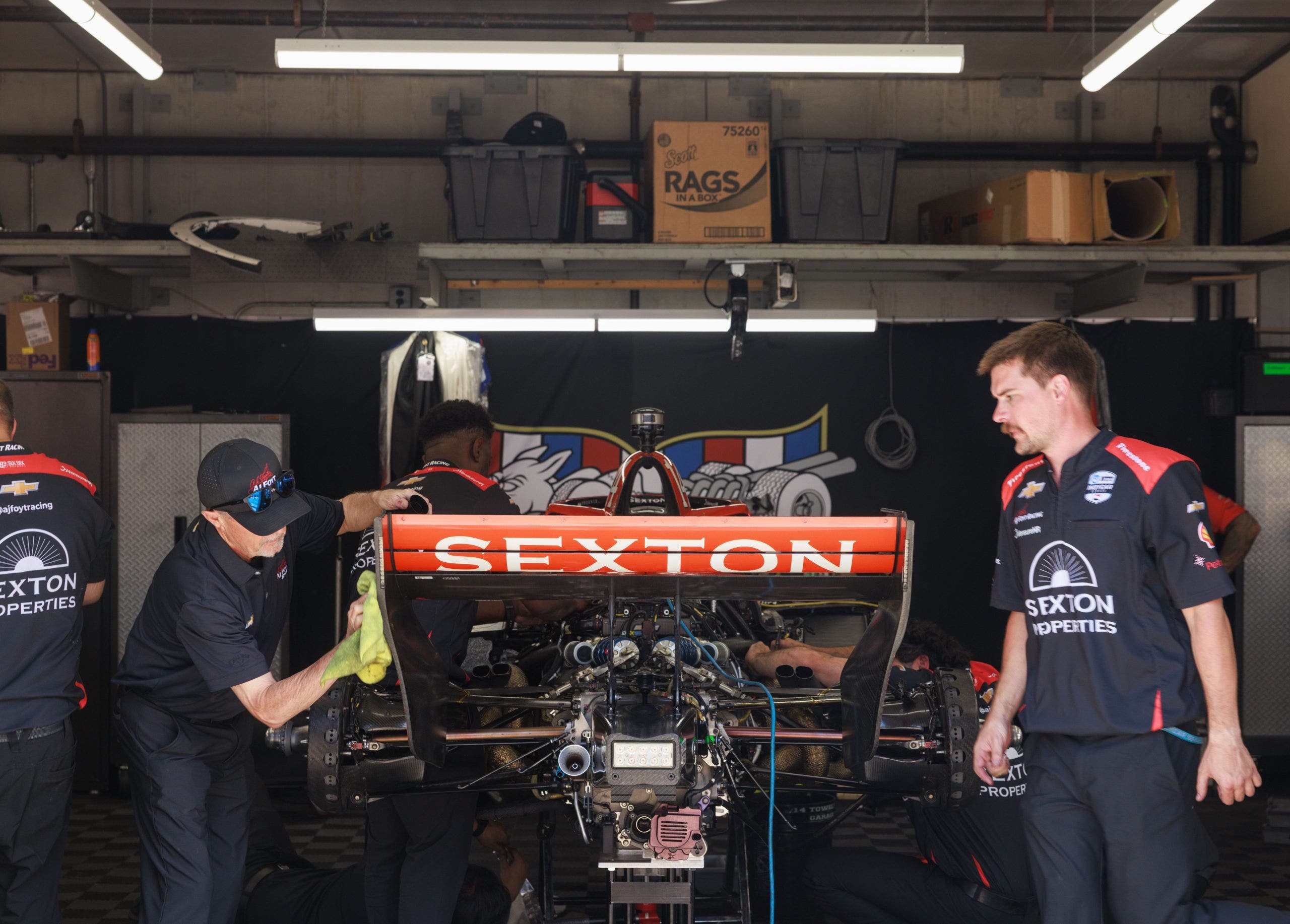
Crew members work on Santino Ferrucci’s engine in 2025. (Photo by Jeremy Hogan/SOPA Images/LightRocket via Getty Images)
We’ve talked about the when and why of P2P, but let me quickly touch on the how.
We say it a lot, we know it gives you a boost, but what is really happening to these 2.2-liter, twin-turbo V6s when a driver pushes the button?
The extra power comes from two different areas. First, the rev limit goes up. Under normal conditions, the engines are limited to 12,000 rpm, which is already pretty impressive. Typical street cars don’t go much higher than 5,000 rpm most of the time! But on the P2P button, that limit goes up to 12,200 rpm.
Might not sound like much, but every rev counts when you’re racing a stopwatch.
To help get it up to that limit faster, the on-board computer that controls the engine, called the ECU, allows the amount of boost pressure from the turbocharged engine to sneak up ever so slightly. It delivers a rev increase and roughly 10% extra in boost pressure, which simply means more power from the turbocharger.
These two things combined give the driver about 50 extra horsepower to play with. Your heart wants to hit it every lap! But your brain knows it will run out fast and that’s not the best way to win the race.
1 FOR THE ROAD
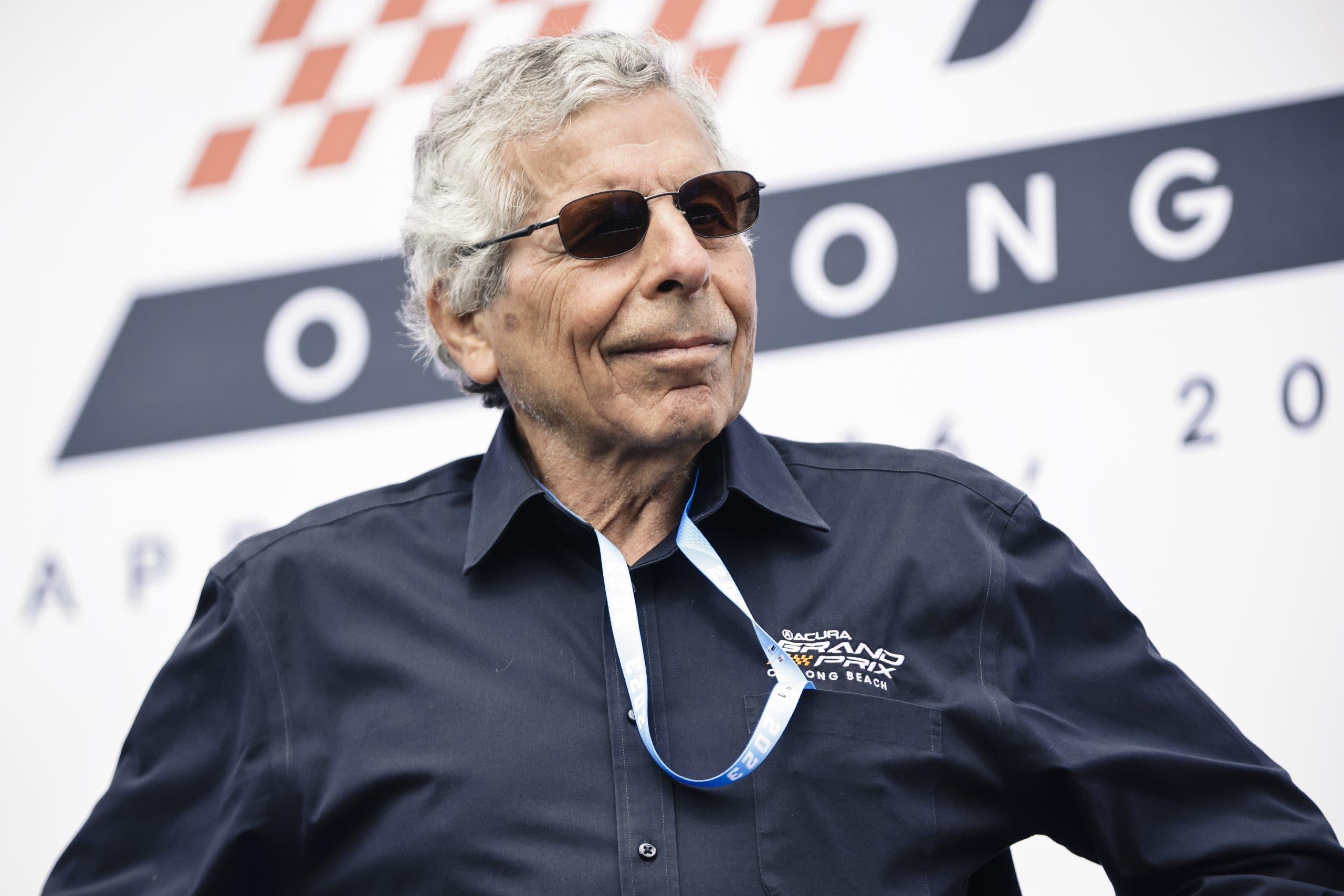
Jim Michaelian at the 2023 Acura Grand Prix Of Long Beach. (Photo by Greg Doherty/Getty Images)
I hate that we are doing this again, but I have to sign off this week by taking a moment to remember Jim Michaelian, the president and CEO of the Grand Prix of Long Beach. He died last month at 83 years old, but his impact will endure.
Jim was due to oversee his last race this year, something he had done as president since 2001, at an event he had helped build for more than 50 years. So much of what makes this race so special — to the teams, drivers, fans and people of Long Beach — was because of the heart and soul that Jim put into this race.
His legacy of creating the greatest street race on the continent will be remembered forever. Thank you, Jim.
MORE DRIVER’S EYE:
<