
How Roki Sasaki Is Turning Into The Pitcher The Dodgers ‘Hoped To Get’
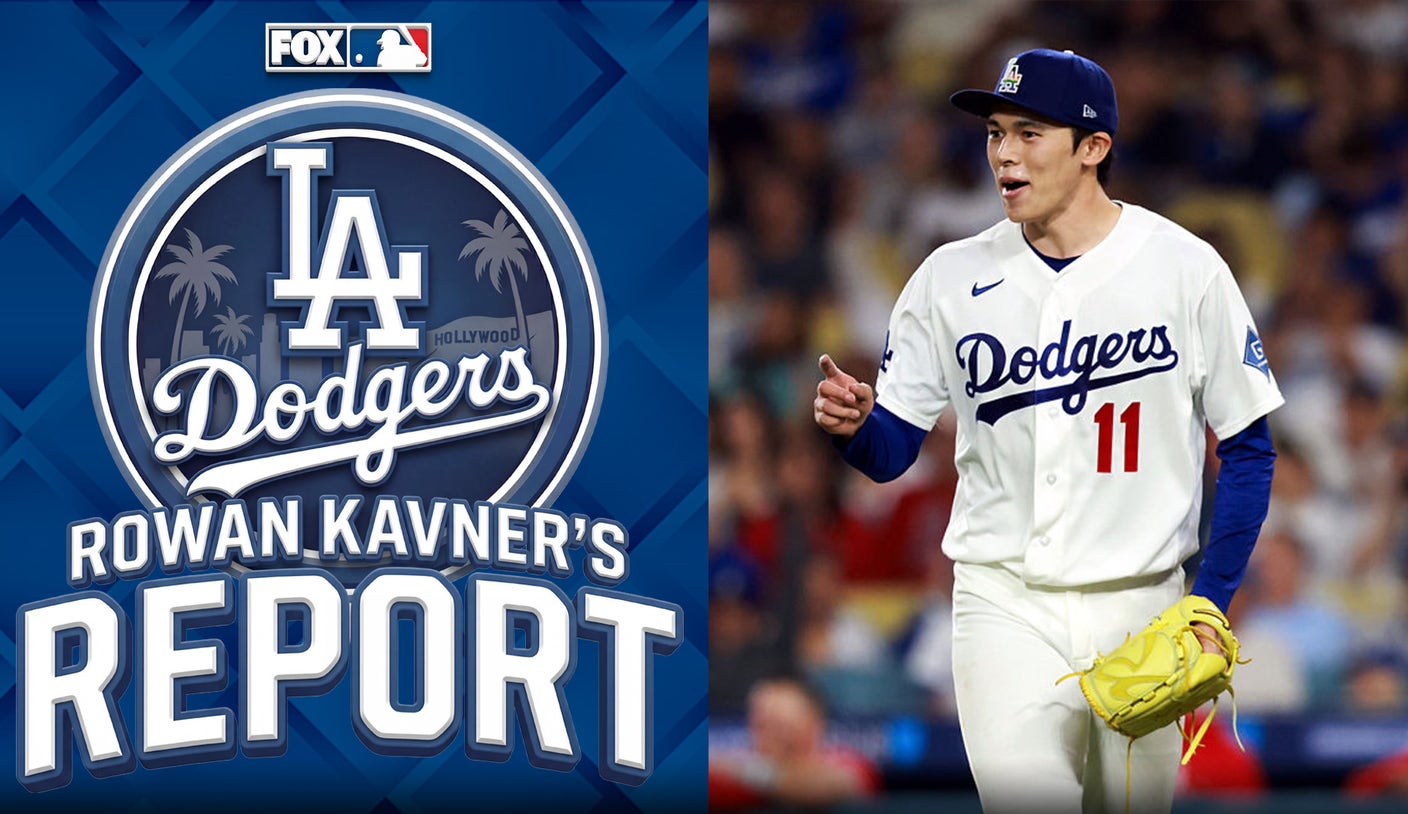
LOS ANGELES — The Dodgers believed “The Monster of the Reiwa Era,” a title bestowed upon Roki Sasaki after the Japanese phenom broke Shohei Ohtani’s high school velocity record, was still somewhere inside the 24-year-old right-hander, waiting to be unleashed again through the right series of tweaks and adjustments.
They were determined to let Sasaki iron out his deficiencies at the big-league level, hoping to reap the rewards once everything clicked into place.
After a volatile year trying to help Sasaki rediscover the form that had talent evaluators salivating before his jump to Major League Baseball last season, the Dodgers’ patience is paying off.
The monster, finally, might be awake again.
“This is the guy that we saw on video in Japan and that we hoped to get,” Dodgers manager Dave Roberts said Friday after Sasaki struck out a career-high 10 batters in seven scoreless innings against the Angels.
When the Dodgers won the Sasaki sweepstakes in January 2025, many of their executives and evaluators believed they were getting a pitcher with a ceiling as high as any player in Major League Baseball — “Cy Young caliber,” general manager Brandon Gomes said — but one who would likely need time to reach his potential. Sasaki himself recognized this during the recruiting process, asking prospective suitors how they planned to help him find his top form again after his velocity ticked down in his final season with the Chiba Lotte Marines.
Rediscovering that consistent velocity and production has been a challenge for Sasaki and the Dodgers. The version of Sasaki that once reached 101 mph during a 194-pitch complete game as a 17-year-old, the one who touched 102 mph while dazzling at the 2023 World Baseball Classic and struck out 135 batters in 91 NPB innings later that year, was not the one that arrived in Los Angeles last year.
Sasaki dealt with injury and inconsistency during his first taste of the big leagues in 2025, registering a 4.72 ERA with nearly as many walks (22) as strikeouts (24) over eight starts. His four-seamer averaged just 96.1 mph, and he spent much of the year sidelined with a shoulder impingement. He returned late in the season as a reliever and saw his velocity tick up as a key cog out of the bullpen during the team’s championship run, but the Dodgers maintained their belief that he could be a difference-making starter long term.
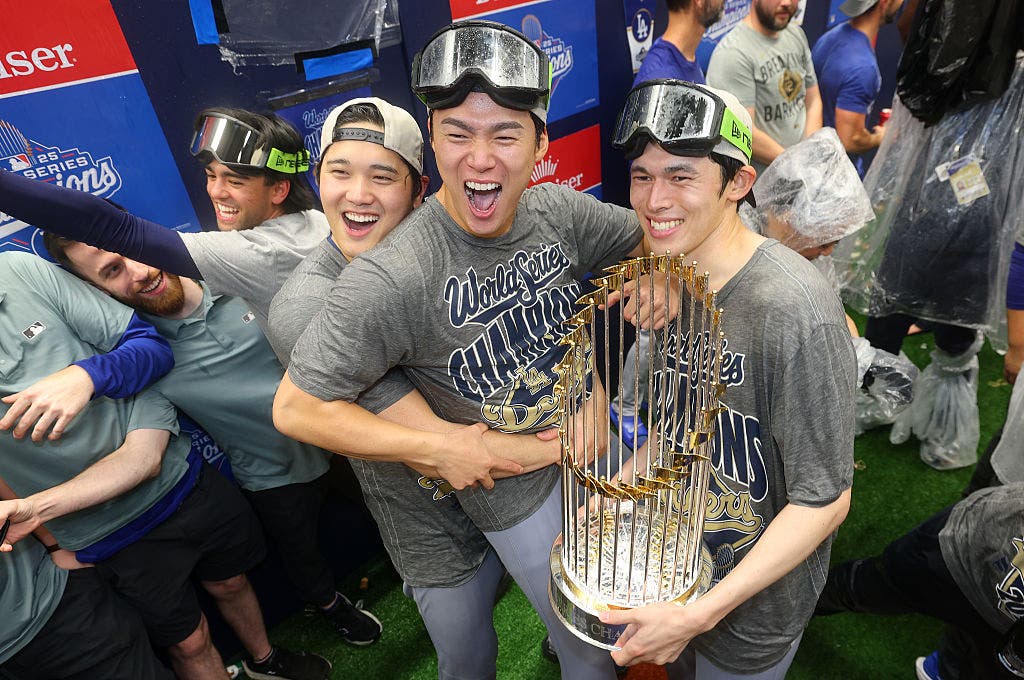
Despite his struggles as an MLB rookie, Roki Sasaki (right) wound up celebrating a championship with Japanese teammates Shohei Ohtani (left) and World Series MVP Yoshinobu Yamamoto. (Photo by Gregory Shamus/Getty Images)
They committed to keeping him in the big-league rotation in 2026, even amid another turbulent start to the year. Through his first five appearances, Sasaki had an ERA over 6.00. Command and control issues persisted, his confidence wavered, and opponents were hitting over .300 against him. Some wondered at the time whether Sasaki might need to shift back to the bullpen or work out his control issues at Triple-A.
But the talent on the Dodgers’ roster — and, specifically, in a rotation that has the lowest ERA in MLB — gave them leeway that other teams do not possess. They could afford to be patient because Sasaki’s struggles were not sinking them.
So they stuck with him.
And in late April, a breakthrough occurred, one that could transform Sasaki’s major-league career.
During a bullpen session in San Francisco, Sasaki began toying with a harder splitter, one that more closely resembled the version of the pitch from his peak in Japan. It tunneled better off his fastball than his slower forkball, which he struggled to throw for strikes.
“He wanted to find something that was a little more comfortable in his hand, something that didn’t necessarily pop out and have the visual of the knuckleball like his forkball does,” Dodgers assistant pitching coach Connor McGuiness told me. “It was kind of something that he had talked about, and we loved the idea of him having an option. I mean, he’s such a talented arm, so to be able to give him an off-speed option to allow him to access the zone, we were ecstatic.”
Sasaki has added a harder splitter to his repertoire, which has helped him improve his numbers across the board. (Photo by Brian Rothmuller/Icon Sportswire via Getty Images)
Days later, Sasaki took the pitch into a game on April 25 and threw it nearly half the time. He surrendered three homers and four runs in the start, but his new-look splitter yielded four strikeouts and helped him pepper the zone more than he had in any of his previous four starts.
Finally, he looked in control.
“Just like us as hitters, you gotta find tweaks sometimes,” said nine-time All-Star first baseman Freddie Freeman. “He found his tweak, and he’s taken off.”
The addition of the harder splitter, Roberts told me, is when everything changed.
Over his past seven starts since adding the pitch, Sasaki has a 3.12 ERA with 43 strikeouts and nine walks in 40.1 innings.
Prior to adding the pitch, Sasaki had a 20% strikeout rate and a 14.1% walk rate. Since introducing the harder splitter, he has a 26.5% strikeout rate and a 5.6% walk rate. His 21% K/BB ratio since April 25 ranks in the top 10 among all National League starters who’ve pitched at least 40 innings over that stretch.
“Certainly now, I think we can all agree that the floor for Roki is much higher, and the expectation every time he takes the ball is high,” Roberts said. “And he’s earned that. I think if you look at the last six or seven starts, it’s been as good as any starter in the big leagues, the consistency of performance. Really proud of him.”
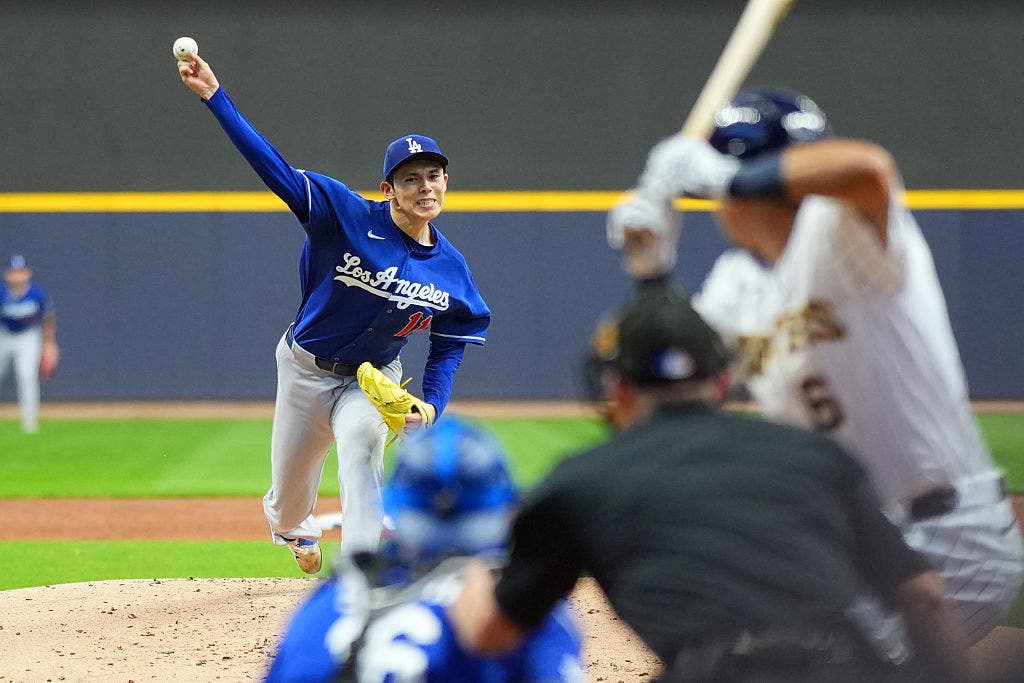
After posting a 7.23 ERA in April, Sasaki rebounded with a 3.18 ERA in May. (Photo by Yuichi Masuda/Getty Images)
Of course, there are other factors at play beyond the splitter adjustment.
Sasaki worked all offseason searching for a third pitch to pair with his fastball and splitter, which seemed like a necessity if he wanted to stick long-term as a starter. He has found success with a harder gyro slider that opponents are hitting .184 against this season.
Along with the new-look splitter, he now has multiple reliable secondary weapons to pair with a fastball that is ticking back up in velocity.
“I feel like everything is kind of coming together now,” Sasaki said through his interpreter.
For the first time all year, Sasaki eclipsed 100 mph in a start against the Phillies on May 30, firing a 100.1 mph fastball to Kyle Schwarber and a 100.4 mph fastball to J.T. Realmuto while allowing one run and striking out seven.
Sasaki has now averaged over 98 mph on his fastball in each of his past two starts. He expressed confidence that he can maintain that jump in velocity, which he attributed to multiple factors.
“I can’t pick just one,” he said through his interpreter. “Building small things, little by little, that’s why it’s clicking.”
While some pitchers might become more erratic the harder they throw, the opposite appears to be the case for Sasaki. He has allowed two walks or fewer in each of his past eight starts, and he has gone five innings or more in each of his past seven starts with a WHIP under 1.00 over that stretch.
Over his past four starts, he has a 1.48 ERA.
“We saw it [last year] where it was, really, you know, we all felt sorry for him and sad for him,” Roberts said. “Now, he’s, like, arrived as an adult and a major-league player and a real confident player.”
Sasaki’s most recent outing, during which he threw his fastest pitch as an MLB starter — 100.6 mph — while surrendering just two hits and two walks over seven scoreless innings in a 1-0 win, was his most encouraging and overpowering. Six of his career-high 10 strikeouts came via the new-look splitter, which opponents are hitting .154 against.
“Now, it just feels like every time he runs out there, we’re gonna get a start like this,” Freeman said.
Finally, the pitcher the Dodgers heard so much about was in front of them.
He’ll have to keep it going, but it appears that the “Monster of the Reiwa Era” has arrived.
<