
Musk v. Altman heads to court next week. Here’s what’s at stake
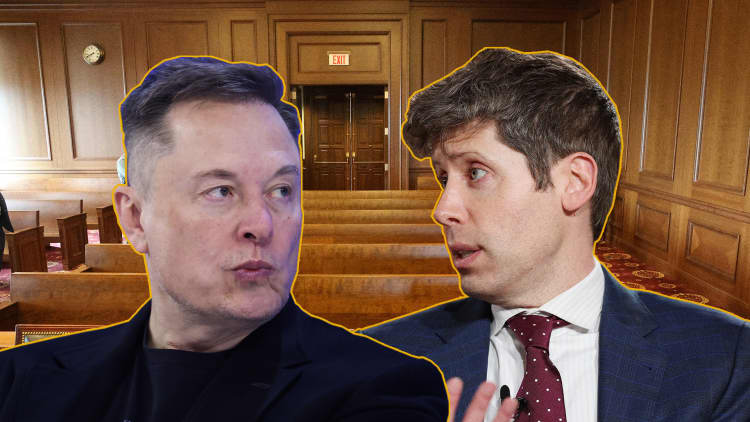

A yearslong legal brawl between Elon Musk, the world’s richest man, and OpenAI CEO Sam Altman heads to court in Northern California on Monday in a dramatic showdown between two of the most high-profile names in the tech industry.
In his $134 billion lawsuit, Musk claimed that OpenAI, Altman and the company’s president, Greg Brockman, reneged on a vow they made to keep the artificial intelligence lab a nonprofit in perpetuity. OpenAI has since restructured so that it can operate a for-profit subsidiary, and it’s now valued at over $850 billion.
Musk and Altman were once close friends, and were among a group of of techies who founded OpenAI in 2015 out of a shared concern over the potential power of AI and the need to advance it in ways that would benefit humanity.
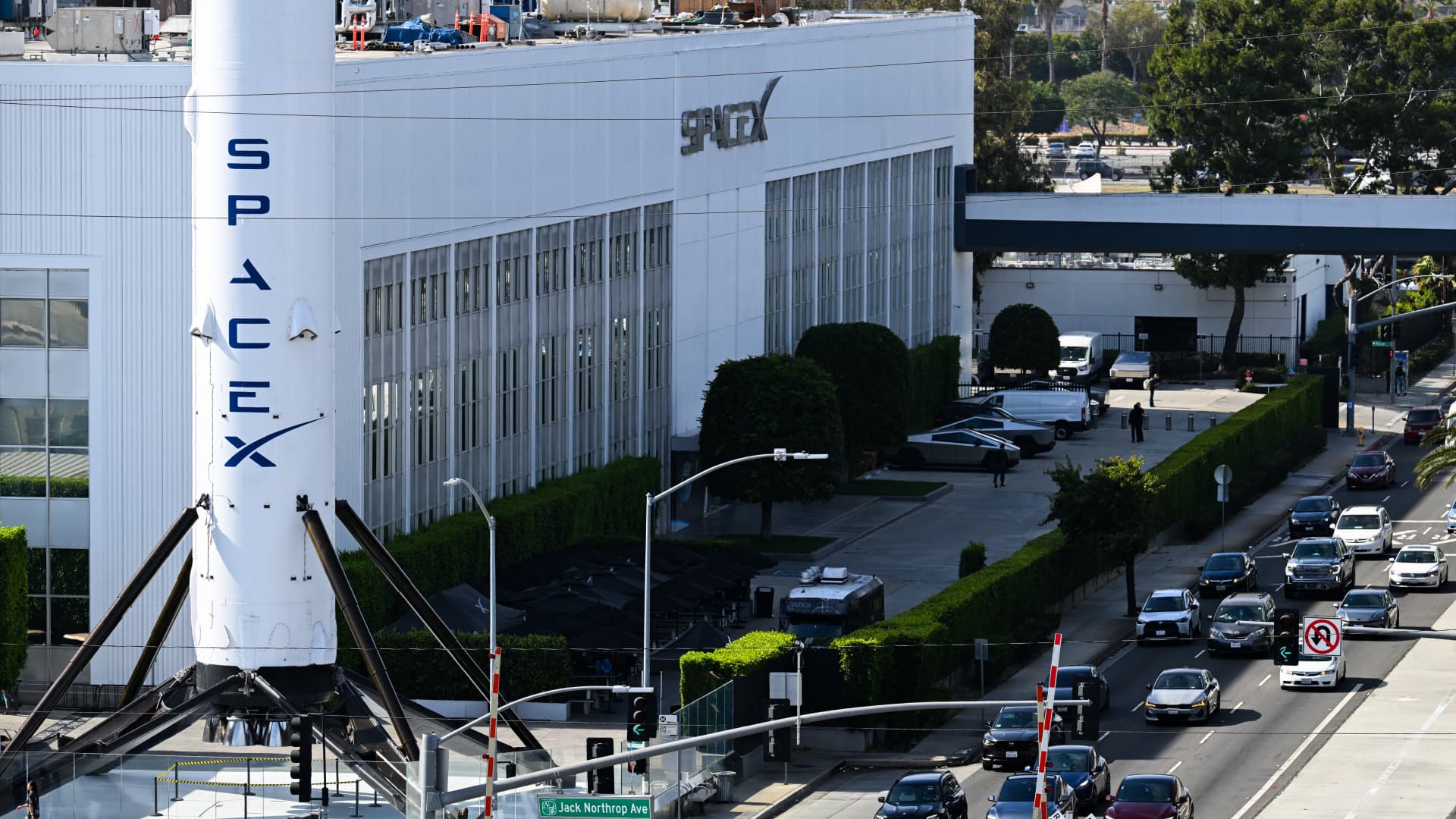
Now they’re public enemies and bitter rivals, with Musk having started xAI as an OpenAI competitor in 2023 and recently merging it with SpaceX in a deal valuing the combined entity at $1.25 trillion. The trial lands as Musk is preparing to take SpaceX public in what will likely be a record IPO.
OpenAI is targeting a potential fourth-quarter market debut, as CNBC previously reported. In a document distributed to prospective investors earlier this year, OpenAI characterized the ongoing litigation with Musk as a potential risk to its business.
The startup has repeatedly dismissed Musk’s lawsuit as “baseless,” calling it a “harassment campaign that’s driven by ego, jealousy and a desire to slow down a competitor,” according to a post on X earlier in April.
The war of words has been going on for months.
“Scam Altman lies as easily as he breathes,” Musk wrote in August in a post on X, which is part of xAI.
“Really excited to get Elon under oath in a few months, Christmas in April!,” Altman wrote on X in February.
Jury selection in Musk v. Altman begins Monday in a federal courthouse in Oakland, just over the Bay Bridge from San Francisco, where OpenAI is headquartered. Should he succeed, Musk said, he wants the court to return all “ill-gotten gains” to OpenAI’s nonprofit, not to him personally. He’s also seeking to have Altman and Brockman removed from their roles and to “unwind OpenAI’s for-profit conversion and restructuring.”
It’s not the only litigation Musk has brought against OpenAI. X, formerly Twitter, along with xAI sued OpenAI and Apple in 2025 for alleged anticompetitive behavior. A hearing in that case is scheduled for May in Texas. And in February, a federal judge in California dismissed a separate lawsuit from xAI that accused OpenAI of stealing its trade secrets.

The Musk-Altman spat dates back to 2018, when Musk left OpenAI’s board after a number of disagreements with Altman and Brockman about the company’s direction, including a failed effort to merge the startup with Tesla, Musk’s electric vehicle company. Following Musk’s departure, OpenAI established a for-profit subsidiary that allowed it to raise outside investments more easily.
OpenAI briefly considered plans to transition into a for-profit company in 2024, which would have wrested control from the nonprofit and kept it as a separate arm. But after facing pressure from civic leaders and ex-employees, including Musk, it changed course. The company completed a recapitalization in October that cemented its structure as a nonprofit with a controlling stake in its for-profit business.
Musk sued OpenAI, Altman and Brockman in 2024, alleging that he was “assiduously manipulated” and “deceived” by their promises that the company “would chart a safer, more open course than profit-driven tech giants.”
But the scope of Musk’s claims have shifted dramatically in recent months, as well as his desired outcomes.
In a January filing, Musk’s attorneys said he should receive up to $134 billion in damages from OpenAI and Microsoft, one of OpenAI’s longtime backers, which is also named as a defendant in the lawsuit. Microsoft is accused of aiding and abetting OpenAI’s alleged misconduct.
Of the 26 claims that Musk asserted against OpenAI, Altman and Brockman in November 2024, only four remain: unjust enrichment, fraud, constructive fraud, and breach of charitable trust. Musk’s lawyers are seeking to dismiss two of the claims, fraud and constructive fraud, ahead of the trial in an effort to “streamline the case,” according to a filing.
OpenAI’s lawyers on Wednesday characterized Musk’s actions as “evasive tactics.”
“Trial begins in five days but Plaintiff still refuses to state plainly what claims he will pursue and what remedies he will seek,” they wrote in a filing.
Judge Yvonne Gonzalez Rogers, who was appointed by former President Barack Obama to U.S. District Court for the Northern District of California in 2011, is presiding over the case. Gonzalez Rogers has overseen several high-profile lawsuits involving technology companies, including the antitrust case between Epic Games and Apple.
Nine jurors will be seated, and there will be no alternates, according to a March filing.
Gonzalez Rogers opted to divide the trial into two parts: a liability phase to decide if any wrongdoing occurred, and a remedies phase to determine the appropriate damages and next steps. The jury will weigh in during the liability phase only, and its verdict will be advisory, which means Gonzalez Rogers will make the final decision in both sections of the trial.
The liability phase of the trial is expected to last through mid-May, and the court will be in session from 8:30 a.m. to 1:40 p.m. PT every Monday through Thursday.
Jury selection will be followed by opening arguments. Gonzalez Rogers has given attorneys for Musk and OpenAI a total of around 20 hours each to present their case. Microsoft will get five hours, according to a filing.
All three parties submitted a list of witnesses that they can call. Musk, Altman, Brockman and Microsoft CEO Satya Nadella are all named.
If OpenAI is found liable, Gonzalez Rogers will hear arguments for the remedies phase, which is scheduled to begin on May 18.
“However, if the jury finds that Musk failed to file his action within the statute of limitations, it is highly likely that the Court will accept that finding and direct verdict to the defendants,” Gonzalez Rogers wrote.
CNBC will be in the courtroom starting Monday. Follow the latest coverage here.
WATCH: How three possible mega-IPOs could upend markets

<