
Separate private credit ‘signal from the noise’

A version of this article appeared in CNBC’s Inside Alts newsletter, a guide to the fast-growing world of alternative investments, from private equity and private credit to hedge funds and venture capital. Sign up to receive future editions, straight to your inbox.
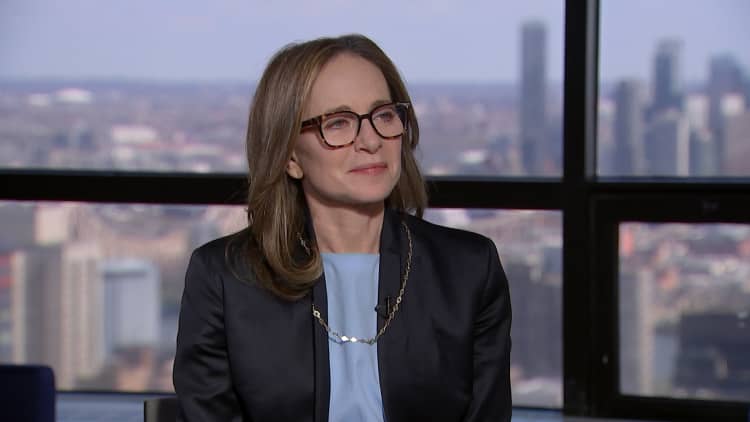
Fears of rising defaults and a systemic crisis from private credit don’t reflect the underlying fundamentals of private loan portfolios and returns, according to Blackstone’s head of private wealth.
A wave of redemptions is causing fresh concerns about the risks of private credit, with Ares Management, Apollo Global Management and others capping investor withdrawals from their funds last month. Joan Solotar, global head of Blackstone Private Wealth, which manages over $300 billion, said the capital flight isn’t justified by the likely returns and potential losses in individual funds.
“In my view, you’ve had all these calls that the house is on fire, when what we see is maybe a piece of burnt toast,” she said.
Solotar said investors and clients are asking important questions about transparency, loan losses, portfolio exposure to software and liquidity. She said some funds may see lower returns. Yet she said the broader case for private credit and access to private capital remains stronger than ever.
Some of worst-case scenarios published by Wall Street analysts, she said, call for loan defaults of up to 15%. Spread over three years, the loss of total annual return would be about 300 basis points. If credit spreads widen, she said the returns for private credit funds could fall to around 3% to 5%, down from the current 6% to 9% that is common for many funds.
“Is 3% to 5% return a disaster?” she said. “And what’s happening in the public equivalents? Because when I look at the public equivalents, they’re actually down. So we’re still outperforming, and that’s the key. I think it’s a matter of staying calm, understanding what you own, what the real downside is.”
Of course, many bank CEOs, analysts and investors disagree, saying private equity firms are understating the potential risks and exposure. The most cited risk is software firms, which make up a large share of private credit lending and are now seen as vulnerable to disruption from artificial intelligence. The Wall Street Journal recently found that large private credit funds managed by Blackstone, Apollo, Ares and Blue Owl had more exposure to the software firms than their filings suggest.
Solotar said less than 5% of the assets in Blackstone funds are vulnerable to AI. While some investors and commentators have criticized the lack of transparency and disclosure in private credit funds, she said the funds often disclose more loan information than banks.
“The word ‘private’ only relates to the fact that these aren’t publicly traded,” she said. “But it doesn’t mean secret or shadowy. I was a financial institutions analyst for many years, and I will tell you the banks do not let you know how they’re carrying any of their loans. We actually show you at the single, individual loan level. There is so much transparency, and we report that every single quarter.”
Solotar likens the current period in private credit to real estate funds after the pandemic. In 2022, Blackstone limited withdrawals from its $60 billion flagship real estate fund as investors worried about the decline in commercial real estate. Over time, withdrawals stabilized, all redemptions were honored and the property market rebounded.
She said the current “stress test” in private credit will actually prove its value in portfolios over the longer term. Institutional investors have proven for years that private investments provide important balance in a portfolio, with less volatility, longer time horizons and often better long-term returns than publicly traded investments.
The private equity industry’s efforts to expand private credit and private assets into 401(k) plans has come under growing criticism, especially given the current redemptions. Former Goldman Sachs CEO Lloyd Blankfein recently told Bloomberg that putting alternative assets into the retirement portfolios of everyday investors was “crazy.”
“Why are you going into this dangerous territory just to make your business a little bit bigger when that represents such a big potential problem in the future?” Blankfein told Bloomberg. “These securities are opaque and may be riskier than most.”
Solotar said Blankfein’s comments highlighted the need for more education.
“I think everyone has to be very well educated on what they’re putting in the portfolios, how the structures work, the limits of liquidity, how they interact with other parts of the portfolio,” she said. “And I would ask Lloyd if he has private investments in his portfolio. I’m guessing the answer is yes.”
Solotar said the demand for private investments will only continue to grow as investors seek to mimic the returns and strategies of large institutions, like endowments, pension funds and sovereign wealth funds that have been allocating to alts for decades. Given the vastly larger size of private markets compared to public, the alts revolution is still in its early stages.
Blackstone Private Wealth’s $300 billion in assets today is up from $58 billion in 2017. Solotar said Blackstone aims to grow its AUM to $1 trillion in the coming years.
“I like to say we are not even in the first inning, I think we’re still in spring training,” she said. “When you think about how pension funds are allocated, about a third of their investments are in private. The top foundations and endowments are at similar levels, and the same with family offices. And if you look at retirement accounts, you’re less than 1% or close to zero. So I see this as a very long-term path of travel, with the same trends happening globally, and it is super early.”
<