SpaceX raises $75 billion in record-setting IPO ahead of Nasdaq debut
SpaceX is officially set for the largest IPO on record.
Elon Musk’s reusable rocket company is raising $75 billion, selling 555.6 million shares for $135 a piece, according to a filing with the Securities and Exchange Commission. The deal values SpaceX at $1.77 trillion, making it the seventh most-valuable U.S. company, ahead of Tesla, Musk’s electric vehicle maker.
SpaceX’s Nasdaq debut will come Friday, when the masses will have their first opportunity to buy into the 24-year-old company. Betting on SpaceX at this price is largely a wager on Musk, as the company is burning cash and is far smaller by revenue than any of its trillion-dollar peers.
SpaceX said in its prospectus that revenue increased 15% to $4.69 billion in the first quarter from $4.07 billion a year earlier. For all of last year, revenue jumped 33% to $18.67 billion. The company recorded a net loss in the latest quarter of $4.28 billion after losing $4.94 billion in 2025.
In addition to its space business, Musk’s company owns the Starlink satellite internet service, which accounts for the bulk of its revenue and is the only profitable unit, and artificial intelligence division xAI, which merged with SpaceX in February.
SpaceX said in its IPO filing that capital expenditures in the first quarter reached $10.1 billion, more than doubling from a year earlier. The vast majority of those costs — $7.7 billion — were for AI, with the rest spent on space and connectivity.
The company has racked up a cumulative deficit of around $41.3 billion since it was founded in 2002. It warned investors in its prospectus that it may not achieve profitability in the future.
Some of the IPO drama was removed last week, when SpaceX set a fixed price of $135 a share. New issuers would typically offer a price range that allows a company and its advisers to gauge demand sensitivity at different levels, but SpaceX took a take-it-or-leave-it approach after a slew of testing-the-waters meetings leading up to the roadshow launch.
Goldman Sachs is the lead banker for the offering, followed by Morgan Stanley, Bank of America, Citigroup and JPMorgan Chase.
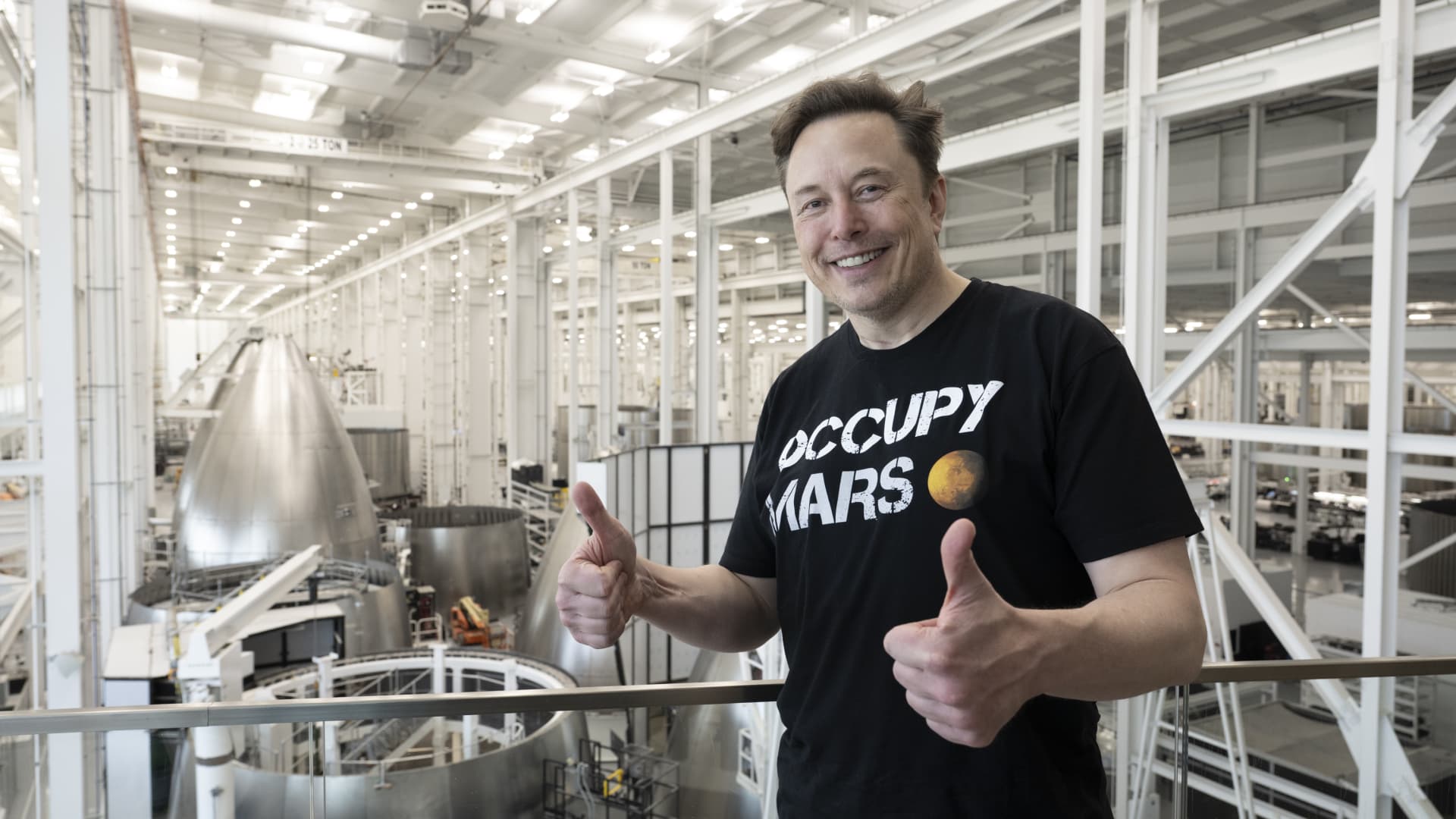
With the IPO, Musk is poised to be the world’s first trillionaire. His stake in SpaceX is worth $866.5 billion, adding to his Tesla holdings that are valued at about $320 billion, not including some options. For the 54-year-old Musk, the SpaceX offering comes 16 years after he took Tesla public.
Musk controls over 82% of voting power at SpaceX, giving him virtually complete control over the board.
Two Wall Street firms initiated coverage of SpaceX on Thursday. Oppenheimer opened with an outperform rating and a 12- to 18-month price target of $190, implying a gain of 40% from the IPO price. Analyst Timothy Horan wrote that the company’s diversified portfolio makes it attractive for investors.
“We see potential for SPCX to leverage terrestrial compute expertise as a bridge (and possible back-up plan) to enable key scale and cost advantages,” he wrote. Horan called it the “only vertically-integrated AI company with the required capital, data, LLMs, hardware, manufacturing and engineering talent,” and said “its space infrastructure appears structurally advantaged.”
Meanwhile, New Street Research initiated coverage with a $165 price target, and said it views xAI as a $575 billion business, “relative to expectations for OpenAI and Anthropic.”
While SpaceX’s IPO is roughly three times the size of the largest U.S. IPO in history, it could be challenged by what’s to come. Anthropic and OpenAI, which are each valued at close to $1 trillion by private investors, have confidentially filed to go public less than four years into the generative AI boom. Those deals could happen this year.
WATCH: SpaceX IPO is emblematic of space economy future
<