
The ins and outs of short squeezes — and how to avoid getting burned
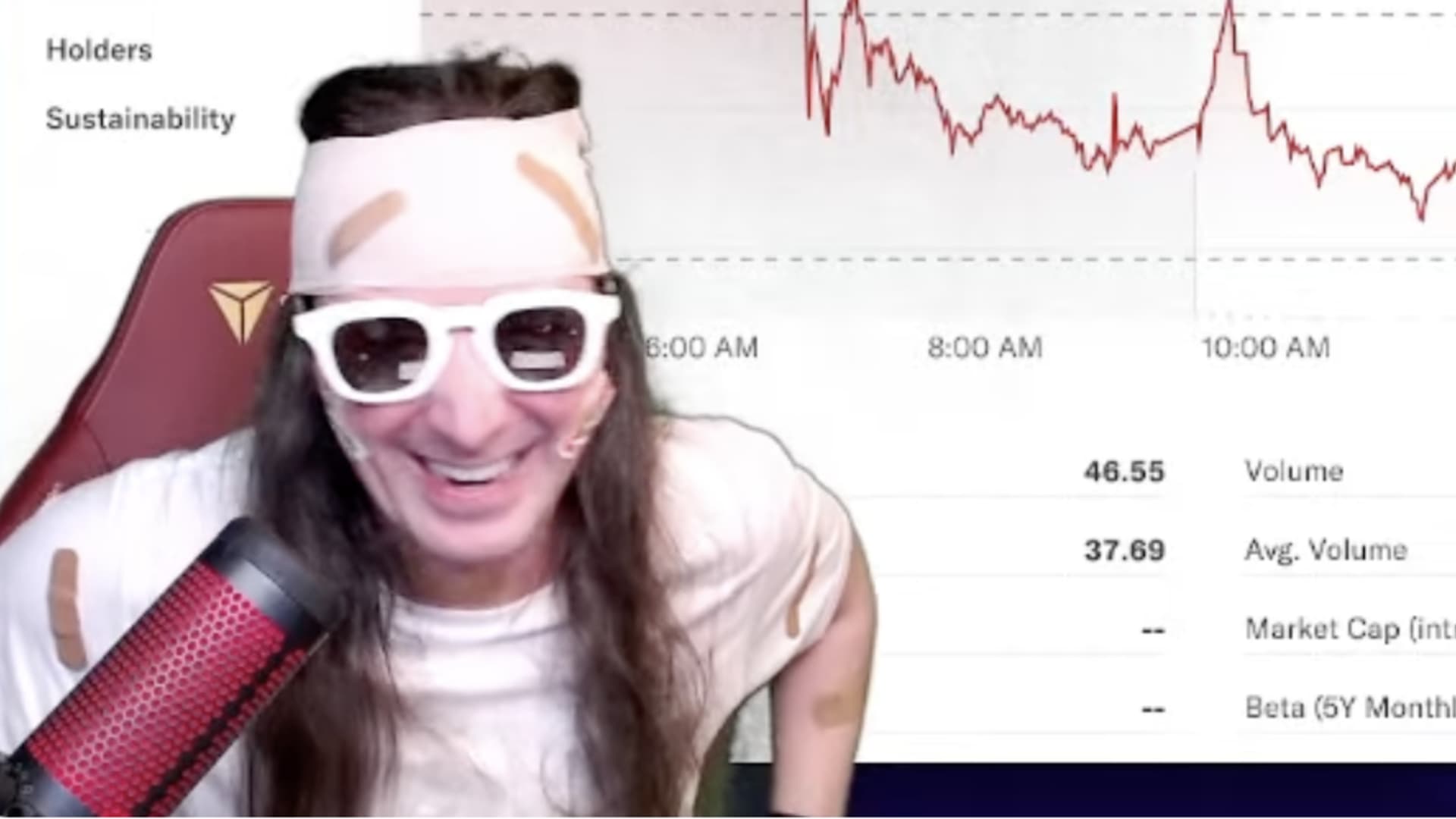
As a consumer of CNBC, you have probably heard the term “short squeeze” — and the warnings for investors trying to ride one. Perhaps no short squeeze is more memorable in the past decade than what happened to GameStop in early 2021, when an army of Redditors led by the outrageous Keith Gill, a.k.a. Roaring Kitty, revolted against the investment establishment. At the time, a hedge fund called Melvin Capital was massively short the videogame retailer, via a combination of direct short selling and put options. Selling short and put options are essentially bets that a stock will go lower. (Don’t worry, we will go step-by-step through the mechanics of shorting below.) Not well known in the investment community, Gill hopped on Reddit to pitch reasons to invest in GameStop in the subreddit WallStreetBets. The WallStreetBets community jumped on the name and began going long by buying shares and call options. GameStop shares ripped 1,500% higher in January of 2021, crushing Melvin Capital and others who were short. GME mountain 2000-12-01 GameStop from December 2000 to the present It didn’t take long for the short squeeze to unravel, as GameStock lost much of those gains a month later. Despite years of new leadership, plans to revive the company, new share offerings, and periodic efforts by folks on WallStreetBets to juice the stock gain, GameStop has never come close to reaching those dizzying heights again. Some regular investors made money by jumping on that rocket ship. But most lost, and lost big, which is why buying into a short squeeze can be so dangerous. Hollywood even made a movie about it called “Dumb Money.” Most short squeezes are not that dramatic, but you can still lose a lot of money trying to time one. We don’t recommend trying to time the market, period, because it’s near-impossible to do consistently. At the Investing Club, we espouse investing in stocks over the long haul to compound wealth. Quick up, quick down The most recent cautionary tale is Avis. Shares of the car rental company were trading at about $100 each two months ago. There was a lot of so-called short interest — meaning many investors were betting the stock would go down. Concerns that brokers would require trading in Avis to be in cash caused short-sellers to rush into the market to cover their positions. The upgraded cash requirement meant that those shorting on borrowed money would either need to deposit more cash, up to a level equal to the value of the shares being sold short, or close out their positions. Closing out a short position is usually easier than raising more cash. CAR YTD mountain Avis YTD In effect, that sent tons of buyers into the market, which caused a short squeeze that drove shares to nearly $850 each on April 22. Most of those gains evaporated in a matter of days. The stock was trading around $150 on Tuesday. Yes, that’s 50% higher than two months ago, but down 82% from its brief spike. What is a short squeeze? To understand what a short squeeze is and how to identify them, we must first ensure we fully understand the concept of shorting a stock. Going long a stock, which is what we do at the Club, means buying shares in hopes they go higher. Buy low, sell high. Going short is a bet that a stock will drop. Investors will make that bet either because they believe the stock is too highly priced or as a hedge against other long positions, in what is called a “pair trade.” For example, a short bet may be placed because the investor thinks it’s a solid company with a super-overvalued stock, or they may target a weak company in a declining industry (à la GameStop and physical videogame purchases). In some cases, they might think a company is engaging in nefarious or fraudulent activity that is flying under the radar (like Jim Chanos betting against Enron ). No matter the motivation, going short is a bet that a stock will drop. A pair trade, meanwhile, is all about playing one stock against another by going long one and short the other. This accomplishes several things. First, the investor can gain leverage by generating the cash needed to go long by selling something else short, resulting in a net $0 cash outlay. Second, it changes the risk/reward of the exposure. By going short one stock and long another, in the same industry, the investor is hedging against a broader sector-wide move and very much betting on the companies. For example, if ABC and XYZ compete in the same industry, one may go long ABC and short XYZ. If ABC goes up and XYZ down, the investor wins twice; the opposite is also true, of course. If ABC falls and XYZ rises, the investor loses twice. However, if both rally or both tank, the moves can offset one another. While it does offer protection against indiscriminate sector-wide moves, you still need to choose wisely. Getting one wrong will result in little to no profit, while getting both wrong will result in a double loss. No matter the motivation or trading strategy, going short is a bet that a stock will decline in price. The mechanics of shorting, however, are a little more complex than just logging on to your brokerage account and selling shares. First, you must borrow shares from someone who already owns them — often from a brokerage and pay a fee, like interest on a loan. Then, you sell the shares for cash. You hope to return those shares to the lender by buying them back at a lower price and keeping the difference. (The end goal of put options is similar, making money by betting a stock will go lower. Call options are like buying long. We explained how this works in a past education commentary.) Again, the Club only buys long and holds cash; it does not mess around with options or short selling. These are the four steps that complete the life cycle of a short sale: borrow shares, sell them for cash, repurchase them, and return them to the lender. It’s absolutely crucial to understand that when you borrow shares, you are not on the hook for their monetary value. Rather, you are on the hook for the specific number of shares borrowed, regardless of their market price at any given time. So, when shares move lower after you’ve sold them, you are making money because you can buy them back at a lower price per share to make good on the number of shares you owe. If they move higher, however, you still owe that number of shares, so spending more to buy them back results in a loss. There’s no ceiling, so losses can quickly snowball. That’s what happened to the GameStop shorts. There came a time when they wanted to cut their losses and bail out of the trade, or were forced to, because the owners of the borrowed shares wanted them back. Hypothetical example “Short Seller Sally” borrows 100 shares of XYZ from “Long Only Larry” at $100 per share and immediately turns around and sells them in the open market, for a total of $10,000. Sally now has $10,000 in cash and owes Larry 100 shares of XYZ. If XYZ trades down to $80, Sally can buy them back at a $20-per-share discount. So, 100 shares at $80 apiece means that of the $10,000 Sally raised, she will spend $8,000 to repurchase them before returning them to Larry. That $2,000 difference is Sally’s profit (less any interest or fees). On the other hand, if XYZ goes up to $120, Sally would need to come up with $12,000 to repurchase the 100 shares borrowed. The $2,000 shortfall (plus interest and fees) she now needs to cover the delivery of all 100 shares represents Sally’s loss on the trade. An important thing to be mindful of is that while stocks stop at zero on the downside, the upside is unlimited. So, the risk in short selling is that prices can keep rising, and your losses can keep mounting, with no threshold. This means the max loss is theoretically unlimited. Moreover, the one who loaned the shares can request they be returned at any time. For example, if a stock is ripping higher and the lender wants the shares back, that forces the borrower to buy them back on the open market at the prevailing price. Moreover, if the losses get too large, the brokerage firm can close your trade out with what is known as a “margin call,” unless more cash is deposited, to ensure you can cover the losses, similar to what happened with Avis. This brings us to the concept of the short squeeze. The squeeze occurs when a shorted stock starts moving higher, as in our second “Short Seller Sally” example. Whether Sally wants to close out the position because the losses are becoming too much to bear, her brokerage hit her with a margin call, or because “Long Only Larry” has requested they be returned, the result is that in addition to the “organic buyer demand” that got the stock moving to the upside in the first place, you now have artificial demand entering the market from short sellers desperate to close out their positions by buying stock. This happened on a grand scale in GameStop. Remember, the only way out of the short position is to buy shares, resulting in more demand and a stock that begins surging to the upside as long-oriented buyers or traders come in to chase the momentum, while short sellers rush in to stem the losses. That frenzy by the shorts — the mad rush of them coming into the market to buy shares to close out their positions — is referred to as a “short squeeze” because short sellers are being squeezed to the point where they have no choice but to become buyers. This results in massive share-price moves to the upside. That’s great if you’re long the stock, but it’s crucial to understand that these short sellers aren’t buying because they believe in the story; they’re buying because they’ve reached the point where they need out of the trade. The demand coming from these short sellers isn’t sustainable. Once they return all the shares they owe, they’re done. And, you guessed it, the demand for shares returns to normal — and oftentimes, share prices quickly return to lower levels. What that also means is that identifying these moves is important because the last thing you want to do is buy into a short squeeze, thinking it’s something more fundamentally positive, only to get crushed when the artificial demand runs out, and the “hot money longs” that were trading the momentum start to book profits. It’s also helpful for those long-term investors already in the stock to identify the move, as it could be a smart time to book some profits. If it’s a stock you like and believe will go higher over time, you can always wait to buy back shares even lower. You’ll see us take profits in stocks we love that are artificially high, only to wait out the downturn and re-buy when the coast is clearer. This is not “sell everything now” market timing, which requires being right a second time to buy back in. It’s a prudent portfolio management strategy to gradually realize some profits while continuing to hold the position. GameStop casualties Back to GameStop: here is how it played out in the real world. Remember, Gill, a.k.a. Roaring Kitty. As new buyers entered the market on the back of Gill’s pitch, shares rose. With each tick higher, Melvin Capital saw its gains diminish and eventually turn into losses. By the end of January 2021, Melvin Capital had lost 53% and was forced to close out its position. The firm also required a $2.7 billion bailout from Citadel and Point72. By May 2022, Melvin Capital was forced to close and return cash to investors. While Melvin Capital was the biggest, it was not the only group that lost big shorting GameStop at that time. Mind you, these were well-regarded, professional investors, and even they got blown to smithereens on a short trade. To get a better sense of what happened and the underlying market mechanics, let’s take a look at the chart. This is a roughly seven-year, split-adjusted chart of GameStop. Our focus will be on the section within the red rectangle. In the top portion, we have the share price; in the middle, the volume; and in the lower portion, the number of shares sold short. Because of how large the move was, we are forced to use a logarithmic price scale, which maps equal percentage changes to equal vertical distances, rather than a linear price scale, just to get the full move to show up on the screen. We’ve included four green circles. The first, before the move, traded at $1 per share; the squeeze caused a spike to an intra-day high of $120.75 per share. However, once the squeeze was over, shares swiftly plummeted to around $10. Though there were attempts to get the name going again, it never reached that old high because the demand that got it there was both organic (Gill’s followers buying in) and inorganic (Melvin Capital and others betting against the stock closing out their positions). We can clearly see the dynamics of a short squeeze as volume spikes and short interest declines, because short sellers enter the market to buy up shares and close out their positions, thereby forcing a rapid price increase. That combination of the huge volume spike, along with the rapid decline in short interest with an incredibly fast parabolic rise in the share price, tells you beyond a shadow of a doubt that this was a short squeeze and a massive one at that. What happens next is equally important to understand. As we can see, once the short interest declines — that artificial demand by short sellers such as Melvin Capital, who were looking to close out their positions, leaves the market — volume declines with it, and the stock price can no longer appreciate. That shows why it’s so important to be able to identify these moves, even if you’re not planning to short stocks. You could chase a hot stock that’s not rallying on its underlying fundamentals and get crushed once the squeeze is over. By then, it’s too late: The highs are unlikely to soar again to previous levels, since demand has left the market. (See here for a full list of the stocks INJim Cramer’s Charitable Trust.) As a subscriber to the CNBC Investing Club with Jim Cramer, you will receive a trade alert before Jim makes a trade. Jim waits 45 minutes after sending a trade alert before buying or selling a stock in his charitable trust’s portfolio. If Jim has talked about a stock on CNBC TV, he waits 72 hours after issuing the trade alert before executing the trade. THE ABOVE INVESTING CLUB INFORMATION IS SUBJECT TO OUR TERMS AND CONDITIONS AND PRIVACY POLICY , TOGETHER WITH OUR DISCLAIMER . NO FIDUCIARY OBLIGATION OR DUTY EXISTS, OR IS CREATED, BY VIRTUE OF YOUR RECEIPT OF ANY INFORMATION PROVIDED IN CONNECTION WITH THE INVESTING CLUB. NO SPECIFIC OUTCOME OR PROFIT IS GUARANTEED.
<