
Weight loss drugs pose risk to pharma, report finds

Surging demand for weight loss and diabetes drugs leaves the pharmaceutical sector at risk from a “bubble effect” as profitability soars, new research suggests.
Demand for the likes of Wegovy and Zepbound has driven research and development returns to their highest level in years, but a report published by Deloitte on Monday suggests this is masking pressure facing the rest of the sector.
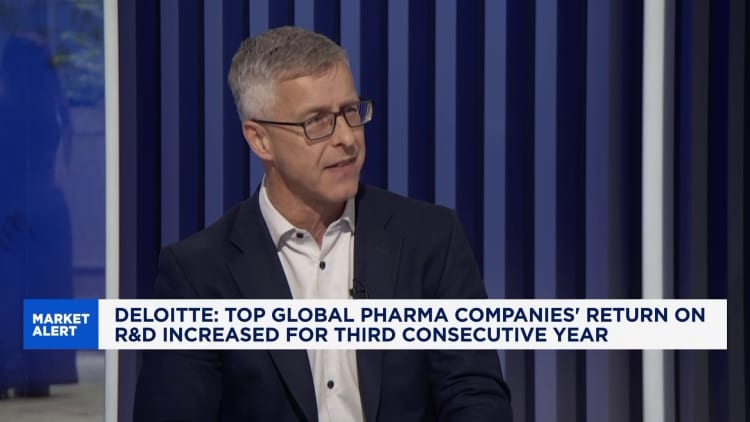
Pharmaceutical R&D returns for the world’s top 20 pharma companies have improved for a third consecutive year to 7%, thanks almost entirely to a handful of high-forecast assets such as glucagon-like peptide receptor agonists, or GLP-1s.
The report found that, for the first time in 16 years, oncology has been surpassed as the largest contributor to late-stage pipeline value by obesity treatments.
This, according to Deloitte, increases companies’ exposure to therapeutic-area-specific shocks.
“It is a bubble, because so much is concentrated,” Life Sciences and Healthcare Partner at Deloitte Hanno Ronte, told CNBC’s “Squawk Box Europe.”
Drugs that target obesity and diabetes now account for an estimated 38% of all projected commercial inflows from the 2025 late-stage pipeline.
The impact is so significant that it masks a weaker environment for the rest of the industry. If GLP-1/GIP assets are excluded from the analysis, the industry’s rate of return drops to just 2.9%, a decline from 3.8% in 2024.
Obesity assets now represent about 25% of total forecast sales of the late-stage pipeline, while oncology’s share has slipped to 20%. This represents a staggering rise for the obesity sector, which contributed just 1% of the projected value as recently as 2022.
While the boom is driving headline growth, it has also led to a significant concentration of risk. Deloitte found that just 54 mega-blockbuster indications, representing only 9% of the late-stage cohort, are projected to generate roughly 70% of total risk-adjusted peak sales.
The concentration risk
Overreliance on blockbuster drugs is not new, but Deloitte says the degree of concentration is. The “big four” accountancy said it creates a high-stakes environment where a small number of assets can lift overall returns on investment, but with greater competition and sensitivity to shocks in those specific therapeutic areas.
“From a patient perspective, the bubble will not burst, and the drugs will not disappear, but we are reaching a point here where for GLP-1s, where vanity and health have collided and have really created a market that was being truly transformative for patients, for health systems, and for everybody,” said Ronte.
Scientists are still figuring out the full benefits of GLP-1s. While Novo Nordisk’s GLP-1 is approved for reducing cardiovascular risks and treating patients with liver and kidney disease, Eli Lilly’s GLP-1/GIP combo is approved for treating sleep apnea in people with obesity.
But many question marks remain, not least the drugs’ potential impact on brain health and inflammation.
Last year, Novo published the result of a years-long clinical trial studying the effect of semaglutide — the active ingredient in Novo’s blockbuster diabetes and weight loss drugs Ozempic and Wegovy — on slowing the progression of Alzheimer’s disease. The trial failed to show a significant delay of disease progression, but showed an impact on patients’ Alzheimer’s disease-linked proteins as well as systemic inflammation biomarkers.
GLP-1s have also been shown to help patients struggling with addiction.
“That’s really the hope. We are still riding that wave, and that’s why people are investing in it,” said Ronte. “Of course, when you ride a wave, and you have to share it with lots of people… you don’t have that much space to surf.”
“The question is, do you just double down on that – that’s the bubble – or do you actually say ‘we’re going to try and find the next scientific wave’?”
<